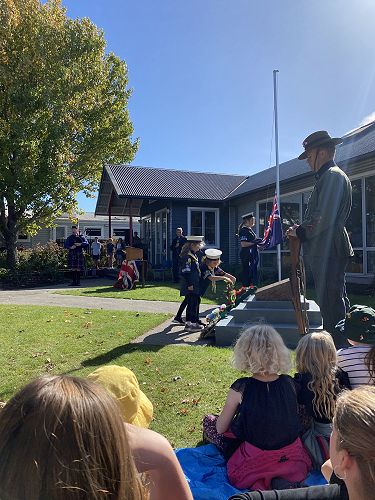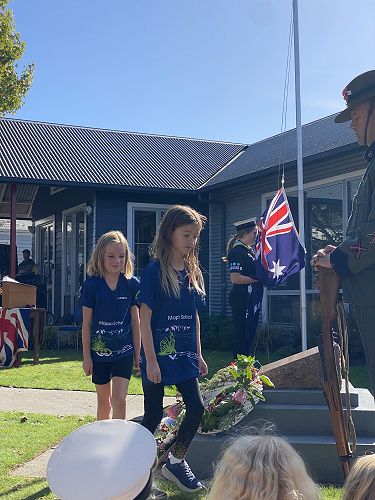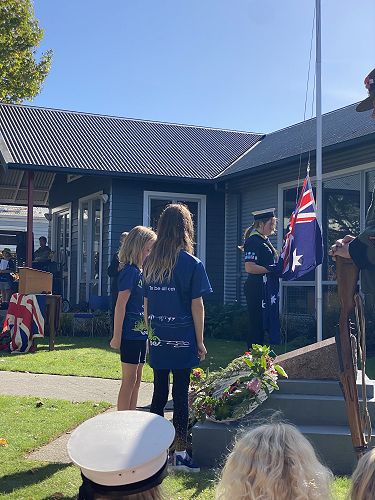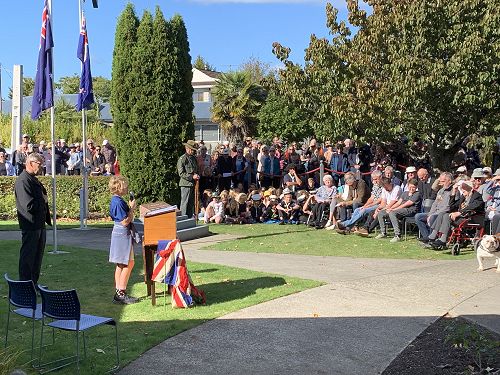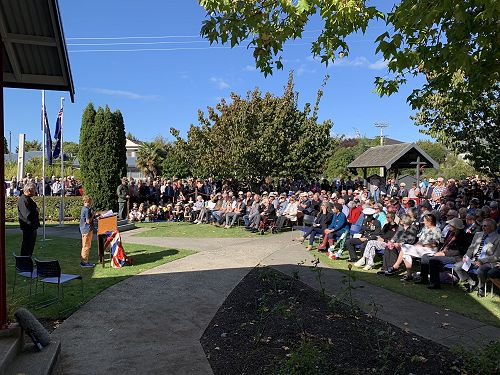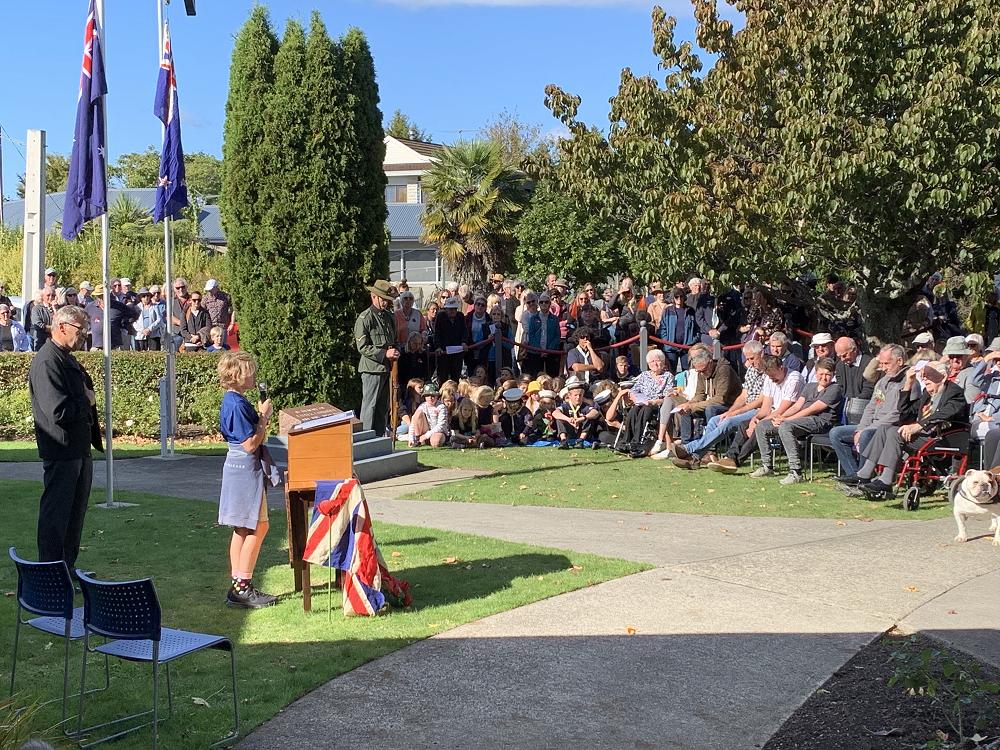
Anzac Day 2023
We were very proud of our Year 8 speakers Austin Bruce-Miller and Benny Smith who spoke with courage and conviction on Anzac Day. Thanks to all those in the Tamaha Sea Scouts, wreath layers and Ian Smith for making this remembrance day special.
Here is Austin's speech that he wrote and delivered:
Lest we forget.
Kia Ora, my name is Austin Bruce-Miller and I am in Year 8 at Māpua School.
On ANZAC Day each year we often hear the saying ‘Lest we forget’. But, I wasn’t really sure what that meant and decided to focus on this as I prepared to speak today. I found out that ‘Lest we Forget’ was first used in a poem by Rudyard Kipling – that’s the same man who wrote the Jungle Book. He used it in a poem about Queen Victoria and “lest we forget” tells us that we need to be careful not to forget. Or, put a different way – we need to remember! But what do we need to remember? And why today on ANZAC Day?
I think it is important that we need to remember and talk about our own personal connections to our ancestors who have made such sacrifices in times of war. For me, all eight of my great grandparents served in the second world war in one way or another. My Great Grandad George was a Bombardier in the Royal artillery. He served in Italy and in the deserts of North Africa. My great-grandad Les volunteered into the Royal Navy at the age of seventeen. He served through the war and was on a landing craft at D-Day when it was hit by an artillery shell. He was found, injured but alive floating in the water. He survived and then went on to continue fighting in Burma and Borneo.
My great grandad Charles was also in the Royal Navy. He joined the Navy when he was 13 as a naval cadet and then served during the war on the Atlantic Convoy protecting the supply lines between the UK and the USA. My Great Grandad Paddy was an officer in a regiment of the King’s African Rifles. He served through the war in Somalia, Madagascar and Burma.
My four great grandmothers were also involved in the war effort and served in the UK with the services in what was known as the home-front. They took on many of the jobs that had more traditionally been done by the men and supported the war efforts in the United Kingdom. They worked in factories supplying the war effort, they supported the transport services and lived under the constant threat of German Air attack.
Today, it is hard for me to imagine how hard all this would have been. All my great grandparents were separated from their families, their loved ones and this was well before they could phone, SKYPE or Zoom. They all went to war at a very young age. Imagine leaving home at 17 to fight on the other side of world with no connections back to home. It is impossible to imagine. And yet they did it to protect a freedom they believed in and to ensure the future generations would not feel the threat of oppression. They did it for us.
So that is why we say “lest we forget” – because we need to remember. We need to remember what they did for us and why they did it. If we fast-forward nearly 80 years since the end of the second world war, there is still war and the threat of war in different places around the world. In the Ukraine, in Sudan and even tensions closer to home between China and Taiwan. It seems peace is hard to find. But we need to remember how much sacrifice and how much loss it took and continues to take to maintain peace. So many of our ancestors died, so many were injured and so many families were torn apart. We need to remember how terrible that was.
I can’t imagine how awful it would be if the world or just Aotearoa New Zealand was ever going to war again. But, I know that if we remember and connect to the sacrifices previous generations have made, we will be all the more likely to try and avoid ever going to war again.
No reira, tuhia ki te rangi - Write it in the Sky,
Tuhia ki te whenua, - Write it in the land,
Tuhia ki nga kau o nga tangata, - Write it in the heart of the people,
Ko te mea nui? - What is the most important thing?
Ko te aroha – the most important thing is love.
With love and respect to all my ancestors and to all those who fought in whatever way to protect the relative peace we enjoy today.
Tihei Mauri ora.
Gallery