
Modern Learning Environments - personalising learning for your children.
We all come to school with different ideas, beliefs, prior knowledge and experiences. Schools are now embracing student diversity, becoming responsive to individual needs and celebrating strengths, differences, contributions and own learning experiences.
Modern learning environments are emerging throughout the country. Educators, scientists and psychologists are working together to develop a growing understanding of how the brain learns and the best way to support the needs of every child throughout their time at school.
A modern learning environment is designed to support best practice in teaching and learning while creating opportunities for children to learn in a way that they can develop skills required for their future:
- working alongside others
- collaboration - moving the excellence around the learners
- problem solvers - developing persistence and perseverance as well as resilience to challenges in our day.
- culturally respectful and responsive as we become globally connected and integrated with technology and within our community.
- innovation - putting ideas together to create opportunities and thinking that hasn't before been realised.
- self monitoring individualised learning styles that will best support achievement for every child.
- socially constructed knowledge through talking, sharing, discussions, exploring, making, doing, thinking, challenging, questioning.
- teacher strength based instruction to best meet the needs of all students.
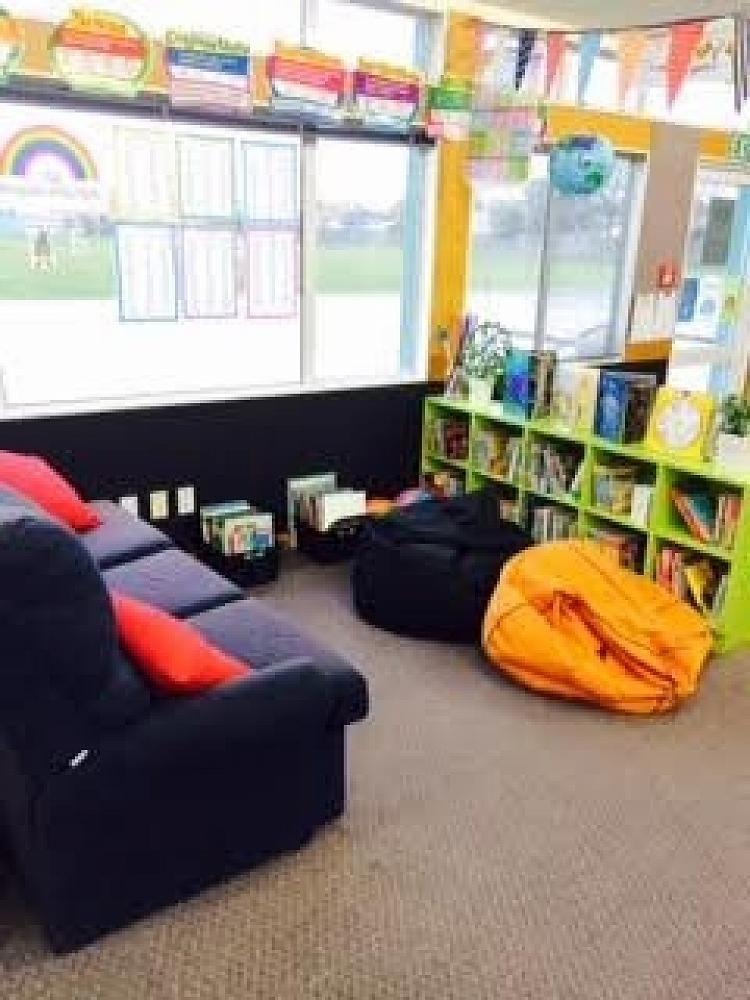
The most obvious feature of the modern learning environment is the design of the building. The large open spaces invite movement, collaboration, opportunities to share, discuss and work independently. The furniture ranges from kneeling tables, standing tables, tables for sitting at for individual learning, collaborative sharing and discussion, floor cushions catering for the variety of physical needs of children.
The interactive learning environment is carefully planned and designed to promote curiosity and sparking the thinking and learning process. Teachers become skilled observers of their students, identifying their natural strengths, interests and peer relationships. This is vital information for the teacher to provide a vehicle for teaching more complex and difficult concepts.
The noise levels are often a concern throughout the transition phase from traditional teaching to a modern learning approach. However, there is a way teachers address this. The use of language to share our ideas, beliefs and experiences is vital for learning, and developing the thinking process. These are challenged, explored, explained and shared regularly within the learning community. This may be done online, onstage or throughout activities in the learning spaces. Teachers are supporting children to understand how to learn and to better understand the best way for them to learn throughout the day. This becomes the expectation for the learning community. As children develop the skills to self manage, self monitor and self reflect on their learning the teachers are providing techniques and strategies to engage, active participants in the learning process. This can take some time to develop and support is provided for the children who take longer. This is when the quiet, conscientious learning environment can be observed.
This is a major learning curve for teacher and students alike. It takes time and support every step of the way. While we understand there is a huge element of trust with this direction in education, we are all here with the best interest of every child, every step of the way.
Please come and see us if you have any questions about modern learning environments. We won't be implementing it into every classroom next week at Merrin, however, it is the direction we are moving towards over many years to best prepare your children with the tools to become skilled, connected, active and engaged life long learners.
Laetitia de Vries