What can we do to protect the sand dunes?
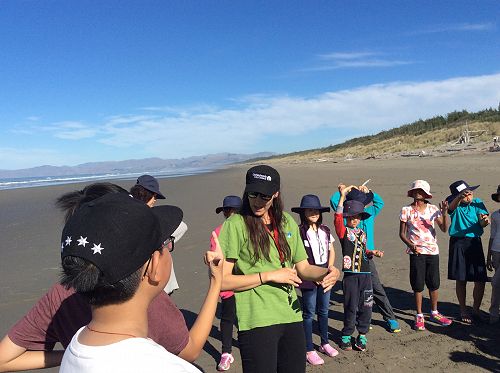
On Monday, 11 April, the ESOL students travelled to Spencer Park. The Year 4-8 ESOL students had been learning about sand dunes for a number of weeks. We were going to spend the afternoon learning things that people do that can save the sand dunes.
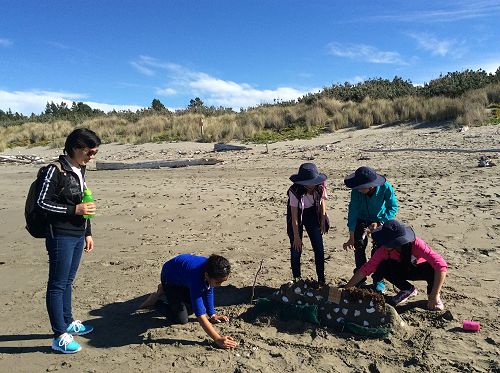
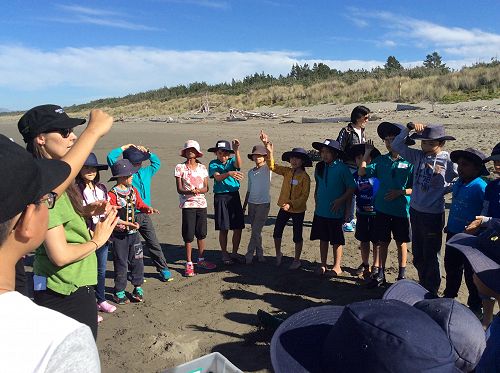
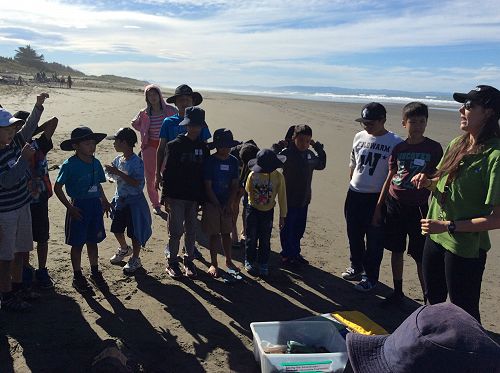
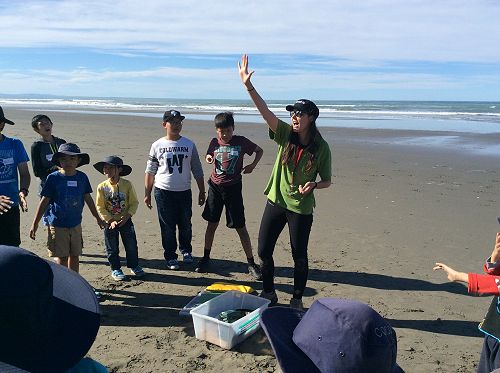
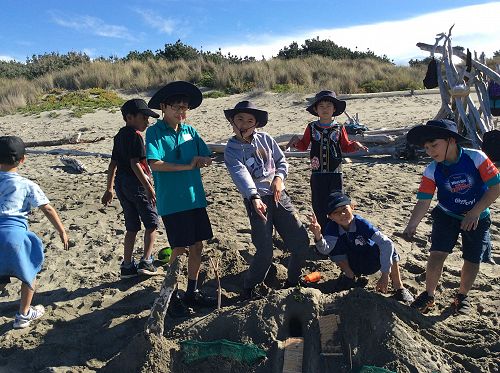
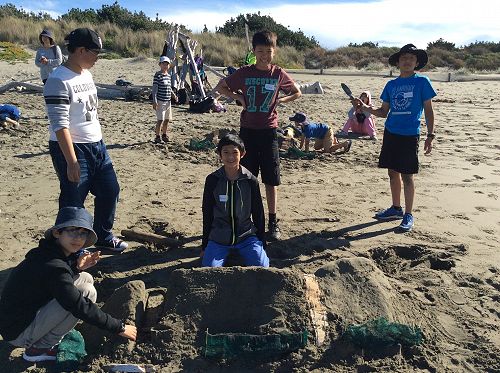
We met with a teacher named Celia. She works with Christchurch City Council as a teacher in many of the parks. The first thing she did was gather us around and show us how to build our own sand dunes.
We learned about some of the plants that live on the dunes. We learned that pingao grass lives on the dunes closest to the ocean, and its roots grow hoizontally. This helps hold the short dunes together. Ice plant also protects these dunes with horizontal roots. Marram grass inhabits the bigger dunes and has roots that grow down vertically.
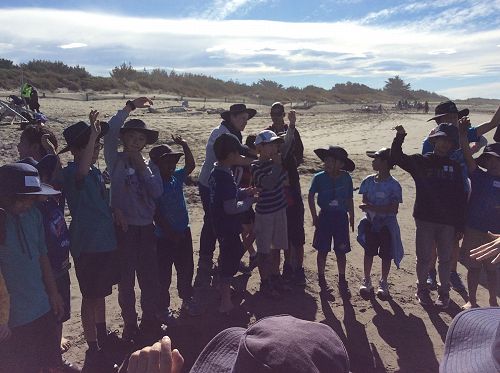
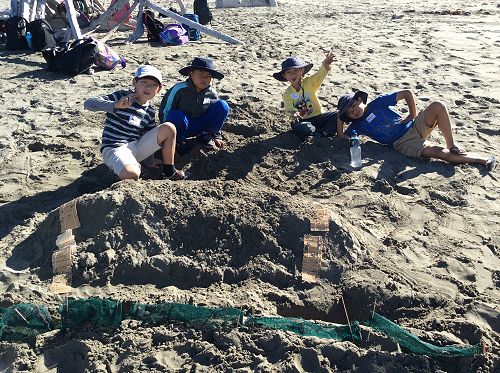
After pretending we were waves trying to erode our sand dunes, we learned net fences can be placed in front of the dunes closest to the beach for protection. Sand ladders can be placed over dunes so that people can travel over the dunes without causing them any harm.
Next we learned about a few animals that live amongst the dunes. The Katipo spider, New Zealand's only endemic poisonous spider lives amongst the lower part of the grass stems. Most people will never see one as they are shy creatures. Skinks, a kind of lizard also live there in addition to many insects and bird species.
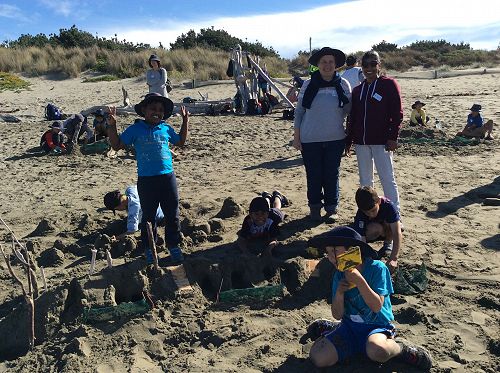
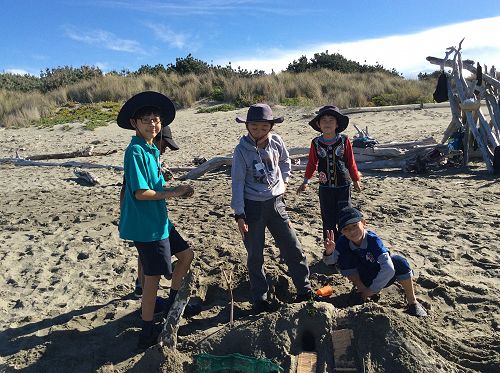
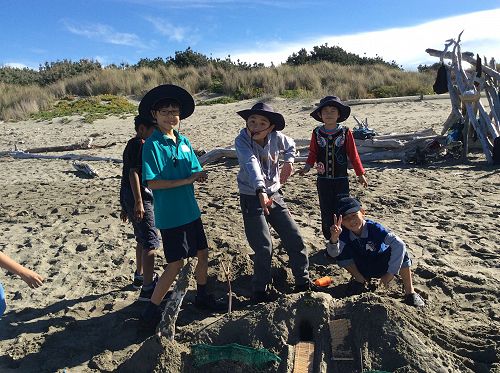
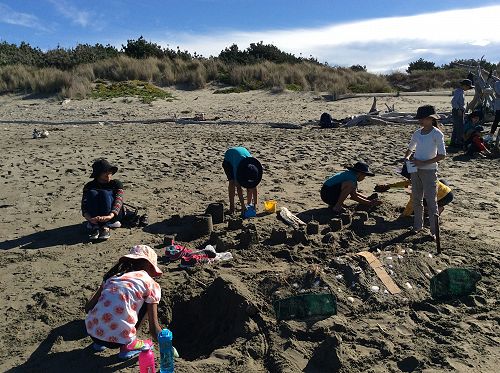
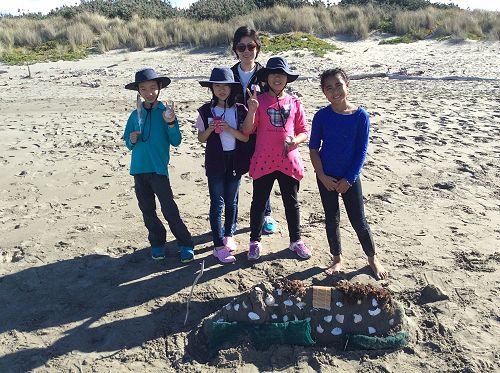
We were then given sand ladders and net fences to add to our sand dunes. Many groups included their own ideas too. We then had to explain how our dune would be protected from erosion, protect the animals living there and the houses and land behind the dunes.
It was a great day: sunny weather, fun times, delicious sausages grilled on the BBQ and an interesting afternoon filled with new information that might change our habits and thinking. Can you do anything to help protect the sand dunes?
Gallery