
Tigers
Read this interesting article about the orange stripy Tigers!
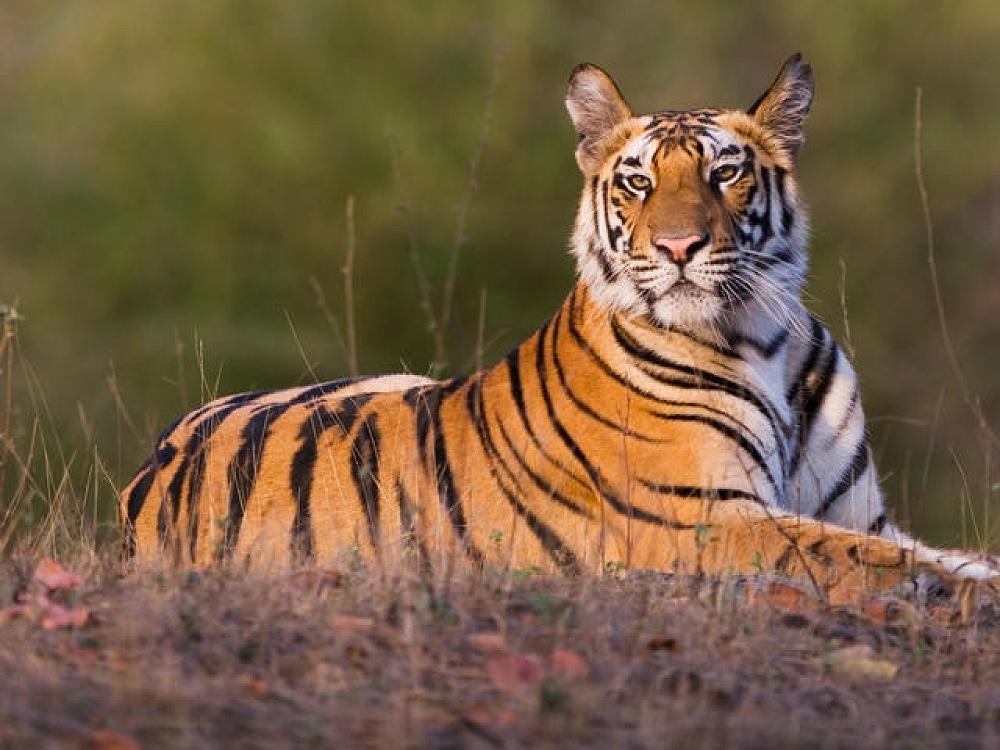
Tigers are amazing animals and are unmatched in their power. They can be identified mostly by their black stripes on their orange body but they use it to camouflage (all stripe patterns are different like a human fingerprint). They mostly live in tropical forests, evergreen forests, woodlands and mangrove swamps, grasslands, Savannah’s, and some rocky country.
Tigers reach sexual maturity between 3 and 5 years. Females mature at 3 or 4 years of age, but males do it a little later, at 4-5 years. Tigers can mate at any time of year, although in regions with tropical climates it happens more between November and April when temperatures are colder. Those tigers living in those temperate zones mate only during the winter months. They are very protective of their cubs as any mother would be. The tigress is responsible for caring, feeding, and teaching survival to the cubs to 3-6 months. The young tigers like to playfight with each other and to acquire the speed, agility, and power that they will need later when they become completely independent.
They will stay safely tucked in their den for the first eight weeks of their lives. When they turn around two months old they venture out of the den to learn survival. There is always a dominant cub, which is larger and stronger than the others, in each litter. The mother will nurture this cub the most to ensure only the fittest shall live, this always happens in a shortage of food.
Tiger’s territory is mainly just their hunting ground and birth area. A tigress will need a 20 square kilometres (7.7 square miles) territory. A male tiger requires a larger territory, such as one that covers 60 to 100 square kilometers (23 to 39 square miles). To mark where the boundaries of their territory they urinate on the boundaries and others tigers may sniff the female's urine to figure out what their reproductive condition is like.
Tigers are carnivores and mostly prey on elephant calves. However, an integral component of their diet is large-bodied prey weighing about 20 kg or larger animals such as moose, deers, pigs, cows, horses, buffalos, and goats. Rarely they might eat tapirs, rhinoceros calves, bear species, leopards. Did you know that tigers' jaws are strong enough to snap a monkey's neck in one small motion! Tigers mainly rely on their sight and hearing to hunt prey. When they find one they stalk it from behind and try to get close. If all goes well they try to aim for the neck or anywhere that can kill it.
By Etaash