Learning to write in English...it’s always a very tricky proposition. So how do we make it happen for our learners with ESOL needs?
English can be a really difficult language to learn when the only rule often seems to be that...every rule gets broken! So let’s look at how we load up all of the words into our students who might arrive with none of their own...and how we organise things so those words all come back out in the right order...
One of the things Merrin School teachers do very well is getting the words into writers so they discover a message of their own that they want to communicate. We think of this as ‘igniting the writer’s spark’. We want them to be thinking: “I’ve got something to say!”, then we provide them with all the many planks of support they need to successfully communicate that idea in English to their audience.
We start by respecting and developing our awareness of the richness of each child’s mother language and home culture, which is their springboard into understanding English. Then we plan for an engaging experience that will create a spark inside the child, one that creates a message that can be shared…
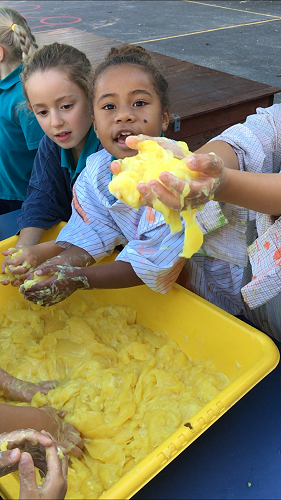
Along with creating this message, we are also thinking about how to develop a strong urge for the author to share it. So you will often see the children engaging in ‘kickstarter’ activities that make their emotional juices really flow. A sign of success here is often lots of noise, lots of excited talk and lots of laughter.
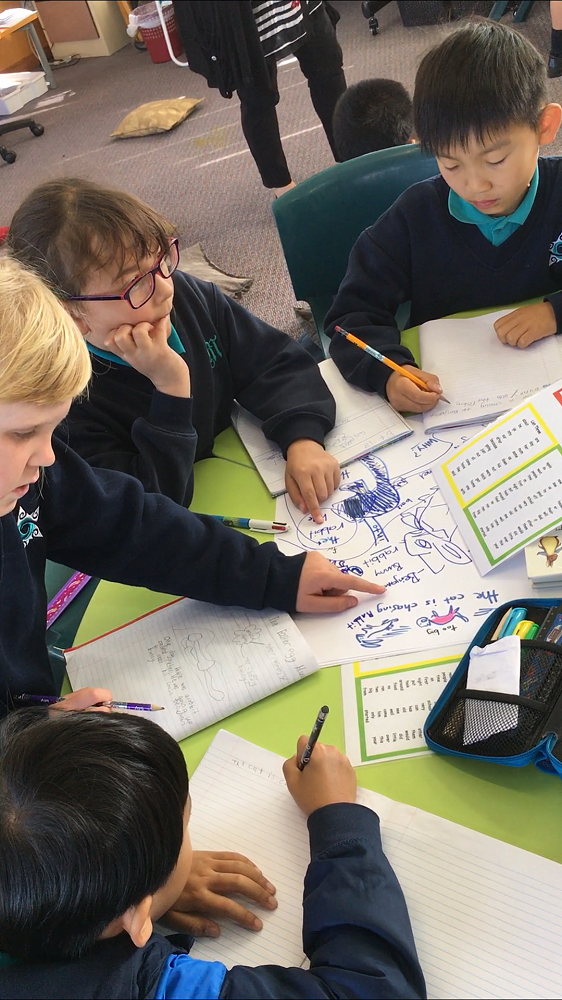
Many words and lots of grammar awareness is needed for a writer of ESOL to communicate their message in a way their audience can successfully understand it. So to make this happen, the teacher co-writes a ‘scaffold’ (writing plan) and a rubric ( set of guidelines) with the writers who need to know what success looks like in English for their type of message.
Throughout the writing process, the learner with English as their second language has been inspired and supported every step of the way by fluent language speaking models. So the message they put down on paper is one the ESOL writer has come to interact with and own in a meaningful and purposeful way.
It’s how we grow successful writers of English.
Gallery