
Upcoming: “This is our nation, not theirs”: The threat of Christian nationalism
Starts May 9, Saturdays 1:00-2:30pm (NZDT), 26 April-14 June 2025 “This is our nation, not theirs”: The threat of Christian nationalism
Why have right-wing Christians declared war on the rest of us? What is a “Christian nation” and why is this idea gaining power around the world today?
Join Dr Eric Repphun and Dark Times Academy for this eight-week course as we use an interdisciplinary lens to unpick these complex questions about religion, politics, history, culture, language, bodies, and violence. We will explore who Christian nationalists are, what they believe, and the stories they tell about faith and its rightful place in human society.
Learn what Christian nationalism is, where it comes from, where it might be going, and what we can do to fight back.
9 May – 28 June 2025
Saturdays:
NZST: 12:00 – 1:30pm
AST: 10:00 – 11:30 am
Fridays:
EDT: 8:00 – 9:30pm
PDT: 5:00 – 6:30 pm
More information | Register here
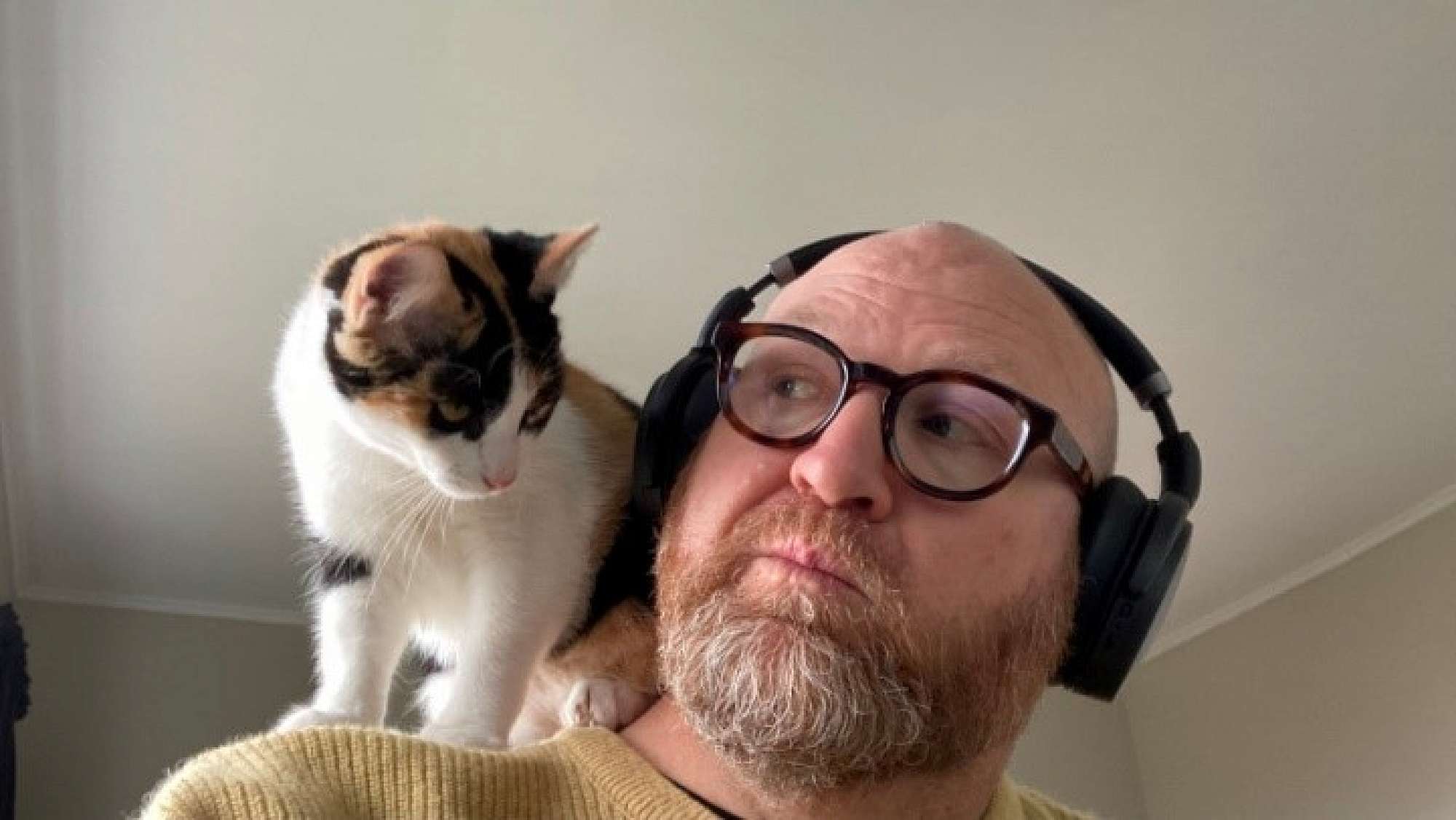
Instructor profile: Eric Repphun
Dr. Eric Repphun has worked as a university lecturer, an instructional designer, and journal co-editor, among many other things. He has a PhD in Religious Studies and has published original research on Mormonism in Battlestar Galactica, religion in the work of Douglas Coupland and Chuck Palahniuk, and different ways to understand the perverse biblical story of the sacrifice of Isaac. He has spent way too much time thinking about the idea of re-enchantment, or how modernity produces its own monsters and its own forms of unreason.
Can you tell me more about your background and what led you to want to teach a class on Christian Nationalism?
I have a somewhat bonkers professional background and have done everything from owning a cafe (the iconic Governor’s if we have any Dunedin heads out the audience) to working as an instructional designer to spending four years making tourist tchotchkes at a small factory. I am also a recovering academic and spent six or so years teaching university-level Religious Studies (not theology!) in person and online in Aotearoa New Zealand.
While I’ve been out of the academy for more than a decade now and have been very busy happily raising my kids, skateboarding, riding my bikes, and taking pictures, I have always missed teaching. I didn’t miss the marking, for the most part. I didn’t miss the pressure to publish work I wasn’t proud of, and I didn’t miss scrabbling for another semester of work as an adjunct lecturer. I missed teaching, getting up in front of a group of students and trying to get them to expand their minds and their worlds. I missed watching young - and not so young - people start to look at things in a different way and start to question what they’d always been told. In a Religious Studies setting, where plenty of the students had grown up in churches or other religious institutions, this could be particularly rewarding, if also really challenging because this kind of learning often butted heads with people’s very ingrained, very core beliefs about the world and their place within it.
For the past decade, I have been watching the world move towards a resurgence in popular religion in ways that most early sociologists would not have believed possible, and I never lost my curiosity about how religion shapes the world and about what religion is in more abstract terms.
Now that my kids are older, I find myself with more free time and when I stumbled upon Dark Times Academy, it looked like the perfect opportunity to get back into teaching and to find an outlet for my desire to be more active in social-justice work. I pitched a number of courses, but I think the one about Christian nationalism was the one I was most keen to dig into, largely because it is such a rich, almost inexhaustible topic, and one that people desperately need to understand because it threatens so many things that so many people value. Researching right-wing American Christianity and the damage it can cause, especially to those on the outside, also gives me an excuse to listen to way too much Ethel Cain.
Do you see the current situation in the US linked to Christian Nationalism?
Absolutely. I actually think it is impossible to really understand the world we are all living in without understanding Christian nationalism, especially as it manifests in the United States. It is a crucial part of the story of how we got to where we are, a story that is both shockingly new and hundreds if not thousands of years in the making. Christian nationalism is both a core cause of and an accelerant of many of the serious threats to social justice and social cohesion that are plaguing the world right now.
While we are doubtless witnessing the end of the long American Century, the US is still one of the core drivers of and dominant forces shaping twenty-first century life around the globe, both culturally and financially. What the writer Talia Lavin calls America’s “strange, God-soaked soil” has become part of the soil we all grow in, even on the other side of the planet, living in what look, for all purposes, to be secular societies.
Is Christian Nationalism a global political movement and how does it play out differently in different countries?
Christian nationalism, like almost every manifestation of religion, takes on different forms and flavours and emphases wherever it takes root. So, while there are things that unite the religious and political figures like Trump in the US, Putin in Russia, Orban in Hungary, Bolsonaro (good riddance) in Brazil, the movements they lead are not precisely the same.
Christian nationalism and the ideas that lie behind it are woven into the rise of far-right politics in every corner of the globe, though other religious nationalisms, like Modi’s anti-Muslim Hindutva in India, also play their part. There is even an argument to be made that the more extreme forms of Christian nationalism very closely resemble political forms of Islamism in terms of their epistemology and their ideas about who does and who does not deserve to have authority over other people. Both sides of this equation would probably loudly denounce this idea, but that does not make it any less true.
Christian nationalist ideas about power, authority, purity, and pollution drive bans on abortion, attacks on the rights of queer people, book bans, the erosion of public schools and honest accounts of history, resistance to vaccines, and wider denials of science. No matter how much Christian nationalism sells itself as a return to tradition - and often as an outright rejection of modernity - it represents a distinctly modern fusion of religion, politics, and economics.
This is really heavy stuff. How do you find joy in times like these?
While this might not speak entirely well about my sanity, I actually find a lot of joy in digging into this stuff, horrific as much of it is. There is a complexity and perversity to it that appeals to some dark corner of my brain. There is also a kind of fierce joy in understanding the truth of something, even if it is deeply unpleasant, even repellent on a moral and human level.
I also find it incredibly valuable to be able to explain this stuff coherently to people who might not understand how serious it is and how much of a threat it poses to the people that Christian nationalists have decided are their enemies. Knowing what these ideas, beliefs, and practices are and where they come from is also crucial to protecting the marginalised, including transgender and gender non-conforming people in my own whānau, and there is joy in that as well.
On a slightly more sane front, though it is a horrible cliche, I have ways to unwind and unthink these dark thoughts, like riding bikes and skateboards, reading horror and science fiction, tramping with my kids and teaching them critical-thinking skills, taking photos, and petting the dog, which is our household’s version of touching grass. If nothing else, like the great Soren Kirkegaard wrote about a long time ago, there is no underestimating the value of a good, long, aimless walk.
What about teaching a community education class appeals to you and why do you think community education is important?
I come from a family of educators and have done all sorts of work in education over the years, but this is really the first time I have done community education, but I am really looking forward to being able to focus on the raw act of teaching while having minimal distractions from things like marking exams. Designing this course without needing to worry about KPIs and the other frustrations of more formal institutional or for-profit education settings has been an immense pleasure.
I think all education is important right now, especially as fascists - yes, they are fascists and some of them can rightly be described as Christofascists - coordinate to suppress and destroy knowledge they find disagreeable. A diversity of tactics means finding new ways - or reviving old ways - of disseminating and protecting knowledge and I think community education is going to be an increasingly important part of the fight for our collective future. Decentralised and often flying under the radar, small community-education organisations like Dark Times Academy are ideal outposts in a world that is growing ever more hostile to the notion that learning should be aimed at the whole person, not just an instrument to increase someone’s utility and their economic value. We need more education focused on humans, not on human capital.