
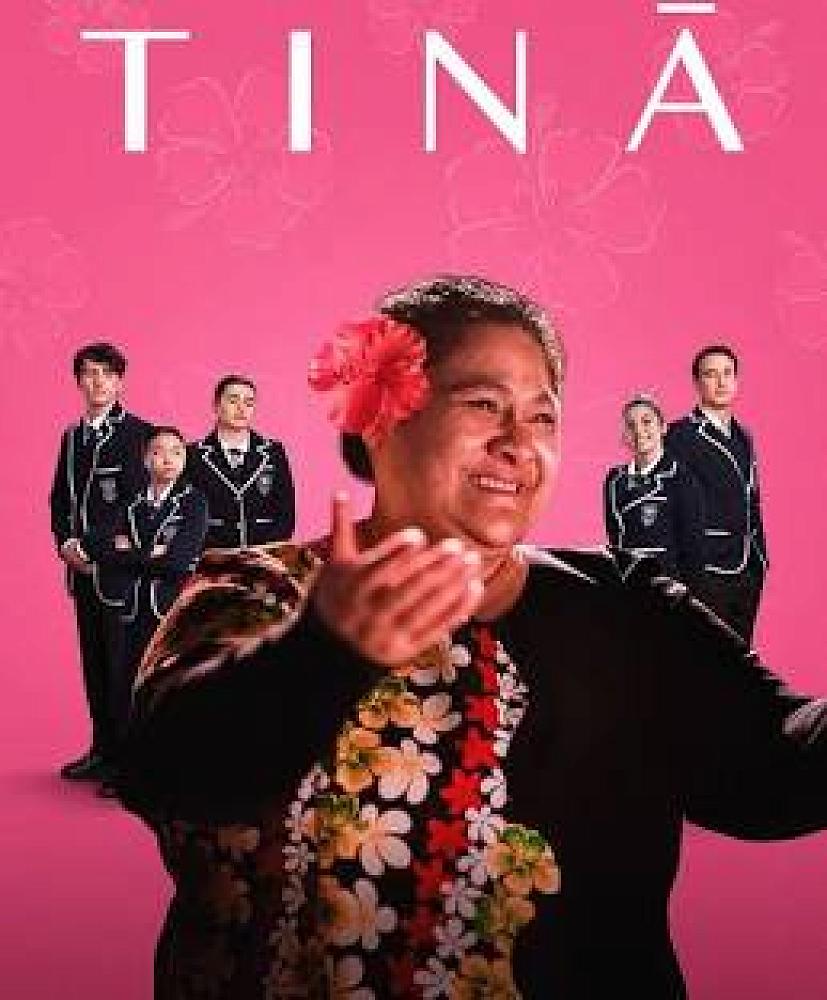
Tinā
In Samoan culture, “Tinā” is a formal word of respect for a mother figure. In Tinā, the movie, Mareta Percival (Anapela Polataivao) is a dedicated mother, and passionate music teacher.
The movie weaves feel-good choral harmonies with the racial fault lines present in Pakeha-dominant educational environments.
Grieving the devastating impact of the deadly 2011 Christchurch earthquake, and the loss of her daughter, Mareta finds herself forming a choir in an elite, predominantly Pākehā, high school. Amid the rugby-obsessed school, there are pupils like Sophie (Antonia Robinson) who need nurture and support.
A constant theme is the vitality of Samoan culture in an earthquake-scarred Christchurch. Weaving mats - what Mareta calls “Samoan knitting,” - and a supportive Samoan church community are essential threads in Mareta’s journey through grief.
Tinā is a feature directorial debut for Samoan-born Miki Magasiva. Magasiva won Best Director award at the 2022 New Zealand Television Awards for The Panthers. He has also contributed to two indigenous anthologies, including We Are Still Here (reviewed in Touchstone March 2023). Magasiva brought this history of telling indigenous and oceanic stories as he wrote, produced and directed Tinā.
Two scenes explore the impoverishment of mono-cultural palagi across cultures. Bewilderment is present in a scene of heated conflict between Peter Wadsworth (Jamie Irvine) and Mareta. Once the deputy head has made an authoritative decree, Mareta speaks in Samoan. Her words remain untranslated, both in the scene and on the screen. It is a clever moment of cinematic craft that instantly separates the audience. Those who knew Samoan, including a row of people behind me, chuckled. Like the deputy head, those who don’t know Samoan are bewildered.
A final scene explores the temptation of cultural appropriation. Eager to win the Big Sing choir competition, the school choir performs a Samoan hymn, with Sophie as the choir lead donning a lavalava. The moment is important to Sophie’s journey of grief. At the same time, it is curious to see Samoan culture and Samoan musicians appropriated to support dominant culture emotional closure.
A Christian hymn, It is well with my soul, is at the centre of another of the movie’s emotional crescendos. Before the school choir sings, they share the biography of hymnist, Horatio Spafford, who wrote the lyrics after losing his four daughters in tragic circumstances.
Theologically, the movie could have pushed back further in time to share insights from Julian of Norwich. A mother figure of the church, Julian wrote Revelations of Divine Love amid “The Black Plague,” which killed half of those people living in Norwich. Reflecting on suffering, she wrote that in Christ, “All will be well, and all manner of things will be well.” Julian’s theology of wellness invites those who grieve to find love in the mothering kindness of God.
There is much in Tinā that is not well. Natural disasters tend to amplify already present inequalities. Yet, amid the racism of a dominant culture, Mareta’s Samoan community finds ways to offer songs and serve in support. In telling these Samoan stories, Tinā invites us into a journey of mothering toward wellness.
Rev Dr Steve Taylor is the author of "First Expressions" (2019) and writes widely in theology and popular culture, including regularly at www.emergentkiwi.org.nz