
“Until A Christian Conscience Intervenes”
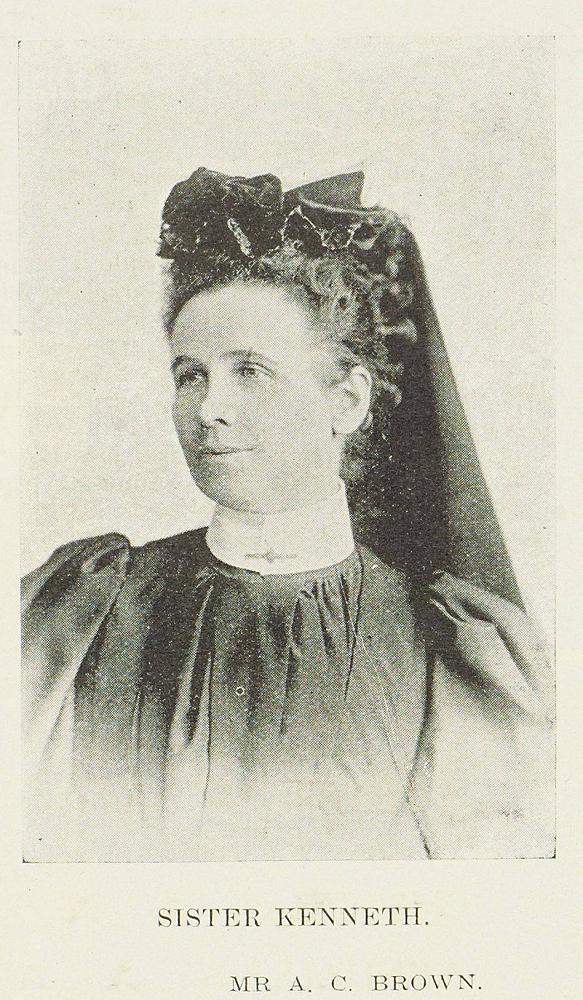
Sister Kenneth McKenzie 1853 – 1942
The story of this exceptional woman is not as well-known as it might be. This may be due to confusion over dates, for example: her death date in two of the principal sources of information on Methodist deaconesses is incorrect. The ‘In Memoriam’ to her in the New Zealand Herald provides incontrovertible evidence. What is known now is that she was born Elizabeth Smith in Dundee in 1853 and came to New Zealand with her family in 1859. Her father, John Smith, was one of thousands who joined in the Thames gold rush in the late 1860s and was successful enough there for him to become a farmer at Ascot near Mangere.
Elizabeth was 21 when she married Kenneth McKenzie, a coastal shipping captain. He was one of those many victims of the dangers of this occupation; when he was 25 he drowned in the wreck of the Rona on the Manukau bar. At that time Elizabeth was living in Oamaru but she returned to Auckland with her young family of three sons and a daughter, and became involved in Methodist activities, maybe at Mangere. She was a local preacher in Auckland when (1892) that was still somewhat unusual.
When Jane Blakeley, the founding sister of the Helping Hand Mission at Freeman’s Bay, transferred to the China Inland Mission, Sister Kenneth, as she was always known, took over and held that position until 1911 when she moved to the East St Mission in Newton. While there she was formally recognised as a member of the Deaconess Order in this country. In 1913 she moved again to the more central role of deaconess at the Auckland Central Mission and she retired in 1919. Hers was a ministry of exceptional length by contemporary standards and attracted the attention of the Auckland newspapers. Reports on her work and letters she wrote seeking help and understanding regularly appeared in the New Zealand Herald. This paper described the Helping Hand Mission as a “household word in the Province” because it was both rescue work and social reform.
The scope of her work can be summarised from the many published annual reports. Her mission was to families suffering cold and privation and, to put it bluntly, this sort of work challenged someone to “respond with a cheque”. “My work is visiting from home to home in any and all parts of the city. It embraces all sorts and conditions of people – widows, deserted wives, the young and the aged, and many neglected wee bairns.” The Benevolent Fund she administered operated literally from hand to mouth and the £100 and more that she received annually by means of small donations was never enough. One early annual report detailed some aspects of what was expected of her and the Mission: handing out 260 bundles of old clothing, writing 416 letters (it is from one of her letters that the phrase used as the title for this piece originated), making 1825 visits and obtaining situations for numbers of people. She worked long hours, starting before breakfast and going on until late in the evening. Her letters published in the newspapers gave rise to different reactions, not always grateful ones – people did not like to be reminded that slums existed in New Zealand at that time.
Possibly the same could be said of the present time. Drawing the attention of the authorities to shortcomings in their application of services for the people is all too often obscured by disagreement over detail – especially when that ‘detail’ is the life and welfare of an individual lost in the world of statistics. The Christian conscience may need revitalising.