
War Comes to Choiseul
An encounter with the enemy
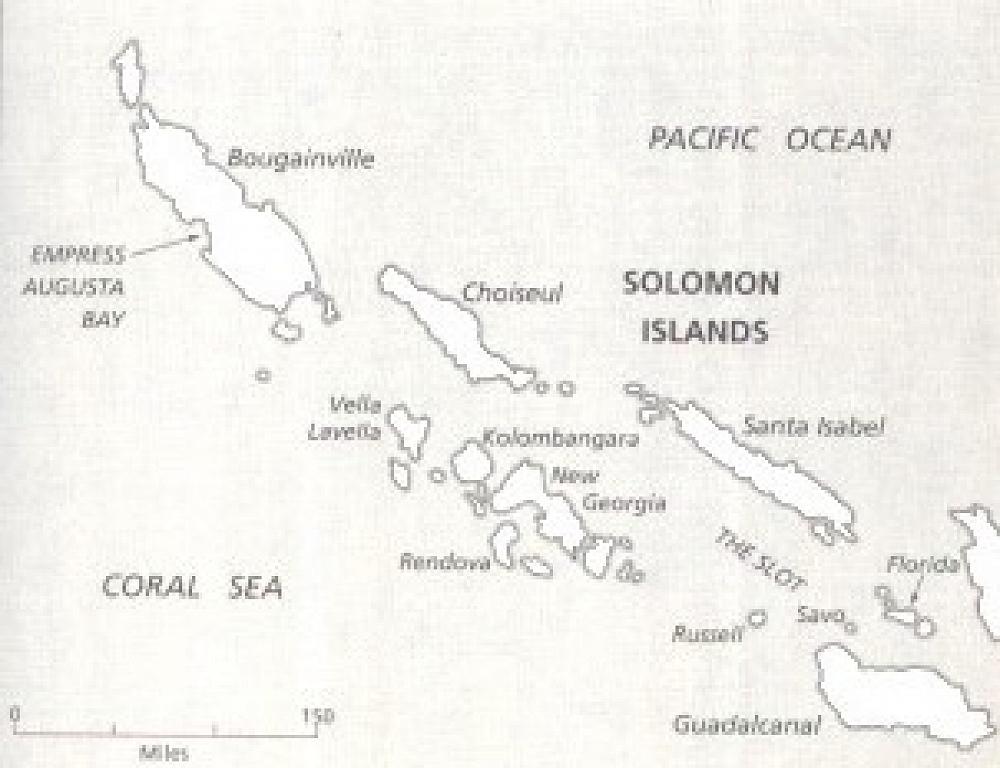
After the Japanese attack on Pearl Harbour in 1941, the Solomon Islands became embroiled in the war and became well known for several battles fought there. The island of Choiseul was not the site of any battles and there were few recorded incidents involving violence by the Japanese on the island. Choiseul, however, received attention from both the Japanese and the American troops.
Missionaries from the Methodist, Seventh Day Adventist and Catholic missions were evacuated from the Solomon Islands as soon as word of a Japanese invasion reached them. New Zealander, Rev John Metcalfe was the last Methodist missionary to depart, after leaving the mission on Choiseul and going to the headquarters at Munda. Metcalfe noted in a letter to Rev John Goldie in New Zealand that he was “utterly at a loss to understand their [evacuated missionaries’] mentality . . . appears to me to be criminal folly . . . they did not call a meeting of staff . . . left us of Choiseul in the lurch . . . they know I should not have agreed to such an idiotic proposition.” In his radio message to New Zealand, he said they left “without authority or consultation”.
Metcalfe did not believe the Japanese were a threat. Based at Munda, on Kokeqolo in 1942, he became friends with trader, Harry Wickham. Gideon Zoloveke (a medical dresser from Choiseul) described the two men spending “a lot of time together, telling stories and drinking tea. They used to assure us the Japanese would leave the Solomons without visiting Kokeqolo.” Zoloveke added that when the Japanese landed on New Georgia, he and others had to “help the Reverend Metcalfe along the difficult paths” to reach the hideout they had prepared for this eventuality. Belshazzar Gina said that Metcalfe “believed or professed to believe” that the Japanese would not invade.
When the Japanese arrived on Choiseul, there were only three Europeans still there, coast-watchers Cardel Seton, a member of the Australian Imperial Force, and Alexander Waddell, a former district officer in the BSIP, appointed to report on enemy activity. The Catholic priest, Father Binois, also remained and hid in the bush in the north of Choiseul until he was finally forced to evacuate in 1942. There were no recorded or remembered reprisals on the Choiseul people, nor did they attack the Japanese. Loyalties were divided. A frequent challenge if two Choiseul people met was “Are you with Japan?”
The Japanese travelled as far south as Sasamuqa. While the Japanese kept largely to themselves in the area, some Islanders identified a distinctive “fishy” odour which they said they could smell when a Japanese soldier passed by. The smell was attributed to the quantity of tinned fish the Japanese consumed. Choiseul people would bring Japanese prisoners to Seton, who would arrange their evacuation by PT boats or Catalina flying boats. Stories were related to a missionary (Coralie Murray) about Japanese prisoners being strung from a pole and transported like a pig to a feast. The tales often included cryptic remarks that not all made it to the coast-watcher alive.
By 1943, an estimated 5000 Japanese troops were concentrated around Sagigai and Choiseul Bay, in the northwest of the island. In October 1943 American troops landed further south, at Voza to carry out “Mission Raise Hell” or “Operation Blissful”, intending to create a diversionary action. They were assisted by local people especially recommended by the coast-watchers to act as scouts. The Americans walked everywhere in heavily forested areas on Choiseul and sometimes encountered the remains of the Japanese camps. American soldiers gave the scouts food from their rations. The food was disappointingly unappetising to the Choiseul people.
According to Metcalfe the Japanese on Choiseul made no effort to occupy the rest of the island or terrify the people, allowing Seton to go into their area and shoot three beasts for Christmas in 1942. The only recorded casualty among the Choiseul people was an elderly man who may have surprised some Japanese troops and was shot.
The Japanese evacuated Choiseul when the invasion of Bougainville began. It was of no use to them due to the rugged terrain. The Choiseul people continued with their daily lives, celebrating Lotu (Church) and welcomed the missionaries back from 1945.