Being a Pioneer John Hobbs 1800– 1883
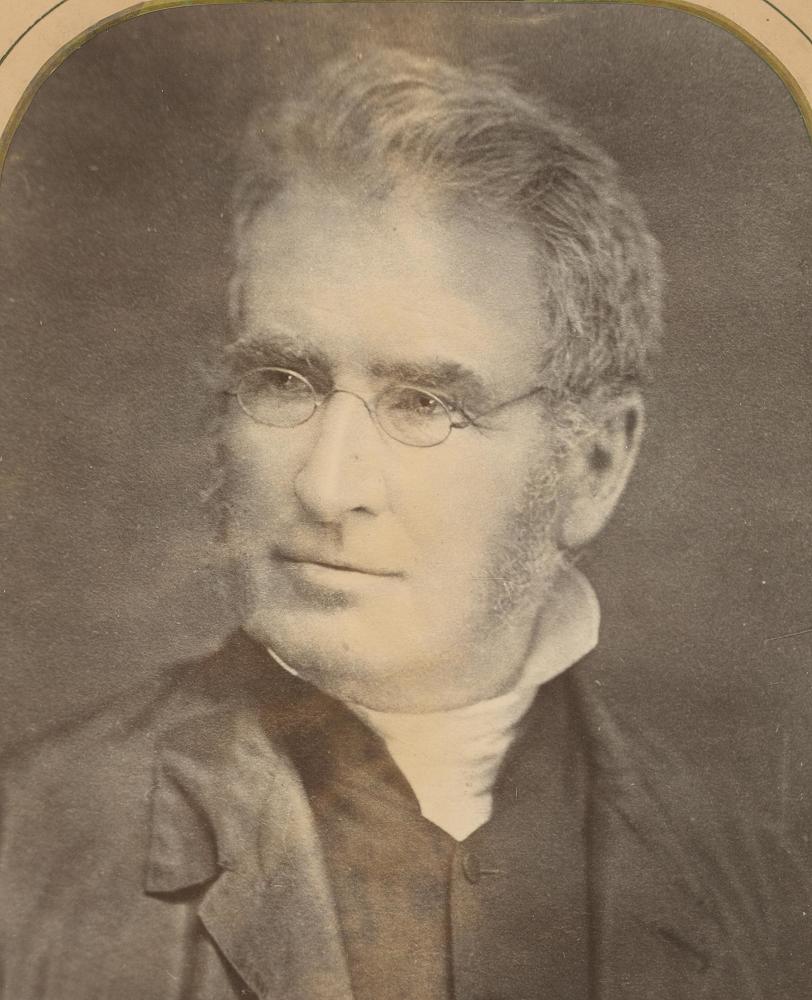
When John Hobbs died no missionary in Aotearoa could match his length of service as a Wesleyan minister. As we celebrate the bicentenary of Methodism in this country, it seems right and proper that John Hobbs should be the one to represent that brave band of practical idealists who came to spread the Gospel here.
His was never a straightforward ministry. What he had set his mind on about the time he turned 20 was not, in fact, achieved for another five years when he was at last ordained at the District Meeting in Sydney in 1828. His disagreements with brethren dogged him for the next decade and more. And then, not long after, the mission to the tangata whenua to which he had been committed for so long, largely ceased to operate. There he was in the Hokianga, in 1855, ‘on the edges’ of a church that was now more interested in creating a variety of English Methodism among the settlers coming to this country in ever-increasing numbers.
The claims of his family meant it made more sense for him to be in Auckland, and for a year he was given the largely honorific title of Governor of Three Kings College when it also was about to fall into disuse. And then for 30 years he lived the life of a patriarch in Auckland, faithful as ever in his commitment to Methodism but through disability and deafness, increasingly an onlooker. A last memory of him, shared with this writer by someone there at the time, was of an aged man, sitting in high pulpit in Pitt St church, listening as best he could to the latest preacher through his memorable ear-trumpet. And so he died, loved and honoured to the very end.
John, the son of Richard and Elizabeth Hobbs, was born in Kent on 22 February 1800. His father was an agricultural implement-maker and Wesleyan local preacher. John was apprenticed to him as carpenter, joiner and blacksmith. The Cyclopaedia of New Zealand states he “began to study for the University” but that seems highly improbable. He became a local preacher as a young man, offered for ministry in 1822 and was, instead, accepted as an “artisan for foreign service”. He came to Tasmania in November and worked there as a carpenter; then to Sydney where he was accepted by Nathanael Turner as mechanic for the NZ Mission. He never lost his skills as a mechanic. He arrived here per the Brampton in August 1823 and was received on trial as an assistant missionary at the 1824 Conference.
He went with his colleagues and their families toSydney in early 1827 after the destruction of the Kaeo Mission and assisted in circuit work while awaiting advice from England. He was ordained by the District Meeting, Sydney in 1827[LW1] and received into Full Connexion at the 1828 Conference. The mission staff returned to NZ at the end of October. After William White’s arrival as Chairman, relationships declined and John and family - he married Jane Broggreff in Sydney in 1827 - went to Tonga for six years from 1832. He returned to the Hokianga in 1838 and spent 17 years there until his removal to Auckland and virtual retirement until he died there on 24 June 1883.
John Hobbs’ life has been well recorded. The major biography is that of T.M.I. Williment: John Hobbs 1800-1883. Wesleyan Missionary to the Ngapuhi Tribe of Northern New Zealand (Wellington, 1985); and she also provided the entry in the DNZB (Vol.1, p.195). The details of the life are all there but the author, for whatever reason, scarcely offers a judgment on the man or his ministry. It was T.G.M. Spooner, Brother John: The life of the Rev. John Hobbs (Auckland, 1955) - just 54 pages, compared with Williment’s 264 – who offers some more considered personal reflections. Spooner’s comments are both highly favourable and full of admiration but are tempered with an awareness that he was very often a difficult and ‘censorious’ colleague. Gary Clover’s Collision, Compromise and Conversion during the Wesleyan Hokianga Mission 1827- 1855 without question sets the standard so far as research is concerned. He, too, is more than ready to praise this man of faith, of commitment to the ideals of early 19th century missions and of practical bent, and who was also blessed with linguistic skill both to promote the use of te reo in printed form, and assist in the early years of systematic translation of English texts into Māori.
This contribution has been made with 200 years of Methodist history in mind – a record of both success and failure. We used to sing a hymn that began, “Let us now praise famous men ...” – but mercifully rarely if ever these days. The uncritical acceptance of what a person of his or her times thought and did is no longer possible. Their record, however, is rarely one of utter negativity and we do ourselves no credit if we hide behind the supposed mistakes of the past while doing no better, and for no better reason, than they. John Hobbs, and those of his ilk – and their wives especially - deserve our respect, at least. That is where we might start rethinking our future into the third century of our mission.