
“In Memoriam: Professor Jürgen Moltmann (1926 -2024)”.
Two of the most precious books on my bookshelves at home are written by two of what I consider ‘my heroes of faith’.
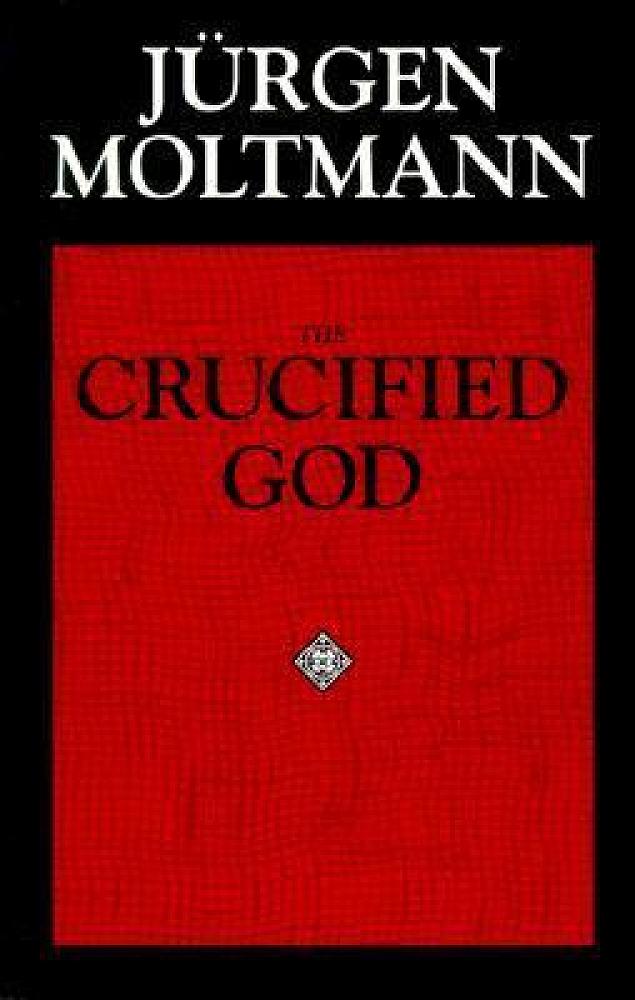
One of the Jewish faith Elie Wiesel with his book Night, and the other of the Christian faith, Jürgen Moltmann, his book The Crucified God. Jürgen Moltmann died on 3 June 2024, aged 98. Since hearing of his death and reading some of the many tributes offered from around the world my thoughts have been tumbling over in memory and gratitude for this significant theologian, without doubt one of the leading Christian theologians of the 20th century post-war era.
In their writing and living, Wiesel and Moltmann provided enduring witness to the capacity of the human spirit to rise above and out of the worst of suffering and anguish that engulfed them. Both authors cross referenced each other’s thoughts and living experiences having lived through - from very different perspectives - the worst of the horror encountered in WWII. Elie Wiesel died on the 2 July 2016, 87 years of age, remembered, honoured, and mourned around the world. Jürgen Moltmann’s death is eliciting a similar response.
Jürgen Moltmann born in Hamburg in 1926 belonged to the generation that consciously lived through the horrors of WWII, the collapse of an empire, and all its institutions, the guilt and shame of one’s nation. He endured a long period as a prisoner of war.
In his personal writing he acknowledged that those who survived those years and who came back from the camps and hospitals were “certainly burnt children who from then on shunned the fire. We were weighed down by the sombre burden of a guilt which could never be paid off; and what we felt about life was an inconsolable grief. It is understandable that there were some of us whose motto was ‘count me out’, and whose aim was to withdraw into private life for the future. But really, we came back to Germany with the will to create a new, different, more humane world. Some of us found behind the barbed wire the power of a hope which wants something new, instead of seeking a return to the old.”
Having passed his University Entrance exams in his late teens, instead of continuing on to university to study mathematics and physics, he, like his peers were sent on to the Air Force – the Luftwaffe. In February 1945 his plane was shot down and he was taken prisoner by the British, and for over three years was moved about from camp to camp in Belgium, Scotland and England. In April 1948, he was one of the last to be sent home to Germany.
The break-up of the German front, the collapse of law and humanity, the self-destruction of German civilization and culture, and finally the appalling end on 9 May 1945 – all this was followed by the revelation of crimes which had committed in Germany’s name – Buchenwald, Auschwitz, Majdanek, Bergen-Belsen and the rest. Standing up to all this and facing what his country had done, his world fell to pieces. He felt he would never be able to face returning to Germany. Two events turned his life around.
Firstly, an army chaplain had given to Moltmann a New Testament which had the Psalms attached at the back, and he began to read them, and found within them the words for his own suffering. “They opened my eyes to the God who is with those ‘that are of a broken heart. He was present even behind the barbed wire – no, most of all behind the barbed wire. But whenever in my despair I wanted to lay firm hold on this experience, it eluded me again, and there I was with empty hands once more. All that was left was an inward drive, a longing which provided the impetus to hope. God in the dark night of the soul – God as the power of hope and pain: this was the experience which moulded me in my most receptive years, between 18 and 21. I am reluctant to say that this is why I became a Christian, because that sounds like joining a party. Because I believe that I owe my survival to these experiences, I cannot even say I found God there. But I do know in my heart that it is there that God found me, and that I would otherwise have been lost”.
Secondly, receiving hospitality in Scotland from a family who through the YMCA programme came to the camp and shared a meal with some of the German prisoners as a way of offering something of the radical hospitality of the Gospel to him and others, enemies of the allied forces. On his return to Germany, he did take up his place at university but not to study physics and mathematics but to study theology. He went on to become one of Europe’s finest theologians, a significant voice reworking how it could be possible particularly for the German church to speak again of God after the holocaust.
In his most famous of published works, The Crucified God, he paints the picture of a God who is so involved in life, in nature, it is the God embodied in Jesus who suffers not only for the victims of the world; this God suffers like them and with them. God is for the world as the “Crucified God”. To illustrate this, he draws on the most chilling illustration in the work of Elie Wiesel in his memoir Night.
The SS hanged two Jewish men and a youth in front of the whole camp. The men died quickly, but the death throes of the youth lasted for half an hour. ‘Where is God? Where is he? someone asked behind me. As the youth still hung in torment in the noose after a long time, I heard the man call again, ‘Where is God now?’ And I heard a voice in myself answer: Where is he? He is here. He is hanging on the gallows …
A passionate and committed ecumenist throughout his life, Moltmann was a great friend of the World Council of Churches and the global ecumenical movement. As one of his theological colleagues within the WCC ecumenical community, Rev Prof Dr Heinrich Bedford-Strohm paid tribute to his dear friend he acknowledged: “His Theology of Hope has been inscribed in the history of theology worldwide. Not only has the life of a great theologian now come to an end, but also the life of a great human being, a man with a wide heart. He is now experiencing the fullness of love of the kingdom of God, of which he wrote so much and which he himself radiated so much”. (https://oikoumene.org/nws/jurgen-moltmnn-theologian-of-hope-dies-at-98)