
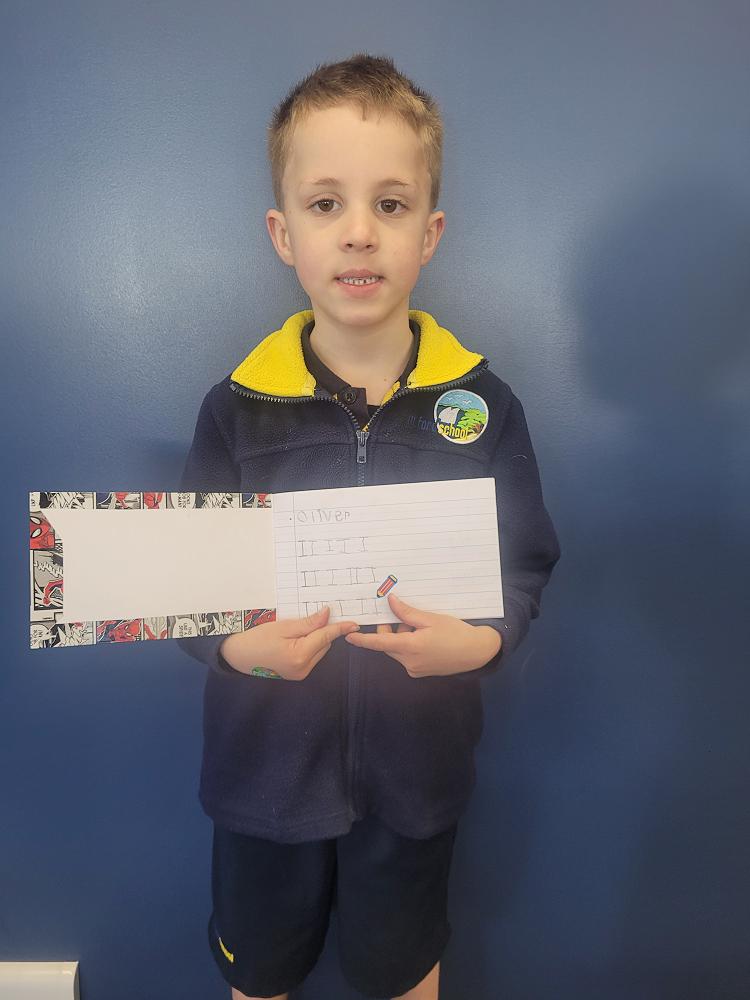
Congratulations Oliver!
Oliver came to share his learning and his work with me and I am thrilled to share with you.
Oliver has been working hard in his classroom, improving his handwriting. We are so proud of you Oliver!
Handwriting is an essential life skill.
For example, children who can write smoothly and clearly are better able to use writing to record thoughts and ideas. When handwriting is automatic, ideas can flow. Children also need to write for many school lessons and tasks.
Handwriting skills help children develop reading and spelling skills. Handwriting also helps with the ability to recall and remember information.
We need handwriting skills to do many tasks later in life, like writing birthday cards, filling in forms and signing important documents.
Handwriting is a complex skill that develops over time. To learn to handwrite, children need to combine fine motor skills, language, memory, and concentration. They also need to practise and follow instructions.
Handwriting starts with scribbling and drawing then moves on to forming letters, words, and sentences.
You can encourage your child to develop an interest in handwriting by giving them opportunities to draw, scribble, and write. This prepares your child for the formal handwriting they’ll learn at school.
Left-handed writing in children
Most children choose to write and draw with their right hand. But some children choose their left hand. This is OK. When children choose their left hand to write with, there’s no need for them to swap hands.
Children who write with their left hand might find it hard to see their writing because their left hand covers their writing as it moves across the page. If you tilt your child’s page so that the left-hand corner is highest, your child can more easily see what they’re writing or drawing.