
FOOD ALLERGIES - what are they and what happens?
Protecting children in our school is everyone's responsibility.
A food allergy is when a person has an allergic reaction every time they ingest (eat or drink) even a tiny amount of the food they are allergic to (the allergen, sometimes called ‘the trigger’). Sometimes contact on the skin can cause a reaction, but this is usually mild. Reactions usually happen quickly – often within minutes and up to two hours.
Symptoms of a food allergic reaction can range from mild to severe, including anaphylaxis. See below for a list of signs and symptoms.
A food allergy is caused by a person’s immune system over-reacting to a food that it has identified as a threat to that person.
The immune system is making a mistake. The foods concerned (see list below) are harmless to most people and are also common in the diet of most Kiwis.
The main foods which cause food allergy in New Zealand are:
Dairy (Cow's milk)
Egg
Fish
Peanuts
Sesame
Shellfish (crustacea and molluscs)
Soy
Tree Nuts (almond, Brazil nut, cashew, hazelnut, macadamia, pecan, pine nut, pistachio, walnut)
Wheat
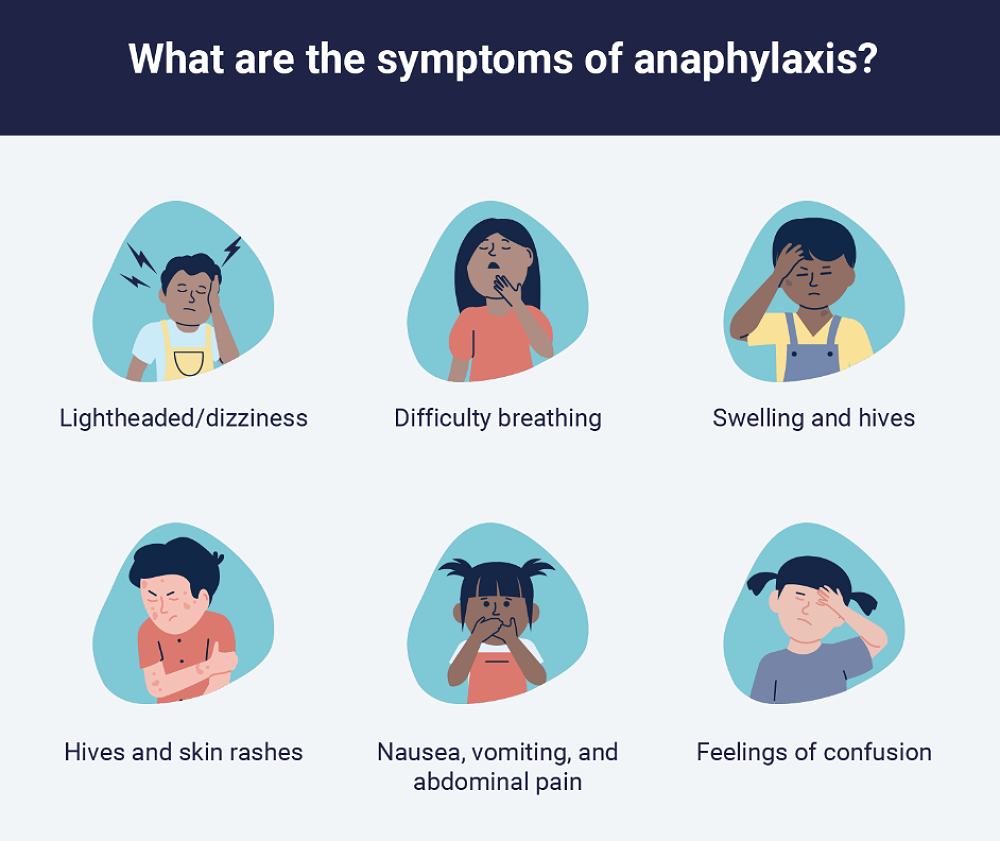
What are anaphylaxis symptoms?
Symptoms can be different each time a person experiences an anaphylactic reaction. They may vary in severity each time. Once symptoms start, they usually progress quickly.
Symptoms usually involve two or more organ systems of the body. These can include:
Skin: itching, redness, swelling, hives
Mouth: swelling of lips, itchy throat, tongue
Digestive: nausea, vomiting
Respiratory: shortness of breath, wheezing, coughing, chest pain and/or tightness
Heart: drop in blood pressure, weak pulse, dizziness, faintness
While skin symptoms such as an itchy rash or hives are common, they do not always occur. Ten to 20 percent of the time, symptoms will occur with no skin symptoms.
PLEASE DO NOT PACK NUTS IN YOUR CHILD'S LUNCH BOX FOR SCHOOL.