
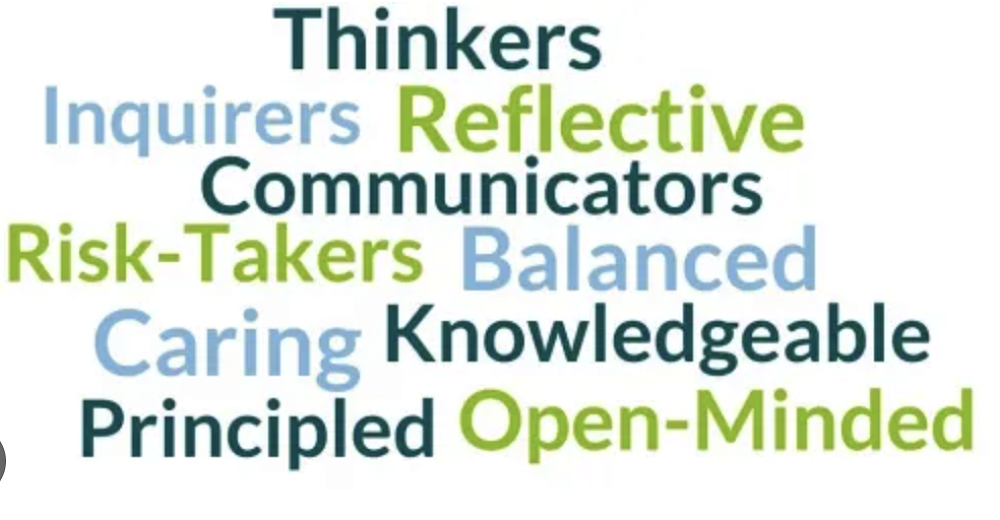
The Attributes of the Learner Profile
The ten attributes our ākonga at Milford School are learning to develop are lifelong, multi-context dispositions! How can you use these at home?
The International Baccalaureate (IB) Primary Years Programme (PYP) is designed to develop students who are internationally minded and prepared for lifelong learning. At the heart of this philosophy is the Learner Profile—a set of ten attributes that help shape students into responsible, thoughtful, and engaged members of their communities. As parents, understanding these attributes can help you support your child’s development at home and reinforce their learning at school.
You may have noticed the ten attributes displayed on the walls of our hall in bright colours. Next time you're in the hall, have a look and reflect on when you last showed each of the attributes!
The Ten PYP Learner Profile Attributes
Inquirers
PYP students are naturally curious and love to explore new ideas. They develop skills to conduct research and ask meaningful questions. At home: Encourage curiosity by allowing your child to explore their interests and ask them questions about these.Knowledgeable
Students develop a broad and deep understanding of various subjects and global issues. At home: Engage in discussions about current events, read books together, and explore different cultures and perspectives. Try to see world events or happenings through a 'lens of hope' to ease the doom and gloom!Thinkers
Students apply critical and creative thinking skills to solve problems and make decisions. At home: Encourage problem-solving by asking open-ended questions and involving your child in decision-making. Offer opportunities for children to be creative.Communicators
Students express themselves confidently in multiple ways and listen to others carefully. At home: Encourage discussions, storytelling, and active listening during family conversations.Principled
Students act with integrity, fairness, and honesty (even when no one is looking!), taking responsibility for their actions. At home: Model ethical behavior and discuss the importance of making good choices.Open-minded
Students appreciate different cultures, perspectives, and traditions. At home: Expose your child to diverse experiences through books, travel, and conversations with people from different backgrounds.Caring
Students show empathy, compassion, and respect for others. At home: Foster kindness by encouraging acts of generosity and discussing the importance of helping others. Explain, feel, and identify the big emotions children can have.Risk-takers
Students approach unfamiliar situations with courage and confidence. At home: Support your child in trying new activities and reassure them that making mistakes is part of learning.Balanced
Students recognise the importance of intellectual, physical, and emotional well-being. At home: Encourage a healthy lifestyle by promoting balance between schoolwork, play, and relaxation.Reflective
Students think about their learning experiences and how they can improve. At home: Encourage self-reflection by asking your child what they learned and how they felt about their experiences.
How Parents Can Support the Learner Profile at Home
Model the Attributes – Children learn by example. Demonstrate these qualities in your daily life. Tell your children how you used an attribute, for example, in your day at work.
Recognise and Celebrate Growth – Acknowledge when your child displays one of these attributes. Use the attribute's name and be explicit about what they did to show it.
Encourage Conversations – Talk about how these attributes apply in real-life situations, for both children and grown-ups.
Provide Opportunities for Practice – Engage your child in activities that develop these traits, such as volunteering, problem-solving games, and reading diverse books.
By fostering these attributes, you are helping your child become a well-rounded, compassionate, and engaged global citizen. The PYP Learner Profile is not just about academics—it’s about developing lifelong learners who contribute positively to the world around them.