
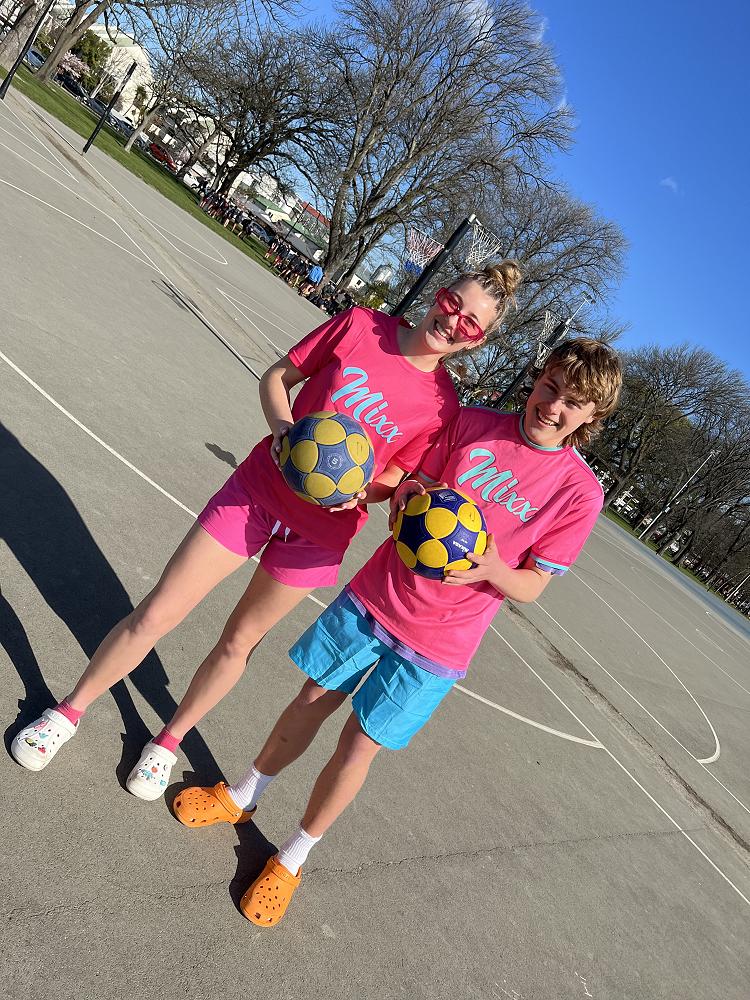
Gender equity in sport
Why sport still has a way to go before making real change
In recent years many sports, particularly those that are most heavily commercialised, played professionally, and with a strong entertainment component, have embraced gender equity.
In New Zealand this has been apparent with the women’s versions of the cricket, rugby and football world cups hosted or co-hosted here in recent years. Other high profile sports have also invested in developing or emphasising their appeal to girls and women as participants and spectators. Working on gender equality for several years, the International Olympic Committee regularly states its commitment to equal participation by male and female sportspeople, and at the 2024 Paris Olympics, reckoned to achieve gender parity.
This is good news for anyone with progressive beliefs, and should embellish each of the sports concerned. My question though is how much difference will this make for society? Girls will surely gain some new role models: Ruby Tui, Eliza McCartney, Zoe Hobbs, Lisa Carrington. Probably young boys will also look to the talent and strength of these sportswomen and draw inspiration from their performances and stories.
At grassroots though, will more girls participate in sport to emulate their idols, or will the girls who already gravitate towards sport simply have a broader choice of which sports to play than their mothers and grandmothers? Meanwhile, at the elite level, will there just be a few more professional female athletes? If so that's great, though not a massive game changer in the wider scheme of things.
Korfball offers another dimension. Girls and boys play korfball together. Sometimes that is tough. Sometimes, particularly among beginners, the boys don’t pay much attention to the girls. Sometimes they don’t pass to the girls and want to do their own macho stuff together, essentially leaving the girls as spectators, albeit watching the young princes doing their thing on court rather than from the sideline.
It doesn’t take long for boys who want to play korfball this way to work out that their approach is limited. Sooner or later they will come up against a team that properly integrates and uses every player, exploiting their strengths and covering their weaknesses. Such a team will usually prevail over a team where the boys endeavour to dominate.
Which at one important level is the point of korfball, and the factor that sets it apart from women’s archery, basketball, cricket, darts, elephant polo, football, golf, hockey, or whatever else you can name. Women versus women, men versus men, individually or in teams. No need to work with anyone of another gender, no need to pass to the girls, no need to take account of different playing styles and ways of thinking to work out a winning strategy. In korfball the opposite is essential: working together will pay great dividends.
Considering current trends and compared to all other sports, korfball has a genuine unique selling point (USP) relating to gender parity. Other higher profile sports endeavour to emulate this. Whether any ever can or will is doubtful. While they are genuinely motivated to do their best, unless or until they can properly formulate mixed team versions, and make those the prevailing mode of their sports, which would be a massive shift, they are only picking at the edges of something that has been inherent in korfball since it was first formulated in 1903.
Former Dutch national coach Wim Scholtmeijer made the point when talking to the New York Times, which quoted him as follows:
“I believe male athletes function better when they have dominant women around them. When you have a dominant male culture, it’s not sustainable. It is more ego driven. If it works, you can go really fast, but it’s like driving a car. If you go too fast, you drive off the curve. Males perform better when they have strong women around them. I don’t say that women should be the boss. But females have to be equally involved.”
All young korfballers learn that. If we had more boys, and girls, learning that lesson at a young age, how good would that be?