ACADEMIC AND LEARNING
A group of Year 13 students has been undertaking a world-first, university-level science course. Also, we showcase our Te Reo Māori learning area.
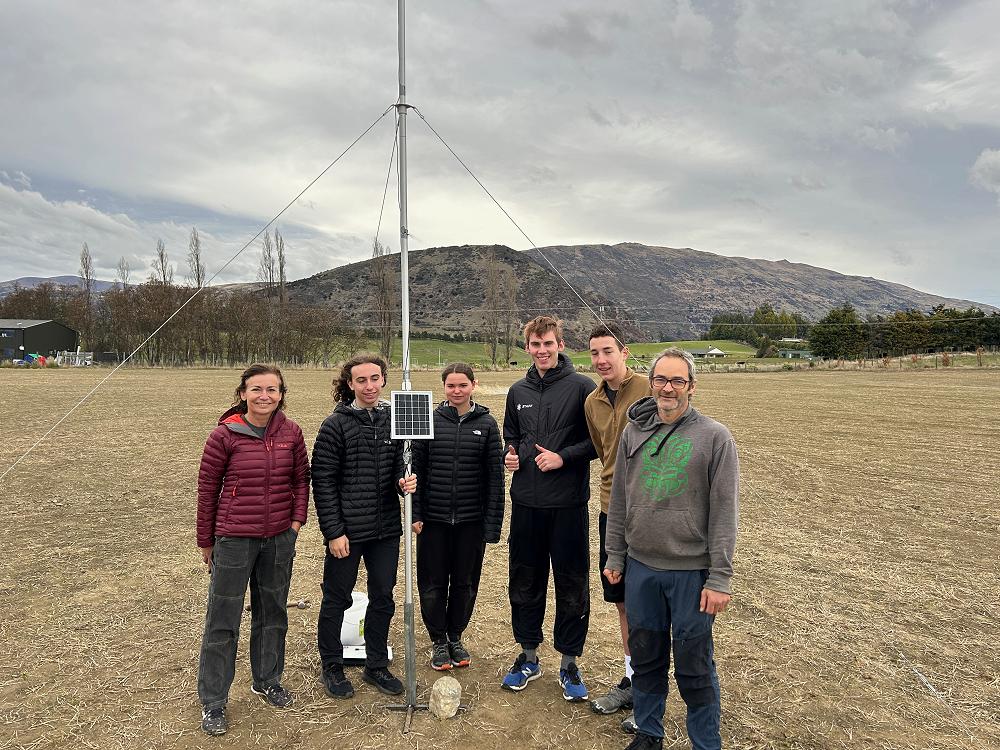
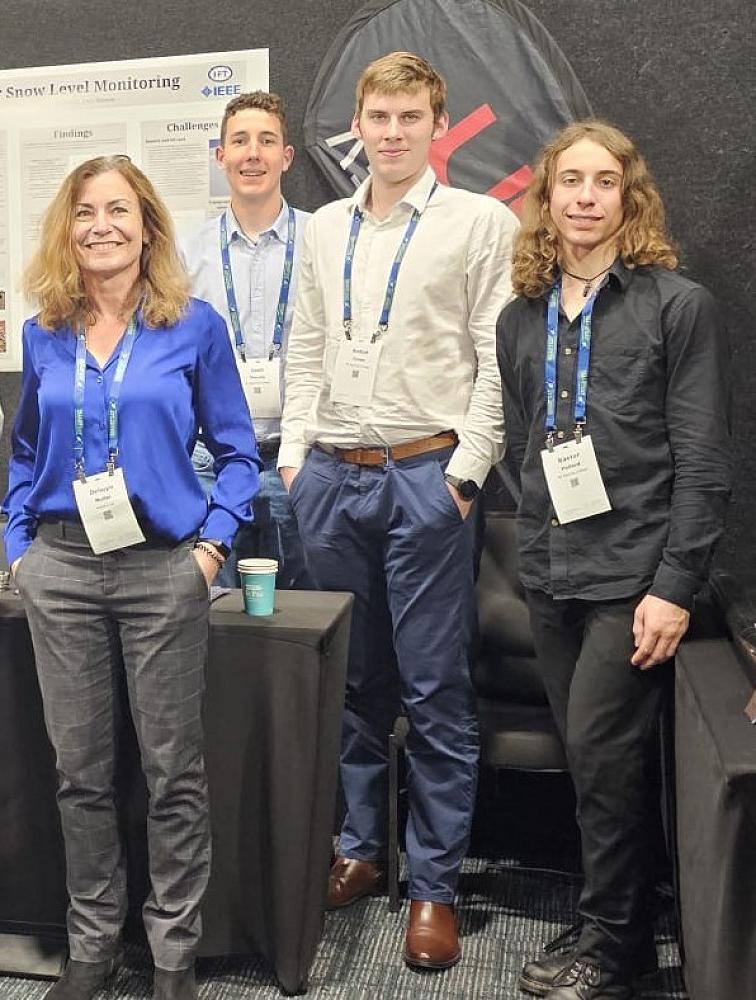
A group of Year 13 students has been undertaking a world-first, university-level science course combining physics, electronics and computer skills. Year 13 students Amy Benson, Anton Jones, Josh Moody, and Baxter Pollard are researching how GPS signals can be used to monitor properties of the Earth’s environment.
This is the first time the Geoscience and Remote Sensing Society (GRSS) - one of the 39 societies of the global Institute of Electrical and Electronics Engineers (IEEE) - has sponsored a course for high school students.
Chair of the New Zealand Chapter of the GRSS Dr Delwyn Moller says the course meets the needs of students who have completed Year 13 physics in Year 12 and are interested in taking university-level coursework during their final year at school.
“We worked with MAC teachers Euan Simpson (physics) and Craig Jefferies (technology) to craft a proposal to the IEEE GRSS to sponsor this new course,” says Dr Moller.
“The GRSS was immediately supportive of the concept and is watching the outcomes of the course with interest.
“The course involves creating ground validation sites for the world’s scientists so they can use it to monitor GPS-reflected signals to better understand our environment. We hope it will serve as a prototype for students worldwide.”
Student Baxter Pollard says the course has provided challenges that were bigger than any other problems he has worked on throughout his education.
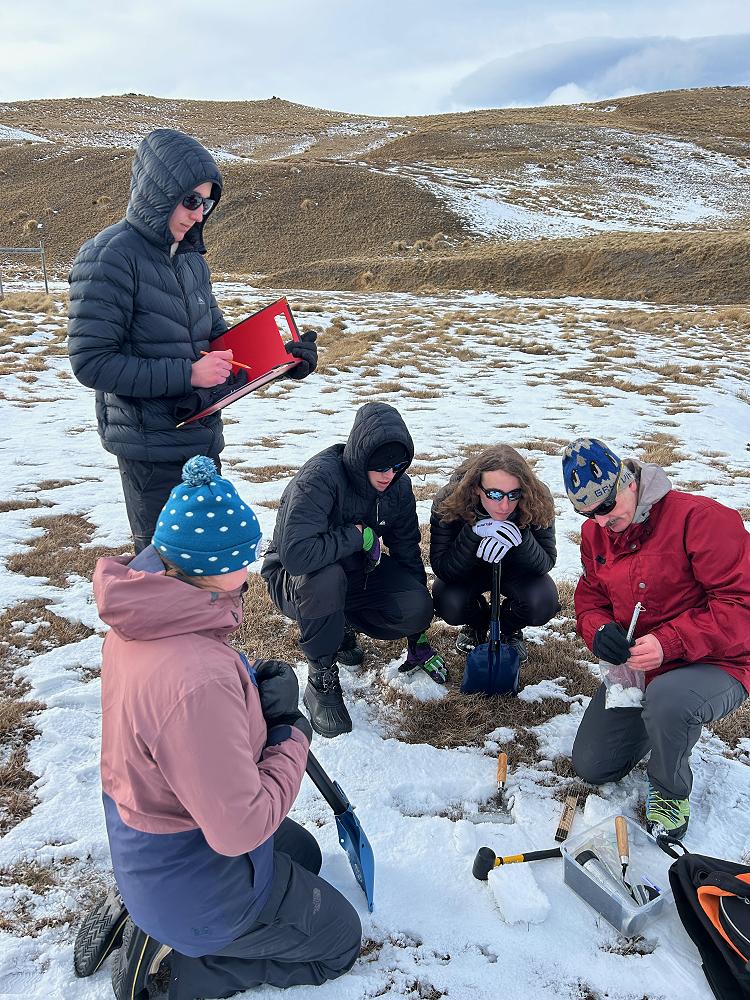
“This project involves physics, coding, electronics, mechanical design, and implementation, and has shown us how reflected GPS signals can be used to measure lake height, soil moisture, and snow height.
“Through this course, I have learned very good debugging skills because not everything has worked as designed, and this has been a great lesson to me.”
Fellow student Josh Moody says it has been exciting to undertake a project with real-world relevance and to approach a new and unfamiliar topic through the perspective of an engineer.
“I have really enjoyed the hands-on, practical aspect of the project. We’ve been able to ‘let loose’ and figure out the best way to solve the problem by trial and error rather than simply being told what to do.”
The project has drawn support from Snow Farm NZ which agreed to host a GPS station.
“We are excited to be a part of this ground-breaking project. The students have built a low-cost GPS receiver and deployed it at the top of the Pisa range,” says Snow Farm General Manager Sam Lee.
“Our business relies on annual snowfall to run, and a solution such as this could be a vital part of understanding the impact of the climate on the future of Snow Farm.”
Also involved in the project is ReSTORe Lab, a Wānaka-based company that focuses on the development of new, advanced remote sensing methods for monitoring the Earth. Company CEO Dr Delwyn Moller and Chief Technology Officer Dr Brian Pollard are mentoring the MAC students and delivering course content.
ReSTORe Lab also leads the Rongowai project, a collaboration with NASA and Air New Zealand to use GPS receivers to monitor environmental properties from an Air New Zealand aircraft – the same technology being used by the students – with both projects aiming to advance earth observations.
The four MAC students attended the New Zealand Aerospace Summit in Christchurch last month to present their findings as part of the University of Canterbury exhibit at the event.
Following completion of this year’s pilot, MAC will continue to offer the course, with the aim of expanding the project to include multiple GPS sites at Snow Farm and elsewhere in the region.
Mount Aspiring College is grateful to the visiting lecturers who have volunteered their time during the course: Associate Professor Robert Odolinski from the School of Surveying at the University of Otago, the Director of Gateway Antarctica at the University of Canterbury Professor Wolfgang Rack, and Associate Professor Nicholas Rattenbury, Department of Physics at the University of Auckland.
Curriculum spotlight on Te Reo Māori
'Ko te reo te taikura o te whakaao mārama' Language is the key to understanding. Nā Tīmoti Karetu.
This is our learning area whakatauakī and through Te Reo Māori and Māori Performing Arts, we give all students an opportunity to learn about Māori language and culture that will strengthen their connection to the bicultural fabric of Aotearoa. In Te Reo, we hope to develop students' fluency, accuracy and cultural competency through language activities, games, waiata, pūrakau and kiriata (film) to name a few. Anei he tauira o ngā mahi | here is an example of our work.
Taonga Puoro Wānanga
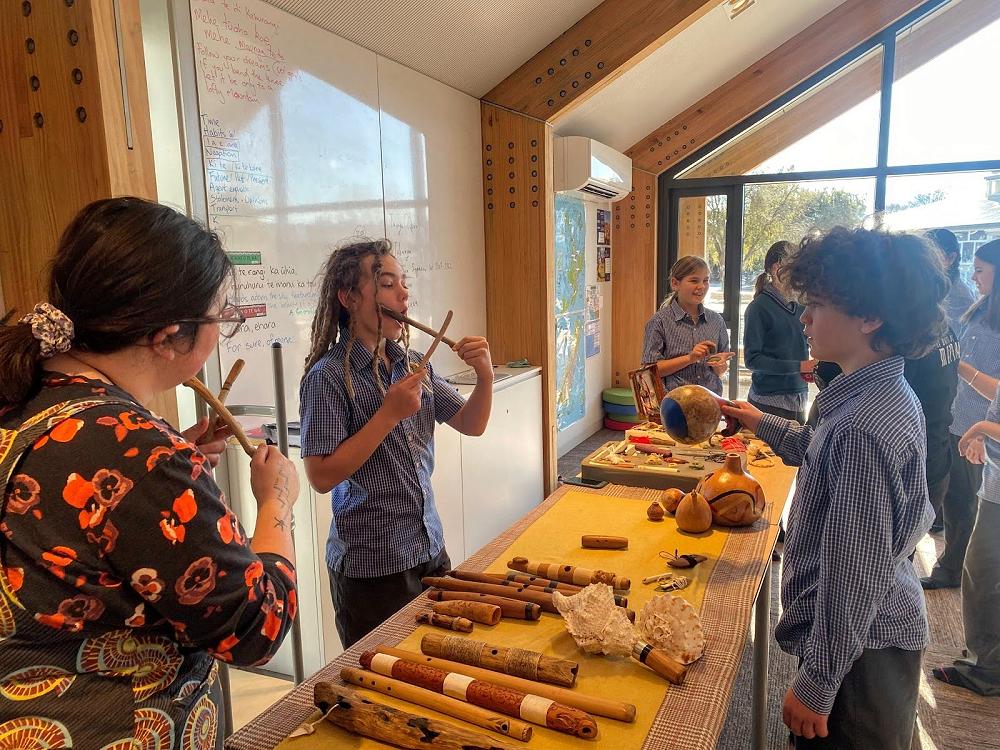
Earlier in the year, students across both the junior and senior school were able to attend a wānanga (learning workshop) with Dr Ruby Solly (Kāi Tahu, Waitaha, Kāti Māmoe) focused on taonga puoro which are traditional Māori instruments. Last week, students in Level 1 reflected on this experience for their new NCEA internal assessment standard that focuses on the vitality of Te Reo. They were able to make connections between learning about taonga puoro and how that supports them in learning te reo Māori. They also had to prepare a mihi (acknowledgement) to present to Ruby which prepares our students to participate confidently in te ao Māori through understanding the protocols that come in wānanga-type settings.
Wider world
Our Level 2 and 3 students have been learning to form opinions about wider contexts and build on their ideas with evidence to support them. Level 2 students have just created a podcast discussing the pros and cons of shifting to a 4-day working week and Level 3 students are in the final editing of their essays about Parihaka and the Springbok Tour.
Teina
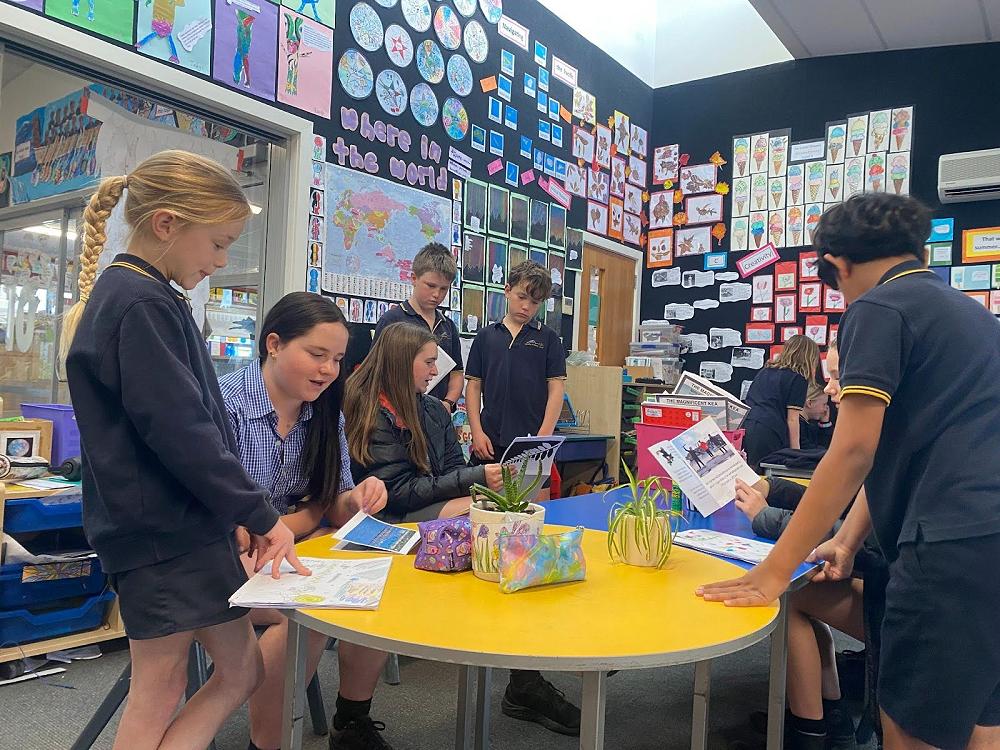
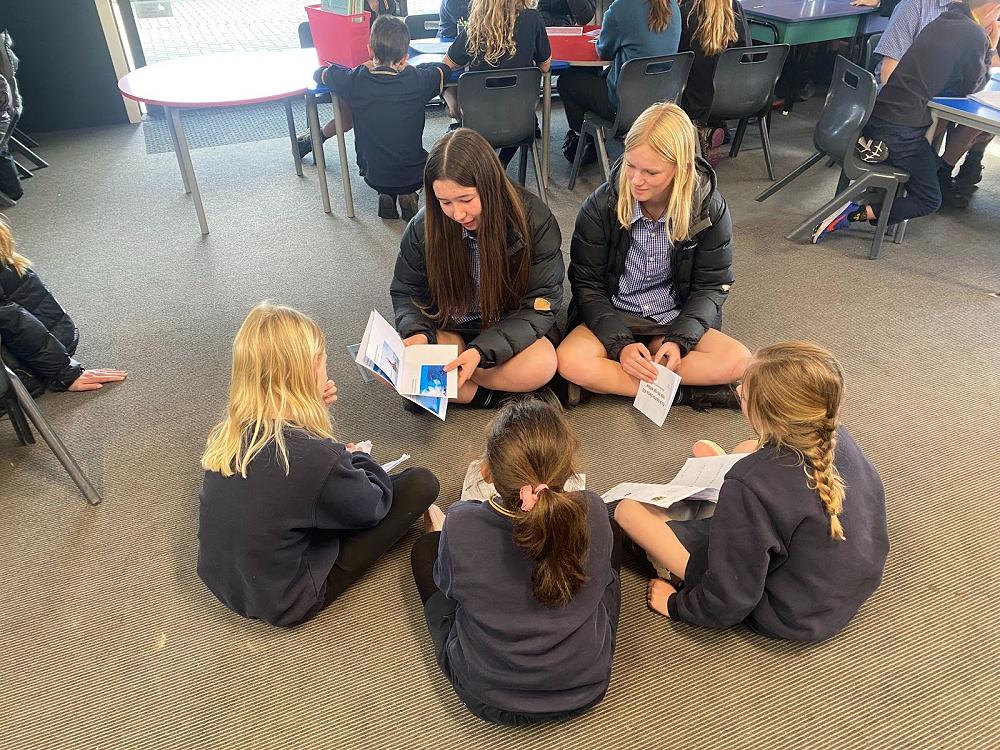
Our Year 9 options have just changed hands but I wanted to acknowledge our Term 3 classes for the fantastic experience of reading their pukapuka to the Years 3 and 4 students in pod 3 at Wānaka Primary. Our focus was on the Olympics and we were surprised to find that the Wānaka Primary School students have also been working on their reo, with pukapuka of their own to share.
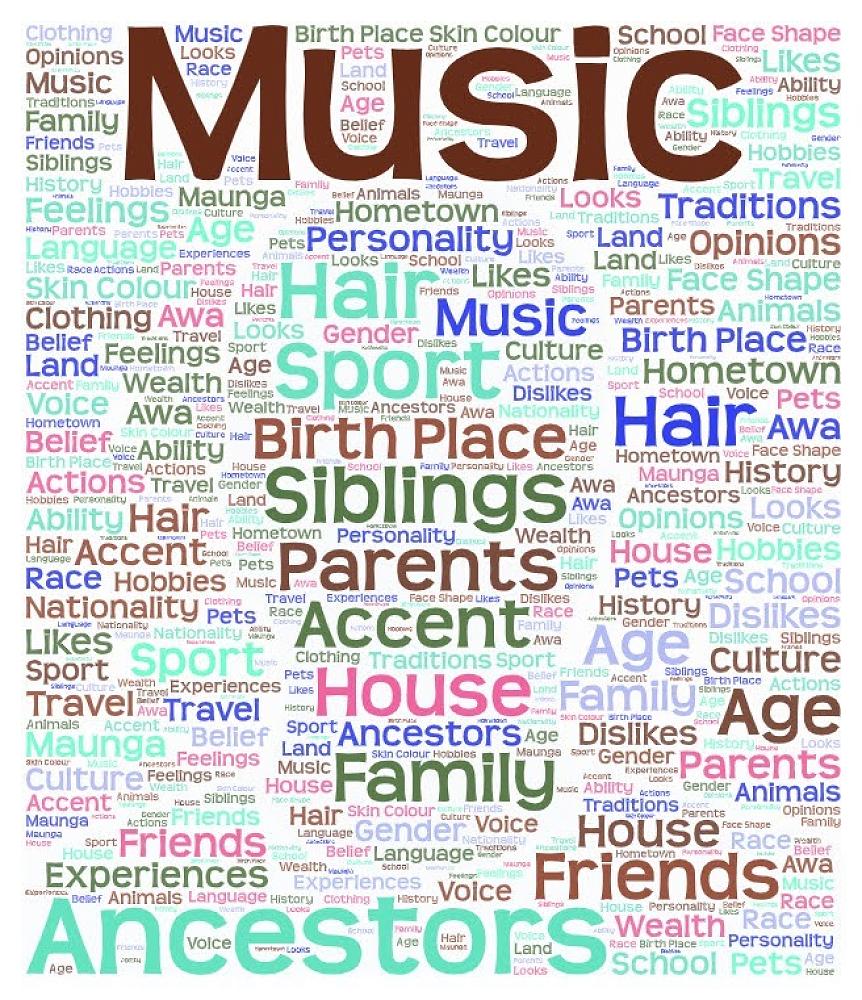
Our current classes have just finished watching the ‘Speak no Māori’ documentary. This gives a brief overview of why Te Reo Māori was in decline and some of the revitalisation strategies that are continuing today. We unpacked what ‘identity’ means to better understand what Māori experienced when they described a ‘loss of identity’. Here is a snapshot of what the students thought contributed towards their identity.