

Exploring issues and taking action.
The Year 8 Exhibition is the highlight of the learning year.
Date: Friday 6 September
Venue: Mt Pleasant Community Centre
Time: 5:30 - 7:30pm
_________________________________________________________________________
What is Exhibition?
Exhibition is a collaborative, transdisciplinary inquiry process that involves identifying, investigating and offering solutions to real life issues or problems. Exhibition is about taking action to make a difference and make our learning real.
Each group has written their own central idea based on the big issues they want to tackle, locally and internationally. These are:
- Plastic pollution and people's litter are having a destructive effect on our oceans and marine mammals. ~ Blake, Lola, Phoebe
- Humans help reduce the impact of pollution on the environment by making responsible choices. ~ Arav, Bailey, Hannah, Harry P
- Equal access to education creates a just society for all. ~ Anna, Grace G, Max
- Humans have the right to be respected, included and treated fairly. ~ Eva, Jade, Lillybel, Olivia
- Discrimination impacts how we live our lives. ~ Grace M, Nina, Osher, Torquil
- Buying your products from ethical businesses reduces child labour. ~ Liam, Tessa, Zoe
- Our wellbeing is affected by the amount of money we are paid due to our differences. ~ Harry T, James, Quincy
- Animals being abandoned and used for human benefit reflects on us. ~ Aaliyah, Courtney, Jack, Tyana
- Lack of resources reduces opportunity and increases poverty. ~ Luke, Maeve, Mohamad, Neve
- - -
What are we actually doing?
Students are currently in the FINDING OUT and SORTING OUT phases of the inquiry cycle. This means they:
Are communicating regularly with their mentor or tuakana.
Developing a deeper understanding of the concepts within their central idea (i.e. conflict, opportunity, migration, artificial intelligence, transportation) through watching assigned TED talks, videos, reading articles and news items, posting questions to Padlet, and discussing their ideas,
Finding personal connections to their central ideas,
Making phone calls and sending emails
Writing interview questions
Arranging and going on trips into the community to find out more.
ACTION that is happening this week:
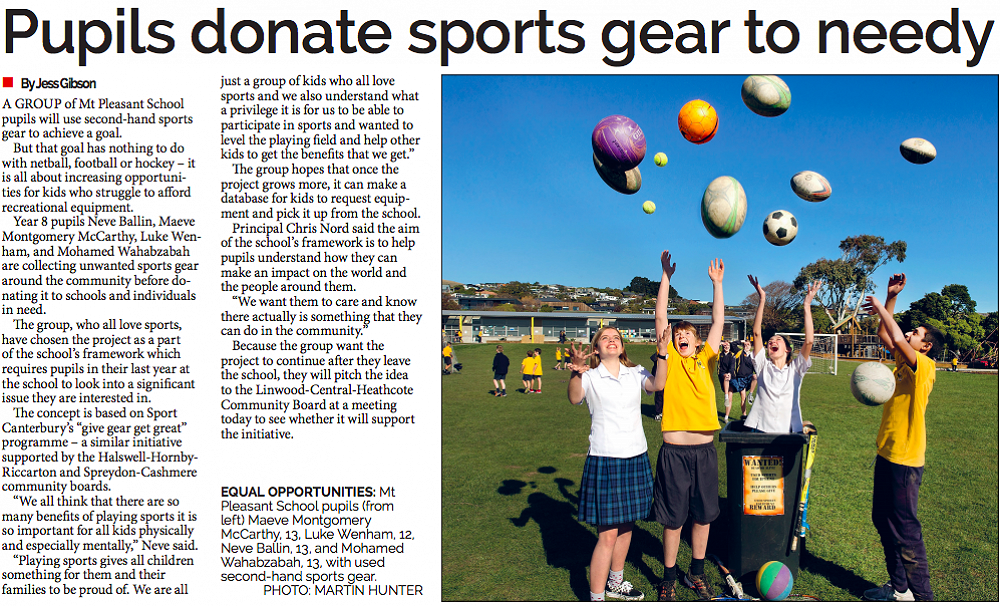
"Give Gear, Get Great" - Luke, Mohamad, Maeve and Neve attended a Linwood Central - Heathcote Community Board meeting to present their action around collecting sports equipment that is surplus to redistribute to children who don't currently have access to it. The Community Board has agreed to support this initiative. They also appeared in the Bay Harbour News!
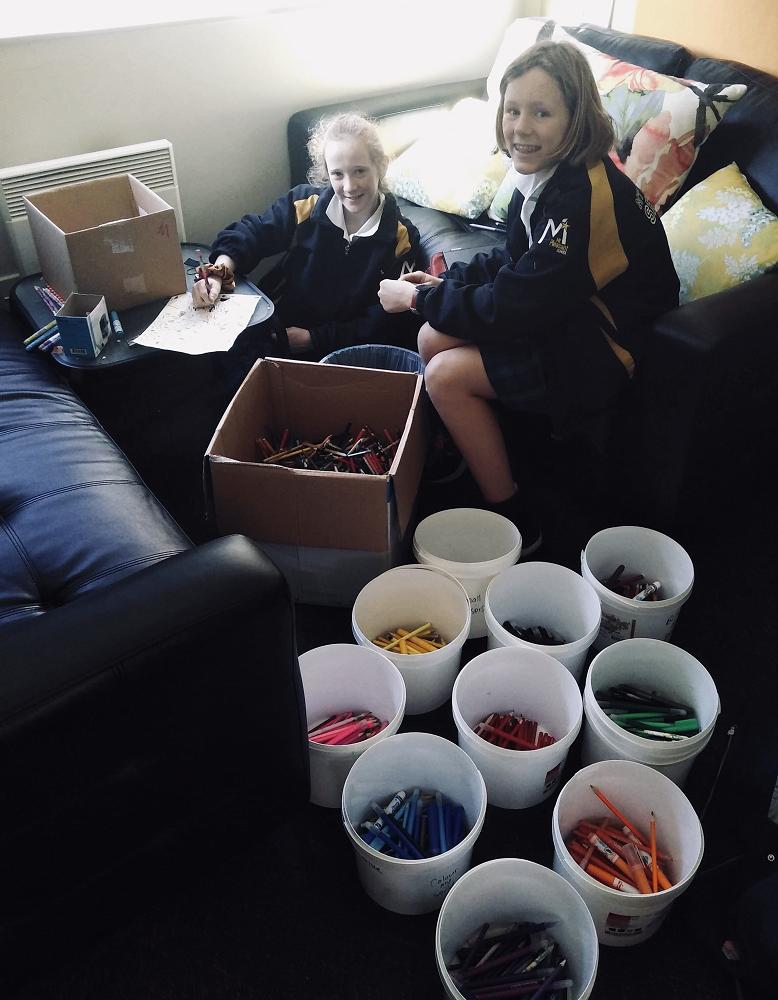
Colour My World - Anna and Grace met with local charity Colour My World who collect, sort and redistribute colouring pencils and pens for the YWCA. There is a collection bin in the office for any new or lightly used school stationery and new small plush toys.
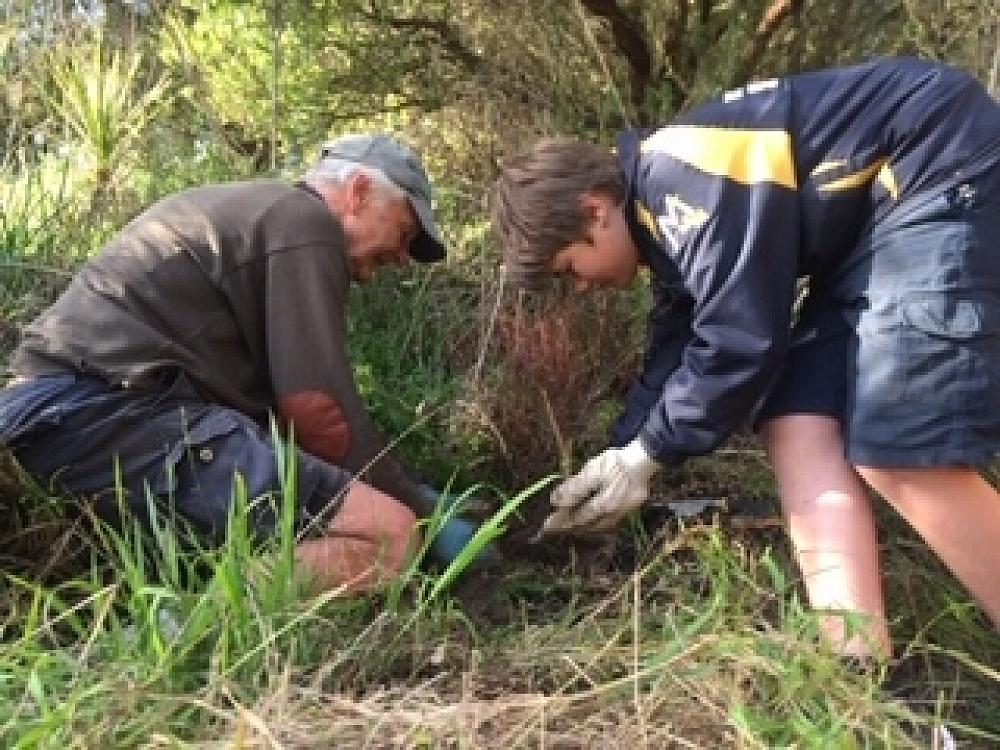
Drayton Reserve Planting - Working alongside the legendary Dave Bryce from EcoSolutions, Hannah, Bailey, Harry and Arav planted a tray of native seedlings in Drayton Reserve to help alleviate the impact of carbon dioxide.
- - -
Self Directed Learners
One of the challenges of inquiry learning is that the outcome is not yet known. This means that we, as tuakana/mentors and kaiako/teachers, don’t have all the answers or a formula for certain success. We use the IB Transdisciplinary Skills to help students identify the skills that are required for independence. These might include:
Group decision making: Listening to others; discussing ideas; asking questions; working towards and obtaining consensus.
Accepting responsibility: Taking on and completing tasks in an appropriate manner; being willing to assume a share of the responsibility.
Collecting data: Gathering information from a variety of first- and second-hand sources such as maps, surveys, direct observation, books, films, people, museums and ICT.
Interpreting data: Drawing conclusions from relationships and patterns that emerge from organized data.
Writing: Recording information and observations; taking notes and paraphrasing; writing summaries; writing reports; keeping a journal or record.
Organisation: Planning and carrying out activities effectively.
Time management: Using time effectively and appropriately.
This kind of learning is disruptive. Part of the responsibility for engagement and commitment comes from the students. It is their responsibility to check their emails daily, to complete assigned tasks on Google Classroom, to do the reading or watching assigned by their tuakana/mentor.
E kora te tangata e pakari i runga i te wai marino.
A person who remains in calm waters will never get strong.
This kind of learning is not easy. But it’s worth it.
What home support is needed?
Ask curly questions about their central ideas. Watch a TED talk alongside your child. Encourage students to make connections between their family histories and their inquiry. Use the PYP language.
There will be tasks that students need to complete. Students will need to check their school emails and Google Classroom periodically to make sure they complete anything that needs to be done. They will probably need your help remembering! If your whānau is going to be away with no opportunity for this, please let their classroom teacher know.