Building understanding across, between and beyond subjects
At Te Kura o Paeraki | Mt Pleasant School we are committed to developing learning and teaching in a transdisciplinary nature.
All our Units of Inquiry are specifically designed and planned to promote meaning and understanding, and challenges, to our kura as they engage with significant ideas. We are also committed to meeting our obligations to cover specific content within the Aotearoa | New Zealand curriculum.
How do we do this?
By using Key Concepts as questions when we plan, inquiries become directed, purposeful and manageable. We are able to add depth and rigour in student thinking so they are not just learning facts or acquiring skills. They begin to think critically about big ideas.
What do we mean - Concepts?
A concept is a “big idea”—a principle or notion that is enduring and is not constrained by a particular origin, subject matter or place in time (Erickson 2008).
Concepts are concise; usually represented by one or two words.
Concepts are accessible; They place no limits on breadth of knowledge or depth of understanding.
Concepts are powerful; they are a lens that students and teachers use to challenge thinking as well as adding coherence to the curriculum.
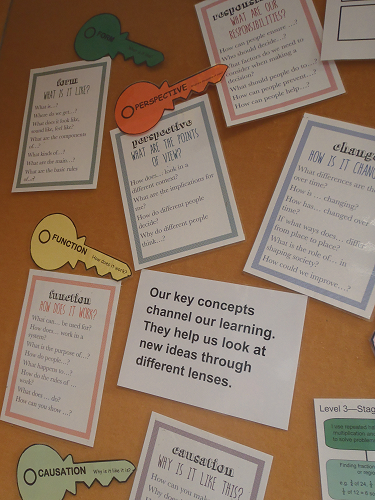
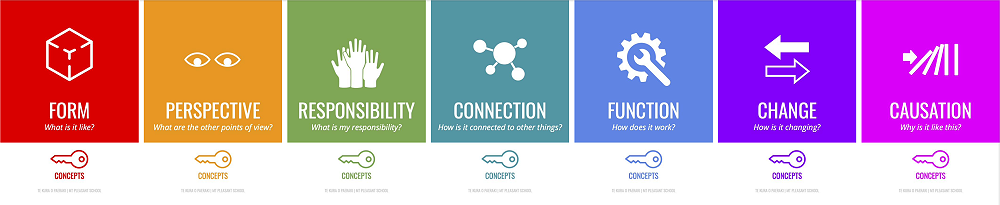
The PYP identifies seven key concepts that facilitate planning for a conceptual approach to transdisciplinary and subject specific learning.
7 key concepts
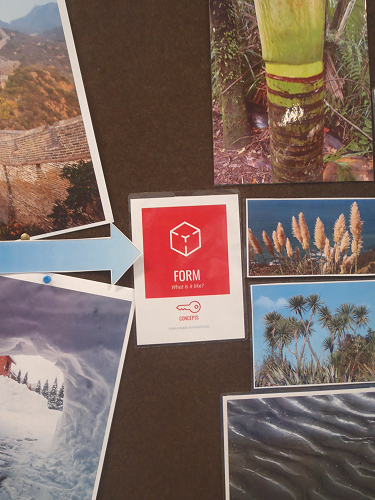
FORM: What is it like?
PERSPECTIVE: What are the points of view?
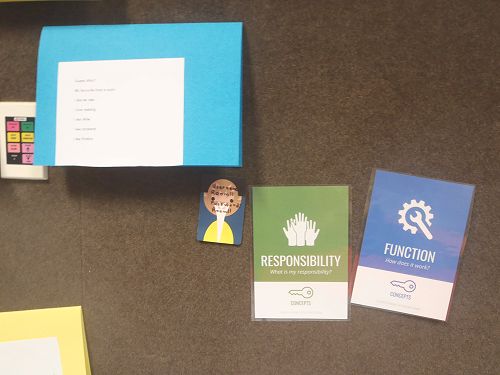
RESPONSIBILITY: What are our obligations?
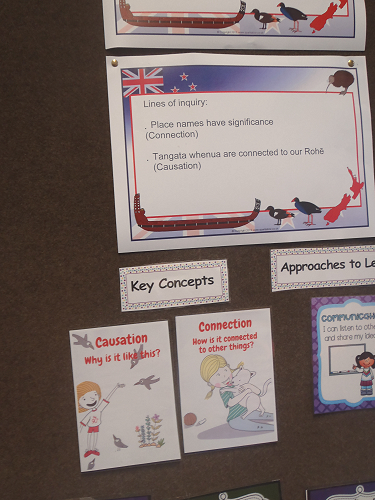
CONNECTION: How is it linked to other things?
FUNCTION: How does it work?
CHANGE: How is it transforming?
CAUSATION: Why is it as it is?
An example:
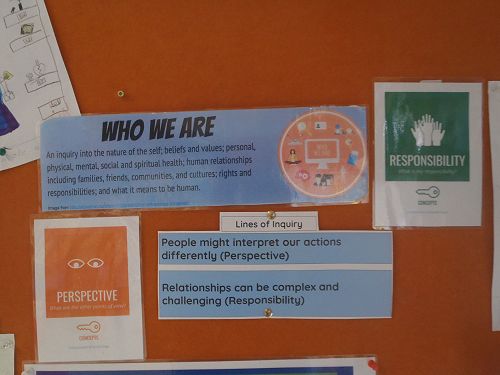
Whilst planning our new Unit of Inquiry in Team Rock Solid under the transdisciplinary theme of Sharing the Planet, we have identified 3 key concepts that will challenge students' thinking and drive the inquiry; Change, Responsibility, and Form. Whilst the lines of inquiry within the unit are conceptually built, these key concepts can also be used as a way of bridging to and/or used within other core curriculum subjects during this time.
For instance in Maths - Number teaching - Form - What is it like? or Change - How is it changing?
Using the conceptual lens of Form, students might look at a myriad of ways to unpack numbers, therefore looking across the 4 disciplines of adding, subtracting, multiplying or dividing.
Using the conceptual lens of Change, the focus may be on number patterns or perhaps gathering, examining and analysing data specifically related to elements of the inquiry.
Where might I see the key concepts in use?
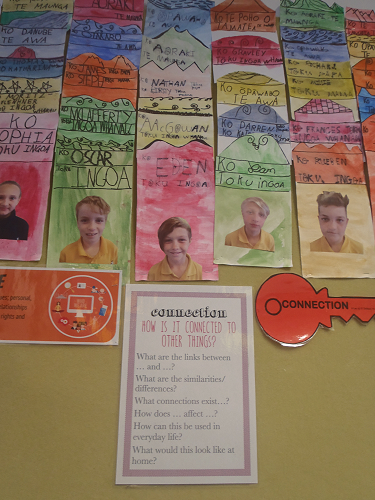
You will regularly see any number of the key concepts above when you look at displays in your child's classroom, view their posts on Hero, or read the End of Year comments on your child's report.
Take the challenge yourself.
Next time you are doing something, consider the key concepts above. Ask yourself the conceptual questions. You may be surprised at your level and depth of thinking that is provoked.
Gallery