
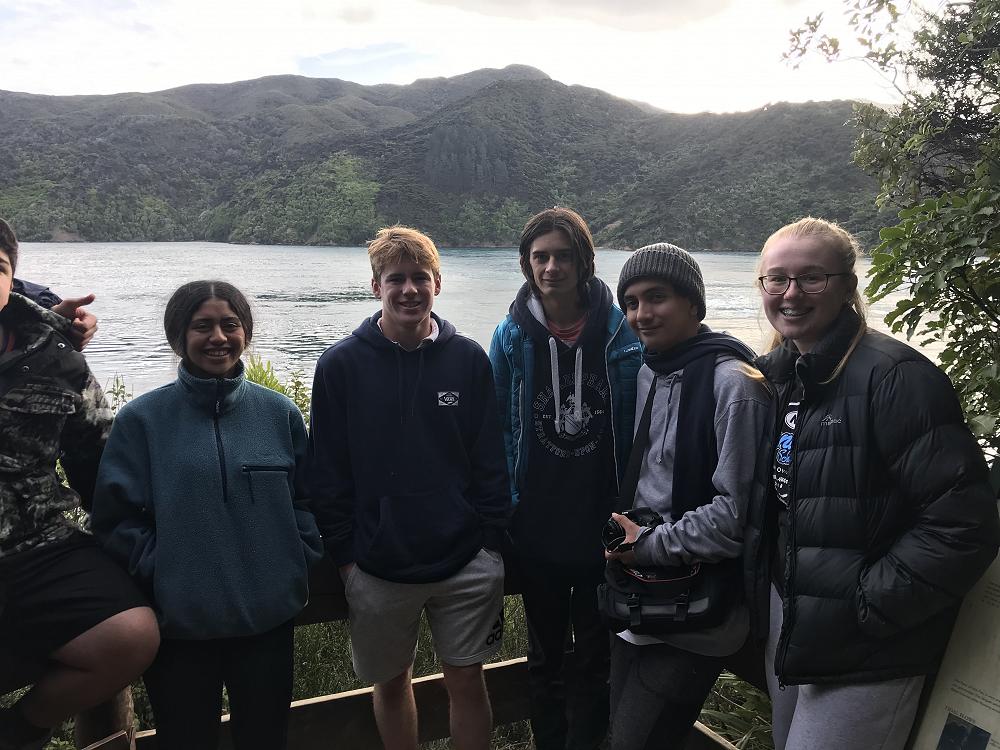
Student leaders connect with the area and each other
Eight of our Hui Taurima leaders and two teachers travelled to Te Aumiti/French Pass last week to learn and share histories and stories of significant sites of the area.
Mā mua ka kite a muri, mā muri ka ora a mua - Those who lead give sight to those who follow, those who follow give life to those who lead.
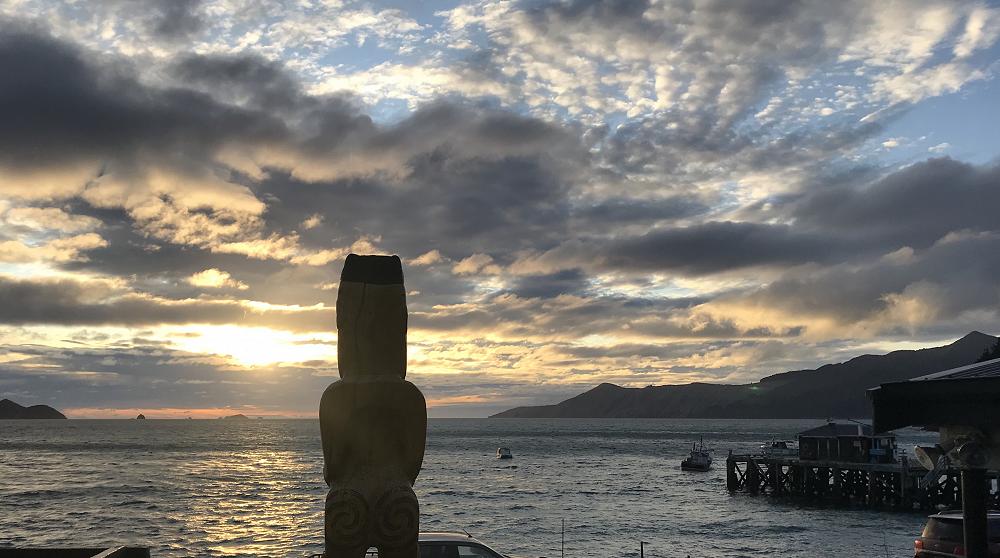
The camp involved staying two nights at Te Haeata, the former French Pass School that is now the Ngāti Koata Cultural Centre in Anaru, French Pass. Te Haeata means ‘the dawn’, which speaks of both the view from the site and the vision of the iwi following the Treaty Settlement in 2012.
The purpose of the camp was for the students to learn the history and stories of significant sites in and around Te Aumiti/French Pass and Rangitoto ki te Tonga/Durville Island. The students planned aspects of the camp such as the menu and an area of interest to present on while visiting the sites during the camp. They also worked in groups to cook meals for the group.
Most of the group were identified as leaders during the Year 9 Hui Taurima, a learning festival that has been run since 2017. The Hui Taurima involves a one-day marae visit in Term 1 and then an additional two days of place and culturally responsive learning activities. The Hui Taurima is an opportunity to learn and acknowledge “our place and our stories” and how they exist in Te Ao Māori. The student leaders then went on to assist with the planning and assisted and/or lead Hui Taurima activities the following year/s.
Four of the Hui Taurima leaders also lead a session on Rongoā Māori, and the history of Marsden Valley and Poormans Stream for teachers from all the local schools for a Teachers Only Day in February.
On our way to Te Aumiti, Sophie, one of our student leaders, arranged for a bat expert to meet us at Pelorus to learn about the native Long Tail Bat/Pekapeka. The group were taught interesting facts about the endangered long tail bat and how bat monitoring is undertaken. Sophie then shared a legend about the Pekapeka with the group.
Throughout the camp, each student led the learning at a significant site so they were able to learn from each other, and learn the history and stories of all the places we visited.
Here is what the students had to say about the camp:
What did you learn?
“I was engaged in the work, from going for walks, seeing the places…it made me engaged in the work….being taught at the place, in person…actually to see the place in person while we were being taught …seeing it and getting taught at the sites – mind blowing!" (Wiremu)
“Local history and legends. I learnt a lot about Te Aumiti and Rangitoto ki te Tonga. We did everything ourselves - organising the meals, the clean-up, a lot of responsibility.” (Jaxon)
“I learnt a lot about the area and the history. I enjoyed the trust we had for the teachers and the trust they have for us. The significance of the sites in the area. We had a really good time and grew as a team.” (Ilaria)
“Teach each other. Really cool to learn from our peers and teach each other. Listen to people from my age and learn about areas I have been to that I didn’t know about.” (James)
“I was able to refresh the stories from my aunties, cousins, kuia. I have learnt more about the area – I got told about the taniwha in a shape of a tsunami. My curiosity has been sated for the area. My inspiration for Art has increased … I want to come back her and listen to the waves.” (James)
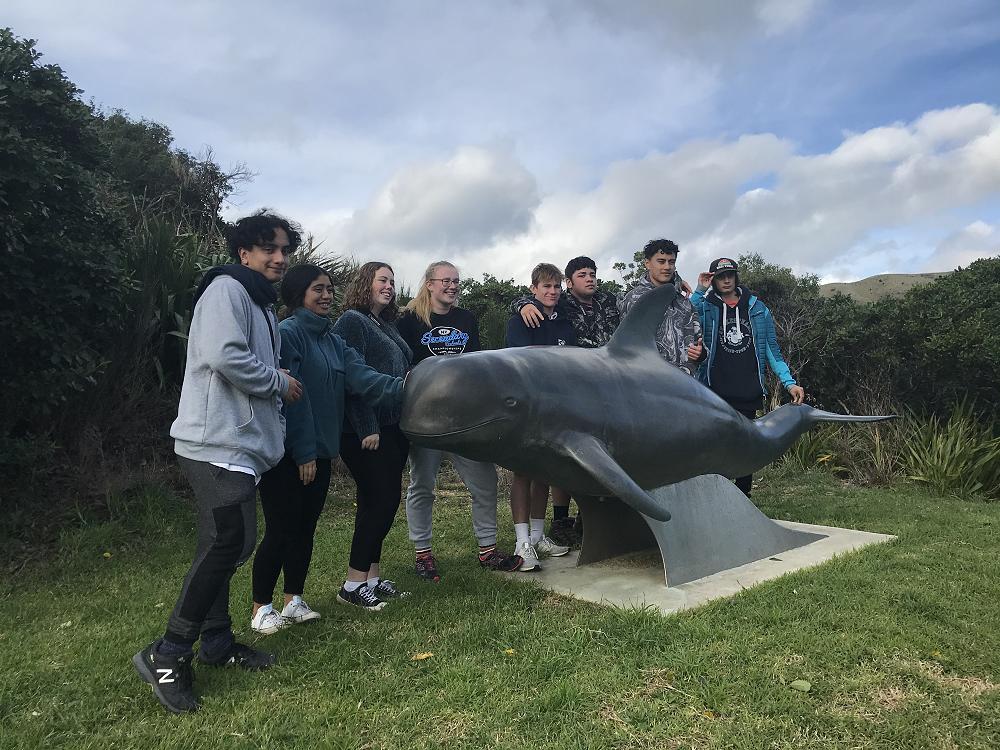
“What I have learnt the most is Pelorus Jack (also known as the taniwha Kaikaiawaro) and the associated legends and how the dolphin dug out the Te Hoiere/Pelorus River with its nose.” (Canon)
Highlights:
“…being together as whanau, playing games, going for walks. I would like to do this again.” (Canon)
“This was a mean trip, this is my first trip with (this group)…I really enjoyed being back here and learning more about the area. I enjoyed learning more about the Ngati Koata connection and the whakapapa of the place. I also liked how everyone brings something different to the team and I hope to do it again with all of you.” (Juahna)
Next Steps:
The students also gained credits towards their NCEA through their research and will be assisting with the Year 9 Whakatū Marae visit and Wero in December and also plan to lead a group of Broadgreen Intermediate students in their learning about our significant local places.