
NetNZ Online Learning Environments: Where to next?
When NetNZ was formed in 2014 we developed a clear vision for where we going to take things. By bringing OtagoNet, CantaNet, SILC, DunedinNet and WestNet together we not only created a more sustainable future for networked learning, but also had the chance to reflect and refresh how we approach teaching and learning.
The goal was to evolve practice to really focus on people, community and connection. That was a key element that video conferencing provided. The question was how to take that much bigger step further.
From an environments viewpoint, OtagoNet and CantaNet came from somewhat different places. All CantaNet courses, as well as a lot of other school activity was hosted on Educo. A shared LMS using Moodle. OtagoNet courses largely used the Google suite of tools, particularly sites and docs.
When we brought things together, Ken, myself and Trevor all agreed that we wanted to shift away from Learning Management Systems. They were institution focused, rather than learner focused. Teacher controlled rather than learner focused. We wanted a far more connected learning experience where students felt a sense of belonging. Where learning wasn’t simply accessed and consumed as you would a website or youtube video.
At the time NetNZ was formed Google launched its new social media platform - Google+. It was ideal, because Google+ was largely built around Communities. These spaces were perfect for us and this was where we hosted courses. Eye catching, easy to use, they allowed a strong teacher presence as well as a strong community. Students could post just like the teacher. Categories enabled the organising of posts which ensured some sort of structure. This environment would still work for us now, but Google decided that their social media platform wasn’t competing with facebook so they eventually ditched it (before reducing it to Google Currents for a couple of years).
This left us in limbo for a couple of years. In this time teachers used a range of tools, with some defaulting to what they knew - Google Classroom.
Google is now in its second year of developing Google Spaces. The part of their suite that is clearly designed to take on Teams and Slack, both very popular in the business space. These platforms are collaborative, connected and communication focused. They allow for some management of files and tasks, but only as a part of a wider collaboration. Based on chat streams, organised by channels, with the right focus they encourage high levels of connection. The basic premise is very similar to Google+ Communities. It just does it differently. If very active, a stream can quickly disappear. Which is why multiple spaces exist and other functionality such as pinning posts and threads. Really, a Google Space is a channel. If a course just used one Space all year, the stream would potentially quickly disappear.
Mattermost is very similar, but is a self contained environment, free from google. Each “team” allows for as many channels as you want. There is also a range of other functionality which includes the ability to create static content. Not that you necessarily want to lock content into an environment. Better in google docs.
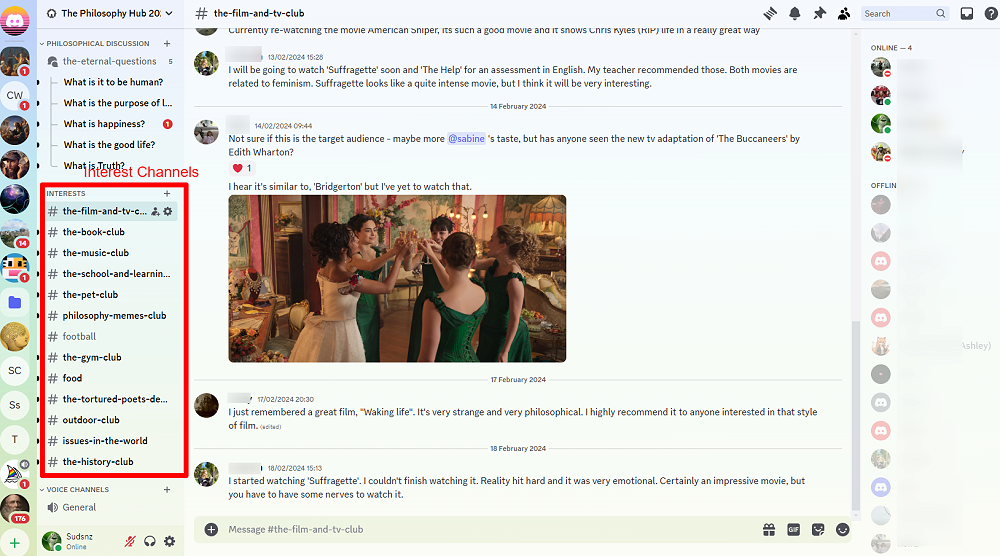
For 2024 and beyond Google Spaces and Mattermost (and Knowledge Forum for KB) forms NetNZ’s online learning environment. However, we are still really in a exploratory phase. There are other environments which operate in a very similar way which teachers are open to exploring. A few of us are using Discord. Others I know of include Matrix, Element, Revolt. There are more. All similar in design.
The key here is we really need teachers to embrace these sorts of environments and explore what is possible. We need to do this with teachers, so lots of support will be provided. Plenty of opportunity to share and critique. And in the end it is really about the approach rather than the environment. It is just that, like physical spaces, online spaces encourage certain behaviours.