
New Zealand Sign Language Week
One of our official languages since 2006
Sign language is an important language to learn. With over 70 million deaf people communicating with this language, learning the basics would not be a strange task. This piece is a report on Room 5’s lesson on sign language. The language, despite being a visual language, is not very different from spoken languages.
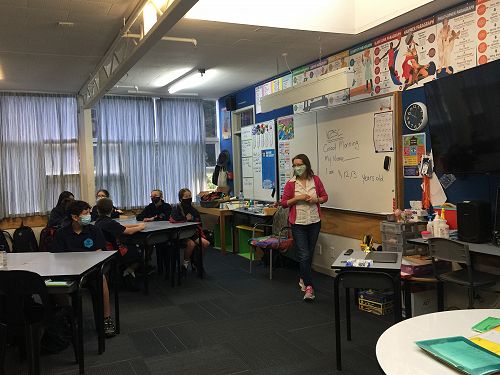
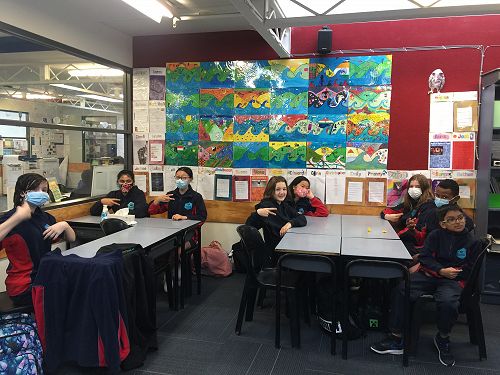
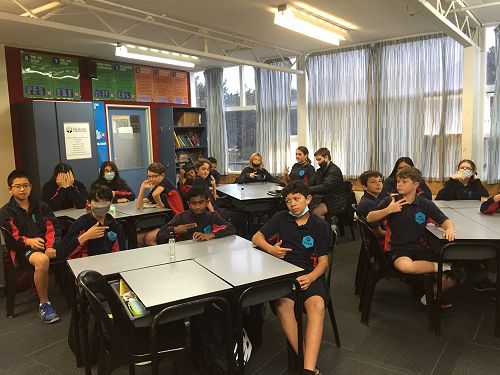
We first learned the basics - the alphabet. A video played on our TV screen for us to follow, showing a clear guide of each letter. A few skilled students also helped everyone learn. This information helped us learn to spell our names. After, we pasted a sheet with all the letters, and had another practice sheet which asked us to translate signs, with words such as “school”, “language”, and “practise”.
Fortunately, we were able to have a guest fluent in the language; the mother of one of our very own class members, Mrs Roper. We learned how to sign good morning and a greeting, translating to “Good morning, my name is ___”. Notably, we also learned words that we recite in our morning karakia, such as “ocean”, “river”, “plants”, and “mountain”. An interesting fact I learned was that people devoid of hearing have stronger peripheral vision, due to sight being their main sense.
Sign language, again, is an important language. With a simple video, and mainly Mrs Roper's experience, we were able to learn and understand more about the language and deaf people. Even just a basic greeting could be necessary in the near future. Learning is prime in the years of childhood.
Gallery