Going To Parliament
A brief and fascinating sneak-peak at the inner workings of the New Zealand Government.
As part of our history and political learning this term, Moemoeā went to the parliament for a school trip. We got to explore the Beehive (the executive wing) and the Houses of Parliament with a tour guide. After that we visited the National Library to see three of the most important documents in New Zealand History: Te Whakaputanga (The Declaration of Independence of New Zealand), Te Tiriti O Waitangi (The Treaty of Waitangi), and The Women’s Suffrage Petition. Combined, that was all an uttermost interesting experience for our syndicate.
After we arrived and got introduced to our tour guide, we had to go through to security and then we began our tour. First of all, we went to the Education Department, which was a recreation of the Debating Chamber. There, we learned a little about the goings-on in parliament and some important bits. For example, we learned which important people resided in the Beehive such as the Prime Minister, Deputy Prime Minister, and the core ministers. We also learned a basic bit about how laws were made, originally drafted as bills and proposed to the debating chamber. Apart from that, we discussed taxes and how whenever we buy something we pay tax via GST. This is how the government gains their budget for social welfare. And then we moved on to see the real Debating Chamber.
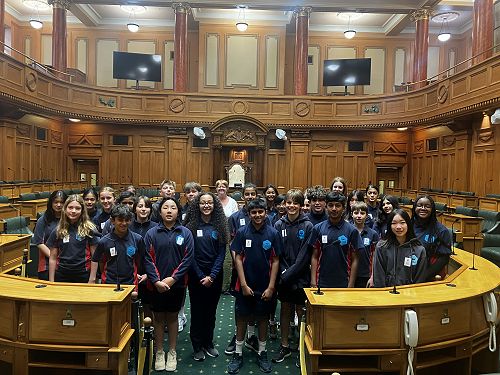
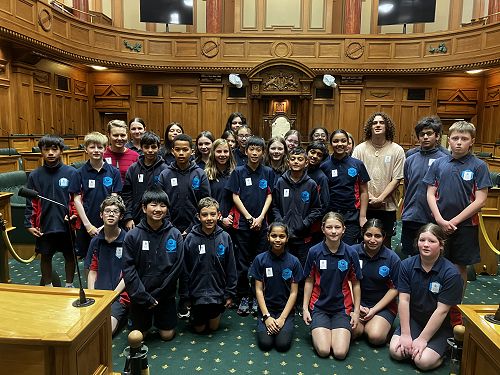
The real Debating Chamber was much larger and definitely grander. We weren’t allowed to touch anything as it was precious and important. We got to take a photo and were allowed to ask questions about the Debating Chamber. The guide told us lots of enlightening and interesting things in regards to our government. We discussed how MPs voted for laws, why the room had a green theme, and many other fascinating elements to the Debating Chamber. We also discussed the importance of the Whip; the Whip serves as a kind of a monitor for all the other MPs, overseeing what they were doing and their opinions on decisions. And then when we were done, we moved on to the Select Committee room.
The Select Committee room had a Maori design to it to represent our dear minorities. We discussed how laws came into being. Once they had been accepted by the Debating Chamber, they would then move on to Select Committees. There, the pros and cons of them would be discussed before they were either denied or accepted and then they would move on to the Chamber again. We also learned that members of the public of any age, including people of our age, could chime in their own opinion on the matter. As we walked out, we walked through a gallery which included many interesting things. There were pictures of all the former prime ministers, former couches from the Debating Chamber, and a row of chairs that demonstrated the evolution of them. Once we did that, we went into the Media Room.
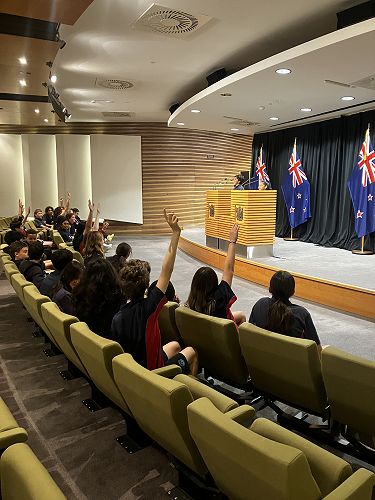
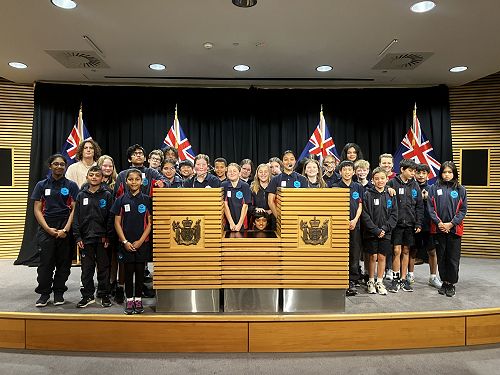
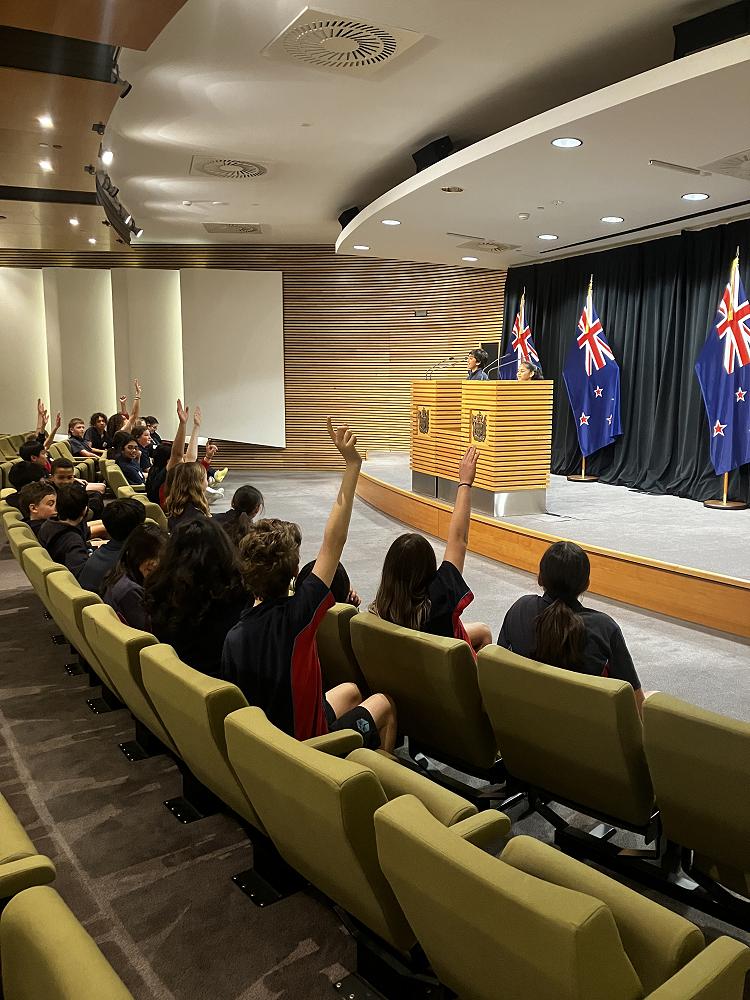
The Media Room, officially known as the Beehive Theatre, is where important officials of the main party talk and answer questions from the press. The tour guide demonstrated that by picking two students to act as Prime Minister and Deputy Prime Minister. The rest of the students posed as the press and asked the two people questions. Then, the students on the podium would try to answer the questions to the best of their ability. The exercise went well and was very enjoyable to participate in. We also discussed how the reason we have a person who communicates sign language is because we need to care for our deaf community, as well as discussing the national languages of New Zealand. That was to some extent the end of the tour for the parliament. We then left parliament to go and visit the National Library.
The National Library was where they store three of the most important documents in New Zealand. To see them we had to enter this special room. But before that, we had to wash our hands with holy water to ‘cleanse’ ourselves if we wanted to. All of the three documents were protected under double-glazed glass to protect them and they had dim lights, just light enough to make them readable as too much light would fade the writing. All three of the documents were at least a century old and were worn and torn in several places. The Treaty of Waitangi especially was gnawed by rats in several places as it was made of parchment (animal skin). The other documents were: He Whakaputanga, which was a declaration claiming that New Zealand was a free land, and the Women’s Suffrage Petition, which was a list of signatures of people who all agreed that women should have the equal rights as men did. After this we left on the bus to go back to school.
In conclusion, it provided a very enlightening experience. No doubt it shall assist us in some way to our historical studies and we express gratitude to our school for providing us this rare opportunity.
Gallery