
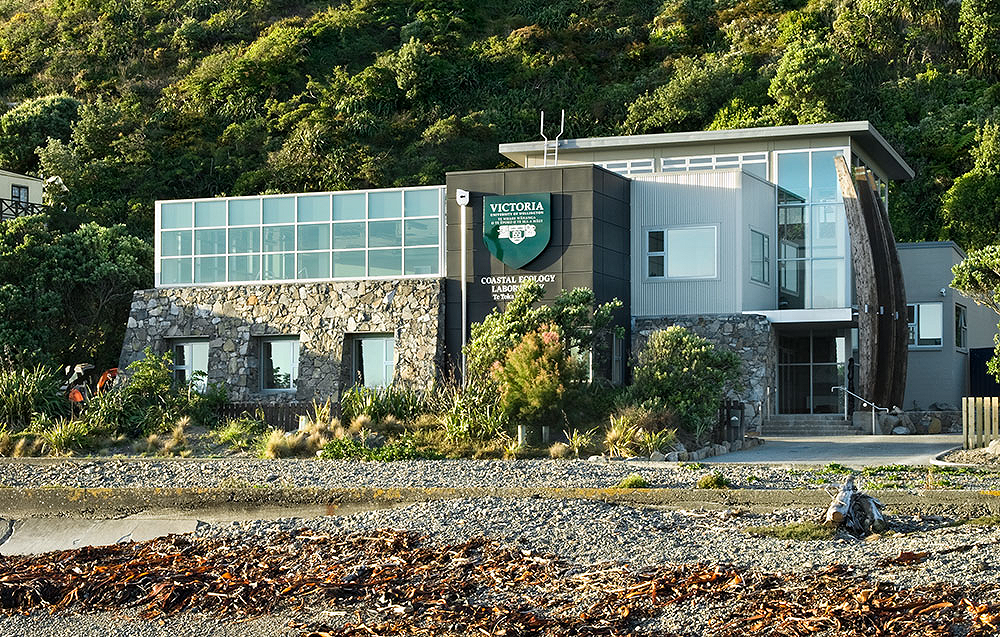
Victoria University Marine Ecology Laboratory 2023
On May 24th, 2023, I had the privilege of visiting the Victoria University Marine Ecology Laboratory. Located on the Wellington South Coast, the Ecology Laboratory is dedicated to studying and preserving marine life.
As I stepped inside, I was greeted by a team of marine biologists and student researchers eager to share their knowledge and experiences. The laboratory itself was filled with various scientific equipment and tanks filled with marine organisms - fish, algae and sea sponges.
The visit commenced with an informative presentation about what they do and how they do it. The researchers discussed their efforts to understand marine animals. They emphasized the importance of preserving biodiversity and finding sustainable solutions to protect our oceans.
Next, I was led to their boat shed where the group was shown the boats they use for research and all the equipment on them. On the boats, they had a flag that - when it was displayed - meant that people were in the water. There was a storage area on the boat for underwater cameras the scientists use. When marine biologists are in the water they are counting how many fish and looking for different types of fish that are present.
In the research area, the group went into the “Wet Lab”. This is where they keep the sponges and algae. We witnessed marine biologists engrossed in their work. I was particularly fascinated by an experiment where sponges were injected with a bright neon-yellow dye to see if they were alive. The dye was contained in their food. If the sponge was alive they would pump the dye back out. If the sponge was dead it would stay the yellow colour of the dye. The scientists wanted to know if the sponges had died of old age.
Moving on, I entered a section of the laboratory dedicated to a virtual marine experience. We put on a VR headset and we were transported under the sea. We explored the underwater world. You could choose to go into a cave which crayfish or out in the open sea with stingrays. Some people found it a little scary because you were underwater and it was dark with lots of creepy eyed fish about. This virtual tour was to give us an idea about what research is like under the water.
As the visit came to an end, we asked our final questions and said goodbye. Leaving the Victoria University Marine Ecology Laboratory, I felt a renewed sense of appreciation for the work marine biologists do.