Parenting teens: Alcohol guidelines
For young people under 18, the safest option is to delay drinking for as long as possible.
Not drinking is the safest option for young people under 18 years of age but if they are drinking, they should always be supervised, should drink infrequently and at levels below and never exceeding two standard drinks. Those under 15 years of age are at the greatest risk of harm from drinking, and not drinking in this age groups is especially important.
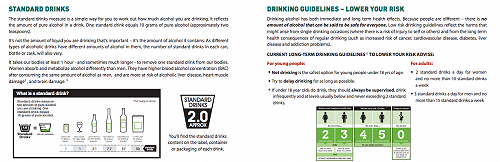
What is a standard drink?
The standard drinks measure is a simple way for you to work out how much alcohol you are drinking. It reflects the amount of pure alcohol in a drink. One standard drink equals 10 grams of pure alcohol (approximately 2 teaspoons).
It is not the amount of liquid that is important – it’s the amount of alcohol it contains. As different types of alcoholic drinks have different amounts of alcohol in them, the number of standard drinks in each can, bottle or cask, will also vary.
It takes our bodies at least one hour, sometimes much longer, to remove one standard drink from our bodies. Additionally, women absorb and metabolise alcohol differently than men. They have higher blood alcohol concentration (BAC) after consuming the same amount of alcohol as men, and are more at risk of alcoholic liver disease, heart muscle damage, and brain damage.
Drinking guidelines - lower your risk
Drinking alcohol has both immediate and long term health effects. Because people are different – there is no amount of alcohol that can be said to be safe for everyone. Low risk drinking guidelines reflect the harms that might arise from single drinking occasions (where there is a risk of injury to self or others) and from the long term health consequences of regular drinking such as increased risk of cancer, cardiovascular disease, diabetes, liver disease and addiction problems.
For more information and guidelines, please refer to the attachment.
Acknowledgement and copyright notice
No Safe Limit is very grateful to Northland District Health Board (DHB) for permission to reproduce this content from the NDHB-Whanau-Pack-ED2-v2.pdf (northlanddhb.org.nz). Northland DHB own the copyright in this material and it must not be copied or reproduced except as expressly permitted by Northland DHB.
Gallery