
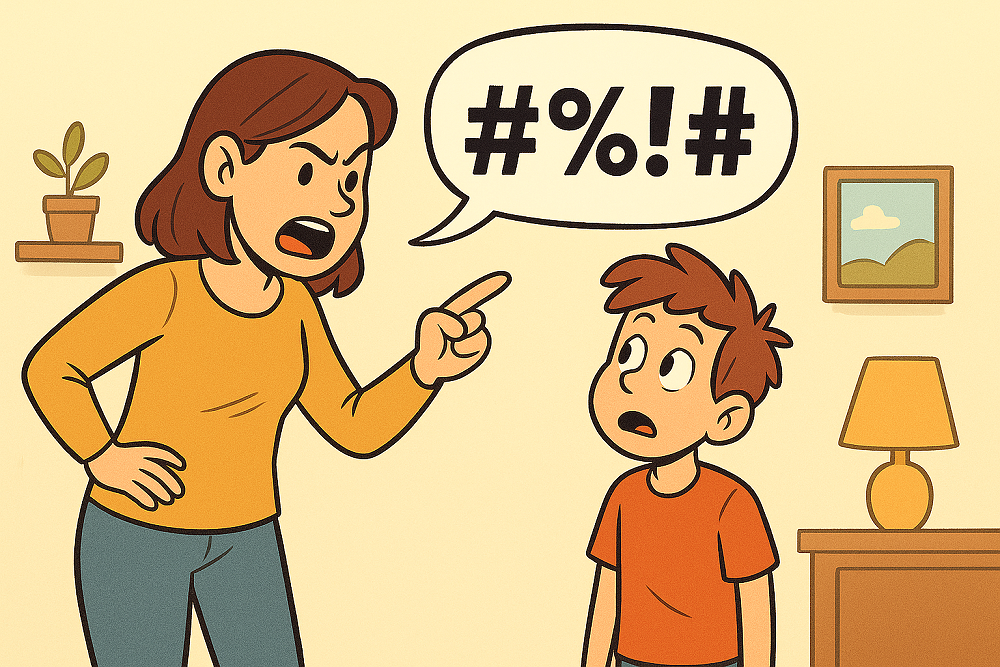
Mind Your Mouth: Why Your Kids Don’t Need to Hear THAT Word
I'm not proud to admit that I've done it too, in the stress of a moment...and when I apologised to my five year old granddaughter, what she said wasn't what I wanted to hear: "It's alright Granma, we use words like that at our house."
Dear Parents and Caregivers,
Let’s be honest—parenting can sometimes feel like living in a sitcom where you didn’t get the script. They’re old enough to copy everything you do, but not quite old enough to understand why yelling at the toaster won’t actually make the bread pop up faster.
Which brings us to language. Children at this age are walking, talking recording devices. Every word you say is neatly filed away in their memory banks, ready to be unleashed at the most embarrassing possible moment. (Think: family dinner, the supermarket checkout, or worse—the school playground.)
Now, it’s one thing when they parrot back your mild grumbles like “Rats!” or “Oh crumbs!” But it’s another story when they repeat offensive words—especially racial slurs. Words like the N-word don’t just “slip out.” They carry a heavy history of harm and exclusion, and when kids use them, even without meaning to, they can cause real damage.
The truth is, if our children hear us swearing or using slurs, they’ll assume it’s normal. And none of us want to get that phone call from school:
“Hello, just letting you know your child used a very… colourful word today in front of the principal.”
So here are a few gentle reminders:
Model what you want to hear. If you wouldn’t want your child blurting it out at Granma’s house, don’t say it.
Swap it out. Instead of reaching for “that” word, try inventing your own goofy phrases. “Banana muffins!” or “Pickle juice!” work surprisingly well in moments of frustration. (And you might even get a laugh instead of a glare.)
Keep it real. If your child does hear you slip up, don’t panic—just apologise, explain why the word was wrong, and move on. Children learn just as much from our corrections as from our mistakes.
At the end of the day, our children will learn how to treat others—and how to express themselves—from us. Let’s teach them that words can be powerful tools for kindness, creativity, and even comedy… but never for cruelty.
So, next time the dog eats your shoe, take a deep breath and remember:
Better to shout “Jellybeans!” than to role-model a word that could stick with your child for all the wrong reasons.