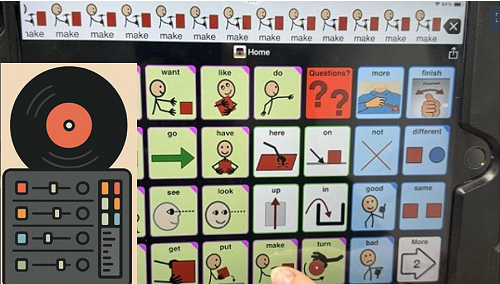
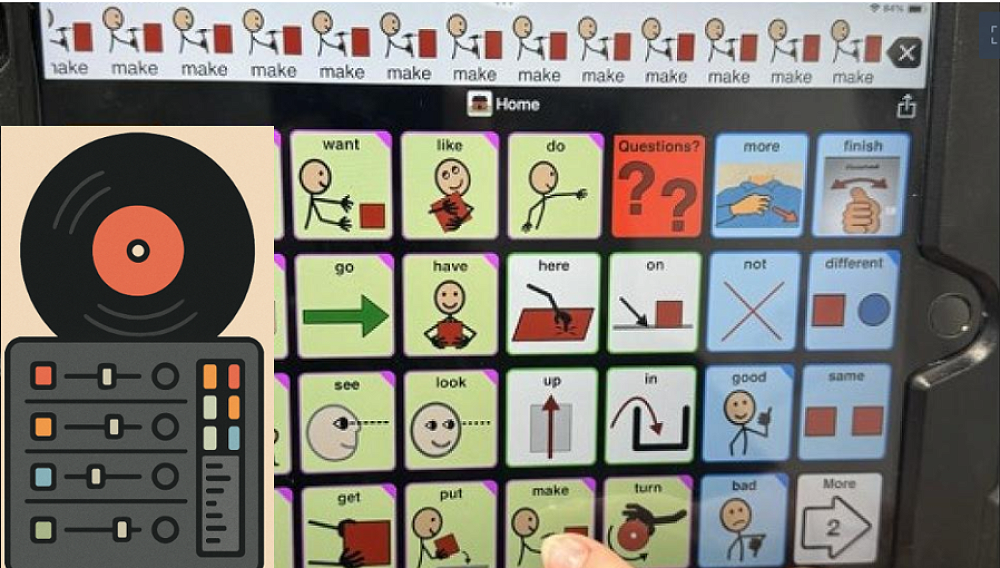
“Remix in Progress: Growing Language Through Repetition”
Many parents wonder: “Why does my child keep pressing the same words on their communication device over and over again?”
A question many parents ask us is:
“How can I stop my child from stimming on their AAC?”
If your young person keeps pressing the same button on their AAC device, it can feel a bit like life stuck on repeat. But just like some young people sing their favourite song over and over (and over!), repetition on AAC often has a purpose. Each tap can be a way to explore, practise, find comfort, or even communicate something important. What looks like “just pressing buttons” might actually be your young person’s way of learning, connecting, and growing with their AAC.
Why Children Repeat Messages
Repetition can be:
Exploration – testing out what the buttons say and do
Communication – trying to share something, even if it’s not clear at first
Language development – practising new words or phrases
Echolalia or scripting – repeating things they’ve heard before
Self-regulation (“stimming”) – using sound or rhythm for comfort or focus
Each of these reasons is valid and part of learning and growing.
Tips for Supporting Your Young Person
Assume it’s communication. Even if the message doesn’t seem to make sense, respond as though your young person is trying to tell you something.
Build on their words. Add to what they’ve said on their device (if they are open to it), using your own voice, or another AAC system. Show them new possibilities.
Allow play and practice. Give your young person times to “explore” their vocabulary. If needed, teach them how to turn the volume down during these times.
Keep their device available. Their communication device is their voice, avoid taking it away, even if the repetition feels a bit much.
Final Thought
Rather than seeing repeated button pressing as something to stop, we can see it as part of how your young person is learning, connecting and expressing themselves. With the right support, these moments can help build confidence, comfort, and communication.
For more ideas, talk with your young person's SLT and check out this helpful article from AssistiveWare!
Gallery