Gestalt Language Processing; The “Whole” Story!
Is Your Young Person a Gestalt Language Processor? Find out and learn how to support them.
What is Gestalt Language Processing (GLP)?
There are two ways of processing and developing language. These are analytical and gestalt.
You are likely most familiar with analytical. Analytical, is when language is learned in a sequential order starting with single words first, then combining these words and moving on to phrases and sentences.
In gestalt language development, whole units, or chunks, of language are memorised for later use. Gestalt language processors will learn language in 4 stages; whole phrases, breaking apart the phrases and recombining them, single words and combinations of these, then sentences.
Some Signs Your Young Person May be a GLP
Speech Signs:
- Uses echolalia or scripts, but no/few single words
- Speaks in the 3rd person (refers to self by own name)
- Reverses, or mixes up pronouns (he, she, they, we, you)
- Is hyperlexic (unusually drawn to print and can read but may not know what they are reading)
- Uses jargon
- Has melody, or “sing song”, intonation (may actually sing more than they speak)
Non-Speech Signs:
- Musical or very drawn to music (may hum or vocalise musically)
- Responds better to things when you sing them not just say them
- VERY routine driven (they seem to make sense out of things by sticking to the same routines in the same contexts)
- Has an AAC system but, despite lots of models, has not started using it
- Plays music or video clips over and over again
- Repeat facial expressions from things they’ve seen, or act out scenes/clips from favourite videos
What to do if you are seeing these signs
Be a communication detective!
Write a record of what your young person says, does, or media they replay over and over again. Write what was happening at the time and your best guess about what it likely means. Feel free to use the attached assessment form to organise your observations.
Assume they are trying to communicate and respond
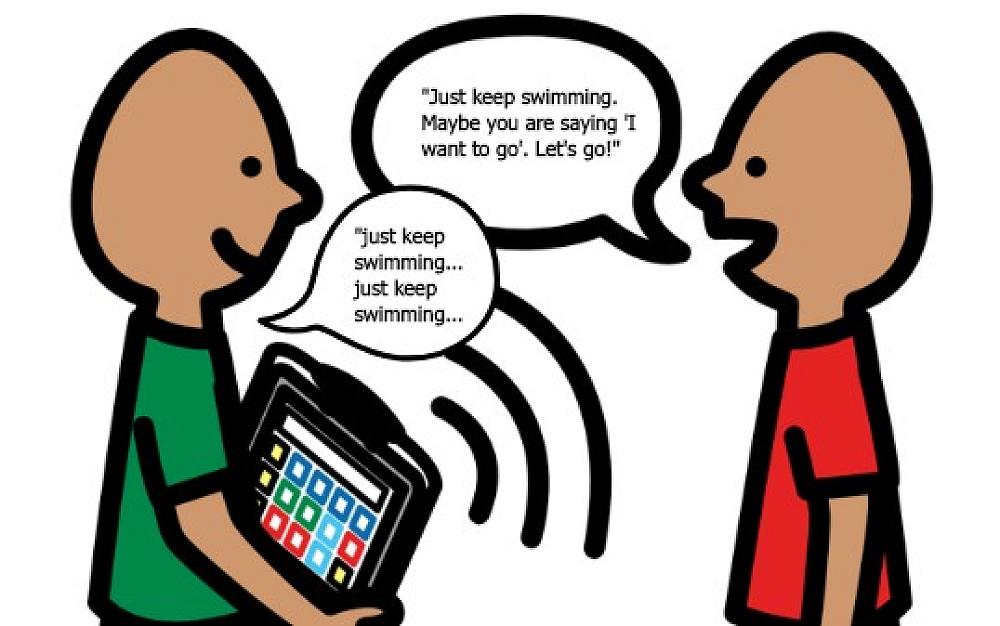
It is important to respond, even if you’re not sure what it means yet. A response can simply be repeating what your young person has said, “yes, you’re saying....”.
Continue, or begin, to Model AAC!
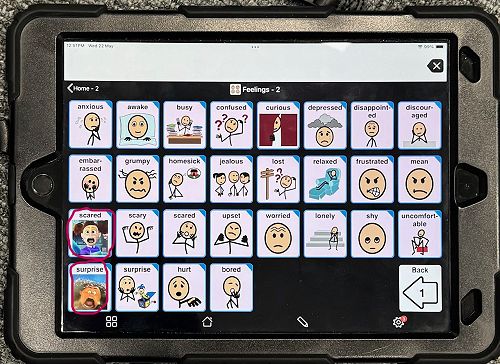
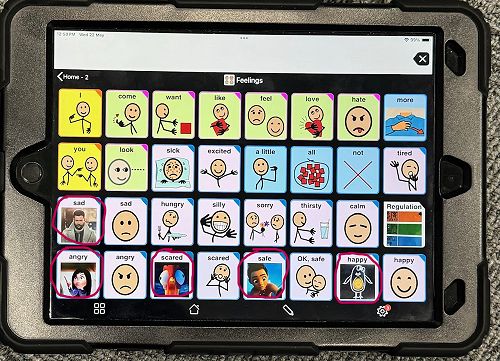
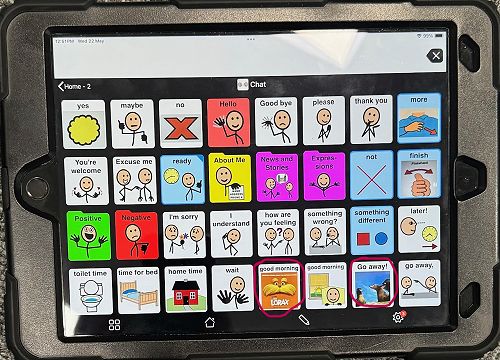
Model an AAC system that is personalised for your young person and incorporates their gestalt language. Work with your SLT to get the right system in place or adapt the one you have. See photos attached to get an idea of how this might work for your GLP.
Gestalt Language Processing is not a disorder, but a difference in the way language is processed and learned. GLPs need a certain type of approach to help support their communication and language development.
If you think your young person is a GLP and would like to discuss this further, please make contact with their Pītau-Allenvale School Speech Language Therapist, or contact michelle.king@allenvale.school.nz.
Gallery