
Toilet thoughts
Our latest technical article on Backflow and the history of the toilet.
It was in 1592 when Sir John Harrington the godson of Queen Elizabeth I, invented the first flush toilet. His device was a water closet that had a cistern connected and could run water to flush the waste.
This invention didn’t really take off until the 19th Century when Thomas Crapper was commissioned to construct lavatories for several royal palaces. Thomas patented a number of toilet-related inventions based on Harrington’s water-filled cistern idea and also that of a watchmaker who developed “S” shaped pipes to stop foul odours coming back up drainpipes.
Great work BUT they inadvertently created another problem called cross-connection.
It was found people were dying from bad water for thousands of years and this new invention had a drinking water and foul water system directly connected together which was likely to cause problems.
The issue was how to keep water that was drawn from the supply from re-entering it, and potentially being contaminated with the foul water from the drains.
Not surprisingly somebody (probably a plumber) came up with the idea of having a gap between the water inlet, and the overflow level in Thomas’s cistern.
This, the simplest form of backflow prevention, - a physical disconnection between the water supply and a source of contamination, - the Air Gap was born.
The Romans had water and drainage systems previously, but the Industrial Revolution and Thomas Crappers' new invention saw a renewed interest in water distribution and waste removal systems. As a result, sanitary plumbing systems and inventions began to take off.
But it wasn’t until later on during the 1930s which saw the development of full-scale urban water reticulation systems combined with increasing numbers of high-rise buildings, that backflow and cross-connection issues hit the headlines. Large numbers of deaths directly attributed to the contamination of the potable supply saw the need for some clear direction and laws.
The first real thinking and formalizing of industry standards for protecting water supplies began to take shape.
Potable water supplies to buildings in New Zealand must be protected and installed in a manner that avoids contamination to both the building it is installed in and the water supply that feeds it.
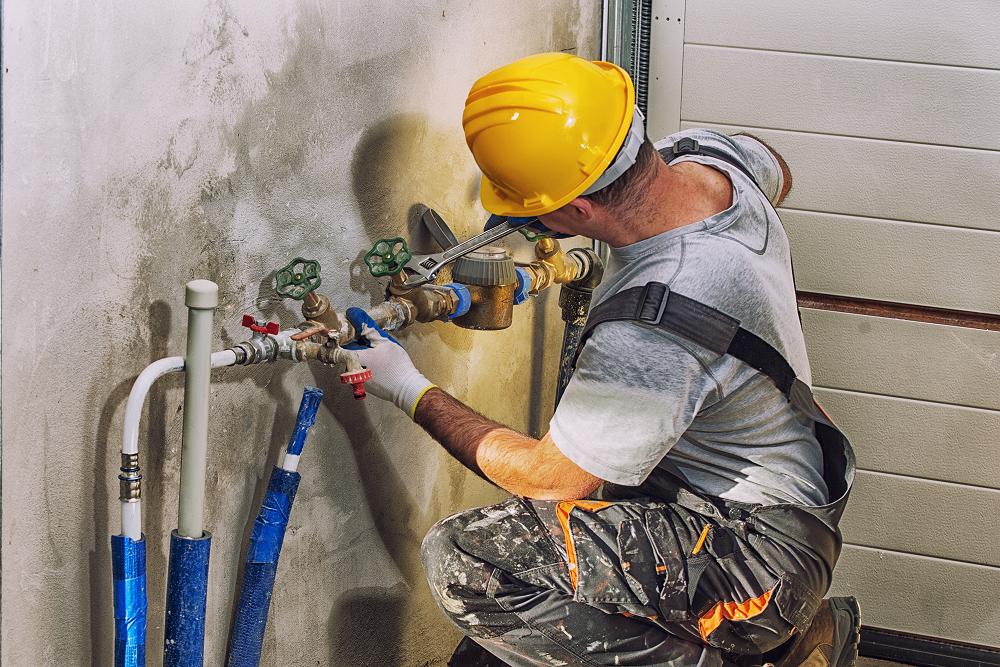
The NZBC Acceptable Solution G12/AS1 provides a means of evaluating the risk, selecting suitable control measures, and giving details for the general installation requirements of backflow prevention systems. Plumbers need to be competent with not only installing a device but also fully aware of how to identify the level of risk and apply the best means of control.
It is also important to remember, in New Zealand buildings other than single residential dwellings that contain backflow prevention systems are required under the Building Act to have compliance schedules. The compliance schedule requires that backflow prevention devices are tested on an annual basis before a warrant of fitness is issued for the building. If this is the case you will need to make the building owners aware of this.
The testing of the backflow preventers must be done by an Independently Qualified Person (IQP) who is accepted by the Territorial Authority as being appropriately trained.
Just as John and Thomas had put a lot of thought into creating their inventions, plumbers also need to put a lot of thought into what they are connecting to the water supply.
It is up to you, the plumber, to consider any existing or potential risk to the water supply and apply appropriate measures to ensure the water we drink stays potable and is fit for human consumption.