Old Boy Colin Webster-Watson
He was, in the American art tradition, as flamboyant and outrageous as he was talented.
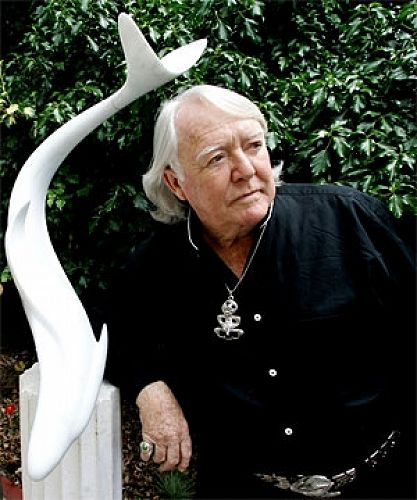
Colin Webster-Watson (6 May 1926, Palmerston North, New Zealand – 25 September 2007, Eastbourne) was a New Zealand sculptor and poet.
Webster-Watson (he hyphenated his name later in life) grew up in Palmerston North, where he attended Palmerston North Boys' High School. At the age of twenty, he travelled to Japan with the Commonwealth Occupation Force. While in Japan, his army superiors deemed that he would be better employed as an entertainer than a soldier, and gave him the responsibility to organise concerts for the troops.
In 1954, Webster-Watson moved to London to become a dancer and comedian at the Windmill Theatre. For a time, he also worked as a radio sports reporter in Wales.
Following the death of his father in 1960, Webster-Watson suffered a breakdown and moved to Italy. It was while running an orphanage in Alberobello that he discovered his love of sculpture and soon after established a studio in Rome. His patrons during this time included Gloria Swanson, Carroll Baker, Morris West, Robert Ardrey, Harold Robbins and Henry Rothschild. His work also graced the collection of Jacqueline Kennedy and Aristotle Onassis.
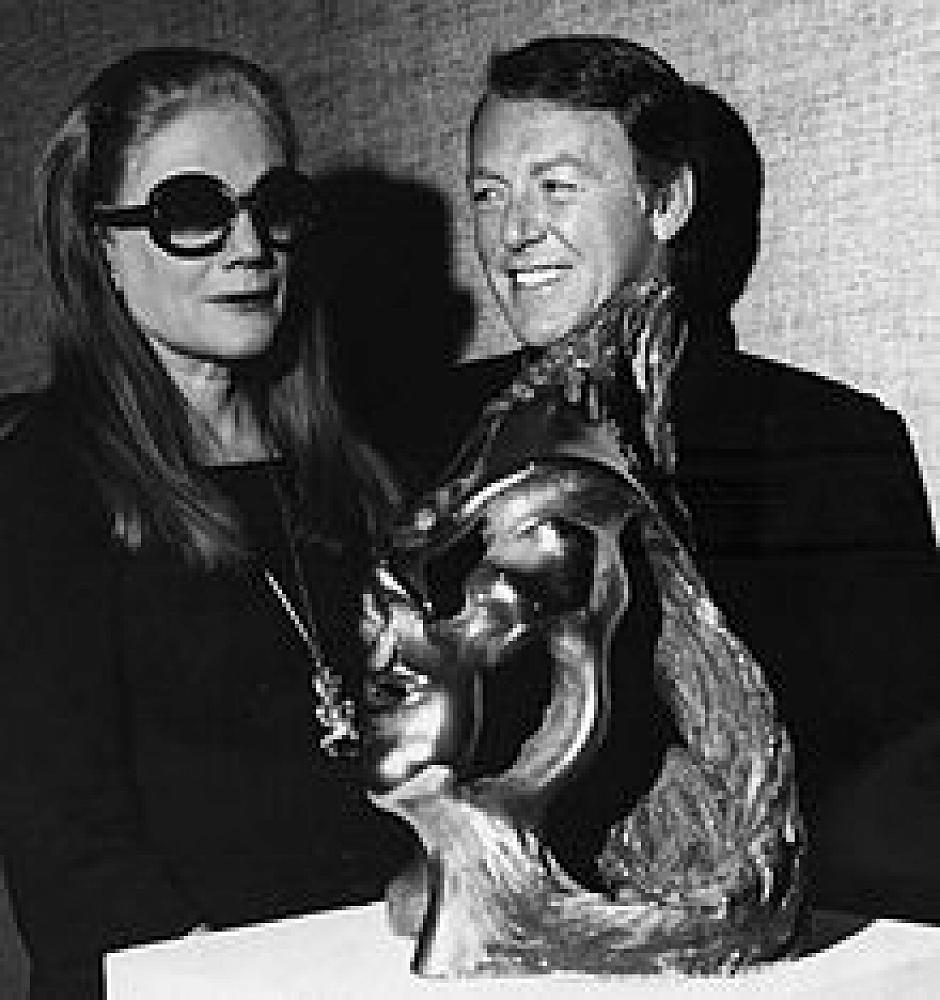
Webster-Watson married Jane Ewing in New York in the 1980s where they lived in Wainscott on Long Island.
In 1990, he moved to Palm Springs, California, where he lived until 2004 when he returned to New Zealand; he died in 2007.
Webster-Watson donated several works to Wellington including Tail of the Whale (Oriental Bay), Frenzy (Ōwhiro Bay), Prowling Cheetah (Wellington Zoo), Mountain of Dreams (Wellington Zoo), La Famiglia (Wellington Hospital).
The Renaissance Man
Written by The Dominion Post
Colin Webster-Watson, sculptor. Born Palmerston North May 6, 1926; married Jane Ewing (dec); died Eastbourne September 25, 2007.
Colin Webster-Watson created a niche for himself as a decorative sculptor and did very well at it. California was his main market but he gave a sculpture to Wellington and one to his home town of Palmerston North.
Palmerston North got a marble work, The Prodigal Son and Absolutely Positively Wellington his Veil-Tailed Whale, a bronze work set up on the seawall in Oriental Bay. He offered a piece to Te Papa which failed, to his chagrin, to accept it on the spot. Colin Webster-Watson created a niche for himself as a decorative sculptor and did very well at it. California was his main market but he gave a sculpture to Wellington and one to his home town of Palmerston North.
He was, in the American art tradition, as flamboyant and outrageous as he was talented. Legend has it he had a tempestuous affair for many years with Winston Churchill's daughter Sarah Churchill. It was she who presented his sculpture Poseidon and the Mermaid to the Greek shipping millionaire Aristotle Onassis and his then wife Jackie Onassis in the late 1960s when Webster-Watson was making his mark in the collections of some of the rich and famous.
Other people who had his fluid sculptures included actress Gloria Swanson and popular writer Harold Robbins, whose written appreciation Webster-Watson kept framed on his wall. He numbered among his close friends 1960s sex symbol and star of Baby Doll Caroll Baker, who encouraged him to shift to Palm Springs after the death of his wife in 1990.
Webster-Watson has been described as Palmerston North's own renaissance man, and also as the bohemian renaissance man of Palm Springs. He came to sculpture quite late in life. Until his mid- 40s he had tried his hand at farming, dancing, acting, teaching and cooking, among other things.
Palmerston North was not the ideal milieu for a person whose first public performance was a spontaneous act at five when he leapt on to the stage during a momentary pause in proceedings at a church concert. At 11 he decided he wanted to be famous rather than rich and recalled shouting his intention into the air from an Eketahuna hill on a farm to which his family had shifted. Around then he was sent away as a boarder to a Wanganui Quaker school but was not happy and ran away several times and was eventually sent to Palmerston North Boys High, where he was involved with a number of musicals. He also had roles in community theatres in Palmerston North in his teens.
In the 1950s he was drawn to a larger stage, England, where he joined the Windmill Theatre as a comedian dancer, did school tours and appeared in a review. He tried a job as a television sports reporter in Cardiff, cooked at a London coffee bar and moved to Italy where he worked for a time in a refugee camp and got a job teaching English to the Italian Air Force. He also began visiting art galleries and took up clay lessons in order to be able to replicate ethnic clay masks he had collected and had broken. Within a year he had produced enough for an exhibition and, on the strength of its financial success, he started sculpting in bronze.
He had several versions of the story of his conversion to sculpture. One was that he moulded a pouter pigeon for his hostess, a Sicilian sculptor at a lunch. She noted the clay under his nails and predicted he would be a famous sculptor. From that time on, "he said in an interview earlier this year "I loved the clay so much I couldn't stop."
Another story was that he was teaching children in an orphanage in Italy and one day got some clay and said: "Use your imagination." Once he saw what they did and his own hands touched the clay "I couldn't stop." Whatever the substance of his stories, they were entertaining and colourful.
He married a New Yorker from a wealthy family and they built a home on Long Island, entertained exuberantly and had many friends. They had no children but he approached the role of godfather to a number of children seriously and with generosity.
He sculpted in studios in London, Rome and New York and then in Palm Springs and shifted back to New Zealand in 2004 when he became "sick of the bloody desert" and his health was failing. He opened a studio in Eastbourne but it closed through lack of patronage. A retrospective of his work was held at Shed 11 in February.
His flamboyance never dimmed. The trademark flowing silver hair, colourful clothes and charm remained. His companion in later years was his Pekingese dog, Andrew. His modest Eastbourne abode was crammed with his ethnic treasures. His reduced world continued to be his stage and he converted a small area in his tiny backyard in which to perform for an audience of up to 60, including the circle of friends and family who comforted him.
Gallery