Co-curricular Participation at PNBHS Continues to 'Buck the Trend'
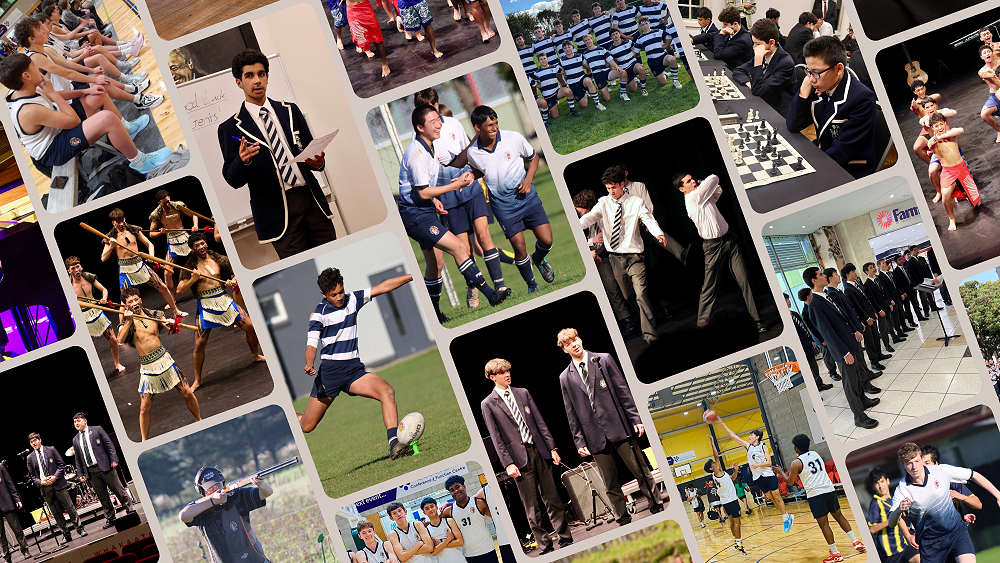
We are incredibly proud that our young men are continuing to 'buck the trend' of falling involvement in co-curricular activities and we are seeing very high levels of participation across all of our co-curricular activities. So far in 2025, we have recorded more than 2,100 individual student registrations for sports and more than 700 for cultural, music and performing arts activities, numbers that again put us well ahead of 2019 (pre-COVID-19).
Registrations to date across a range of sporting codes include:
Badminton 🏸 - 118, Basketball 🏀 - 289, Canoe Polo - 39 🚣, Cricket 🏏 - 224, Cycling 🚴♂️ - 25, Football ⚽ - 271, Golf 🏌️♂️ - 50, Hockey 🏑 - 118, Mountain Biking 🚵♀️ - 15, Rugby 🏉 - 480, Squash - 41, Table Tennis 🏓 - 86, Tennis 🎾 - 21, Touch 🏉 - 162, Volleyball 🏐 - 89 and Water Polo 🤽♂️ - 23.
A huge thank you to our staff, parents and others from our community who volunteer their time to enable these opportunities for our young men.
Earlier this year, a PNBHS Athletics team of 96 young men competed at the Manawatū Inter-Secondary Schools Athletics Championships, with 13 of those young men going on to compete in the North Island Secondary Schools Athletics Championships. 664 young men competed in the PNBHS Cross Country and a team of 31 competed in the Manawatū Inter-Secondary Schools Cross Country and 18 in the Super Eight Schools Cross Country championship. 45 young men have registered in term one and term two to train in the school weight training facilities and the Shand Shield competition has so far included opportunities for all young men to get involved in Athletics, Road Race, Swimming Championships, Cross Country, Junior Monrad Cup and Butler Cup Cricket.
In addition to this sporting snapshot, there are significant numbers of young men involved in Kapa Haka (Super Eight - 21 young men, Te Piringa - 9, Junior Kapa Haka - 27, Māori Department Kapa Haka - approximately 190), the Pasifika group for Super Eight (34) and Pasifika Fusion (83), Junior Musical Theatre (20), Theatre Sports (30), Senior Production (37), The Rector's Company (15) 🎭, Stage Band (17) 🎺, Junior Concert Band (50 - 60), the Symphonia (approximately 45) 🎻, Senior Concert Band (35 - 40) 🎷, MANifesto (23), SOAP Choir (78) 🎤, as well as a range of other music groups and more than 200 young men receiving tuition each week through the itinerant music programme 🎼. Currently, approximately a quarter of all young men in Year 9 are involved in one way or another in our music programmes.
Other school activities include Vex Robotics (24), Chess Club (25 - 30) ♟️, Clay Target Shooting (32), Smallbore Shooting (18), Debating (23), School Librarians (21) 📚, Sim Racing (16) 🎮 and Motocross (15) 🏍 and a multitude of other activities. We also know that there are many young men involved in a range of cultural and sporting activities outside of school.
Through our daily assemblies, school newsletters and social media we celebrate the involvement of our young men in their chosen co-curricular activities. The promotion of these opportunities and the celebration of student success is very deliberate. We strongly believe that involvement in co-curricular activities is an essential component of an effective education for young men and a fundamental aspect of developing their character, alongside the many benefits for physical and mental health and general wellbeing.
During term one, we shared with our school community data from 2023 and 2024 that showed young men at PNBHS who are involved in co-curricular activities attend school more regularly than their peers who are not involved and achieve at a higher level academically. This pattern was evident at all year levels.
In recent years, the Association of Boys’ Schools New Zealand commissioned the independent New Zealand Council of Education Research (NZCER) to undertake a study comparing the achievement of boys in boys’ schools with the achievement of boys in coeducational schools. The results of this study, which utilised several years of NCEA achievement data, were unequivocal; boys in boys’ schools are more likely to achieve educational qualifications than boys who attend coeducational schools, boys in boys’ schools are more likely to gain Merit and Excellence endorsements than boys who attend coeducational schools, and boys who attend boys’ schools are far less likely to leave school without a formal qualification when compared to boys who attend coeducational schools. Furthermore, these findings held true across all ten deciles.
Dedication to a strong co-curricular programme was recognised as one of eight key factors accounting for the success of young men who attend boys’ schools. In her summary of the findings of this study, Cathy Wylie, NZCER Chief Researcher, stated: “What was really interesting was how the high-performing schools stressed the importance of a student-centred approach, offering co-curricular activities alongside academic programmes for holistic development, and developing self-managing students who set high goals for themselves.” This statement encapsulates much of why we believe co-curricular activities are so important. Sporting and cultural activities provide vital lessons for young men as they develop their character. They put young men into situations in which they are challenged and are required to rely upon each other in order to achieve. Young men learn about working as part of a team within set rules and team culture (Tū Rangatira | Integrity), commitment, competition and hard work (Te mahi tahi | Industry), the importance of having good time management and organisational skills, they gain valuable lessons in coping with defeat and what they need to improve their performance for next time (Tū Māia | Courage), and learn how to win with humility, to take pride in their performance, while at the same time respecting their opposition.
Psychologist Richard Weissbourd identifies that empathy and an appreciation for others can be developed through team or group activities:
“Competition challenges children to appreciate the skills of opposing players even when they seem like mortal enemies, to find weaker teammates’ strengths even when those players are jeopardising the team’s chances of making the playoffs, to take the referee’s perspective, at least after the game, even when he or she has made a bad call at a critical moment. That’s the kind of demanding morality that helps to develop over time children’s capacity to see beyond their own intense feelings. To tolerate others’ flaws, to place others’ perspectives and needs on a par with their own.”
Many employers today emphasise what have traditionally been considered ‘soft’ skills – those associated with teamwork, collaboration and relationship building. Participation in co-curricular activities provides a concrete way for young men to demonstrate the development of these skills. Increasing emphasis is being placed on co-curricular involvement in the awarding of many scholarships for tertiary study, and involvement in such activities provides another avenue for young men to set themselves apart from the 'competition.'