
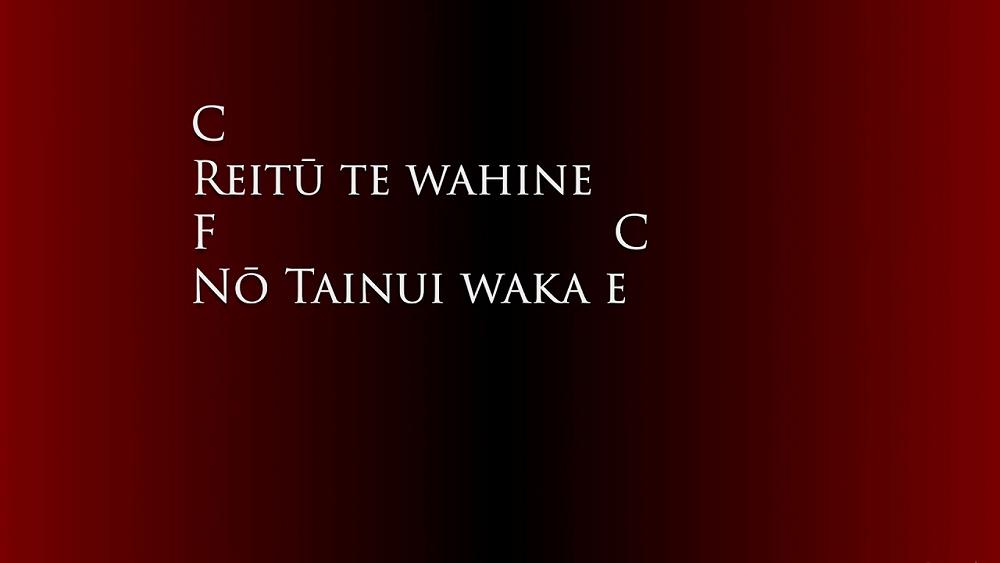
Waiata - Rerenga Wairua
Cape Reinga/Te Rerenga Wairua heritage
Rerenga Wairua tēnā whakarongo mai - Fly now and listen to this
Papaki tū ana ngā tai o Te Tokerau - The tides/waves of Tokerau are crashing on the shore
Ueoneone rā he tangata rangatira e - There is Ueoneone, who was a great leader
Nō Te Aupouri Ngapuhi nui tonu e - He is from the Aupouri of the great and strong Ngapuhi
Taku ara taku mana he wahine whakaiti - My path, my strength leads to this woman of humility
Reitu te wahine nō Tainui waka e - Reitu is this woman belonging to Tainui waka
Nāna i mārena ko Ueoneone e - It was Reitu who married Ueoneone
Ka puta ka ora tātou ngā uri e - From them came their descendants, us who live today
Nō reira e te iwi kua mutu ngā mihi - As such, our story is finished
Aku tangi kōrero aku tangi tikanga e - My story of tikanga has been called out
Noho iho e koro ko Ueoneone e - Lie still my tupuna Ueoneone
Ngā manaakitanga - Being looked after/watched over
A te hunga runga rawa e - By those above us all
Ngā manaakitanga - Being looked after/watched over
A te hunga runga rawa e - By those above us all
A bit of History
For Māori, Cape Reinga is the most spiritually significant place in New Zealand.
An ancient pohutukawa tree and a lonely lighthouse mark this special place.
It is here that after death, all Māori spirits travel up the coast and over the wind-swept vista to the pohutukawa tree on the headland of Te Rerenga Wairua.
They descend into the underworld (reinga) by sliding down a root into the sea below. The spirits then travel underwater to the Three Kings Islands where they climb out onto Ohaua, the highest point of the islands and bid their last farewell before returning to the land of their ancestors, Hawaiiki-A-Nui.
Everywhere you look in the surrounding landscape of Te Rerenga Wairua, you can find evidence of human settlement, hundreds of years in the making.
The Far North is the nearest in climate to the tropical home of the first Maori settlers. They could garden here with plants like taro, gourds, and yams. Forests, coasts and wetlands were abundant sources of food for hunting and gathering too.
Kupe, known as the great navigator, is said to have discovered the Far North when he thought he was heading towards a whale. In fact, he was travelling towards Mount Camel in Houhora. Kupe’s crew, upon landing, settled from Cape Reinga to Parengarenga Harbour.
Many places Kupe named range from Te Ara Wairua (the spirits pathway) to Te Rerenga Wairua. Kupe established Te Rerenga Wairua as the point from which his descendants would travel in spirit form back to Hawaiiki-A-Nui.