Health Notice - RSV Virus
School will be open for the last day of Term Two.
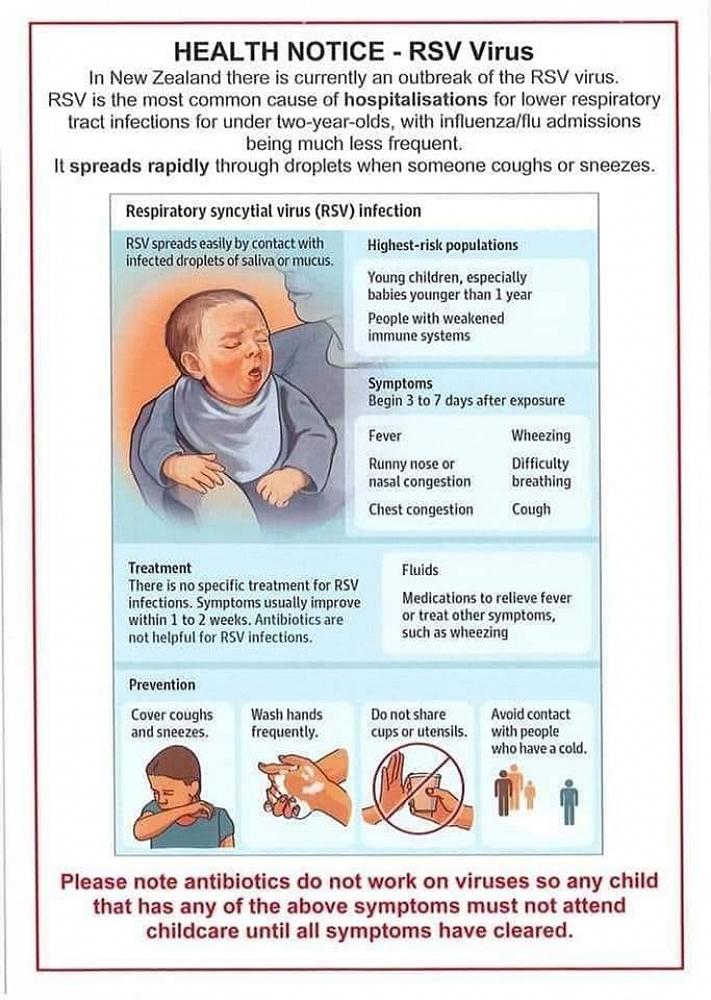
Please be aware the RSV Virus is in our community.
Key points about respiratory syncytial virus (RSV) infection
- Respiratory syncytial virus (RSV) is a common virus. Almost all children will have had an RSV infection by their second birthday.
- RSV causes infections of your lungs and respiratory tract.
- If it recurs in healthy adults and older children, RSV symptoms are mild and similar to the common cold.
- However, in infants, the virus can cause serious illness including bronchiolitis and pneumonia (infection of your lung) and they may need hospital care.
- There is no vaccine against RSV, but you can help prevent its spread by covering coughs and sneezes, hand washing and other hygiene measures.
What are the symptoms of RSV infection?
The symptoms of RSV infection are typical symptoms of a cold, such as a runny nose, coughing, sneezing, fever (high temperature), wheezing and not feeling like eating. These symptoms usually appear in stages and not all at once. In very young infants with RSV, the only symptoms may be irritability, decreased activity and breathing difficulties. However, RSV can also cause serious illness, including bronchiolitis and pneumonia (infection of your lung).
This virus is contagious for 3 to 8 days. Please do see a doctor if you are concerned about excessive coughing, difficulty breathing or high fever as this virus can turn into a serious illness requiring hospital care.
RSV Virus presents like the common cold. Please click on the following link for further information or ring Healthline on 0800 611 116 .
https://www.healthnavigator.org.nz/health-a-z/r/respiratory-syncytial-virus-rsv-infection/