C10 Survey Camp
By Athena Clark (C10 student)
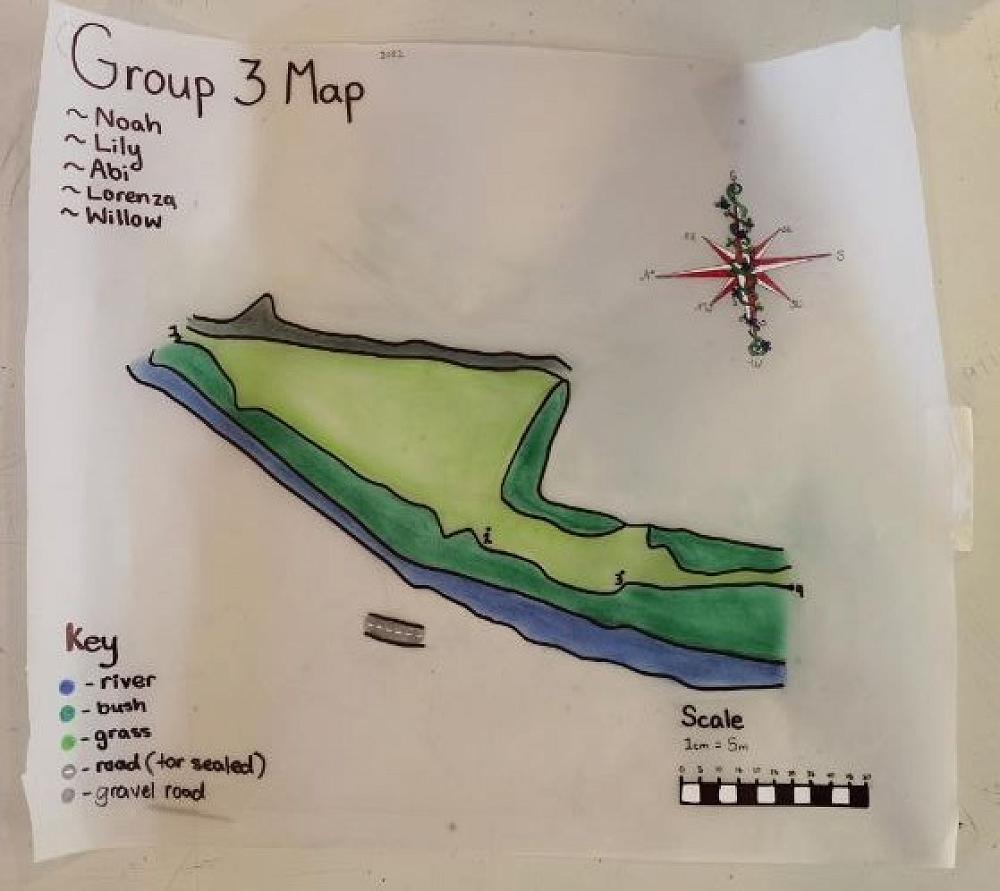
Well after some truly all-terrain maths, innumerable re-measurements, and copious amounts of sugar, the survey camp has ended, and we now have a map and a whole set of surveying skills.We only broke four umbrellas, and a tent (sorry Noah's Dad). Some of us discovered the most amount of mold we had ever seen in one place- that being the campsite showers. When we weren't surveying or breaking umbrellas, we went to the waterhole and swam for a cool-off, or played MTG while eating Alex’s gingerbread chocolate.
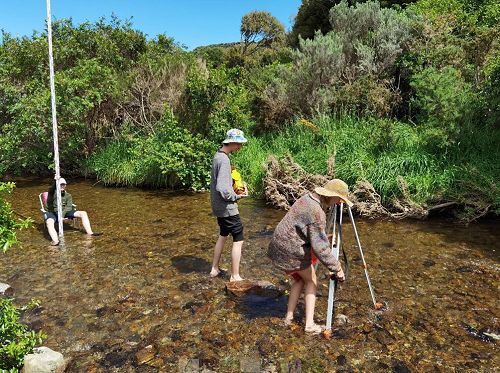
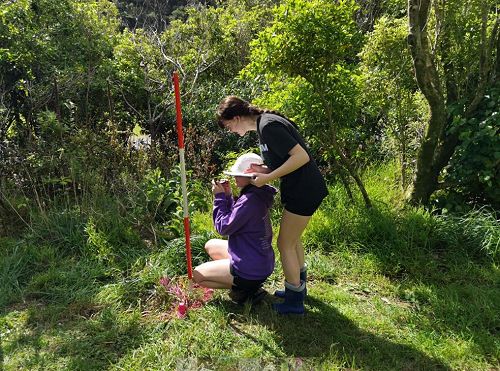
Class 10 went to the Orongorongo’s for 4 days to survey and make a map of the campsite. We were split into groups and surveyed our area using theodolites, compasses, and tape measures. We used methods such as radiation and offsetting to get an accurate map of our region.
On the first day of camp, we went for a walk around the campsite to understand our surroundings and get an idea of the environment we would be surveying. Merlin had set up survey poles previously, we drew a sketch of these poles placed around the campsite to get an approximate view of what the map should look like.
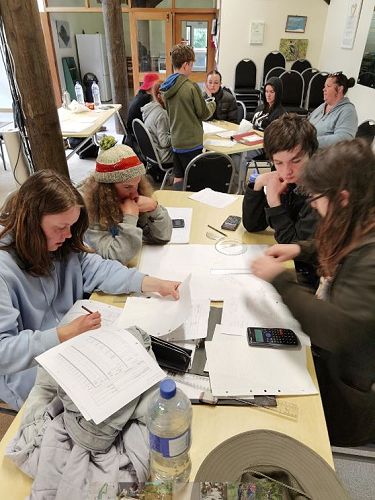
Then we measured our step length. We did this by counting the number of steps we took over 100 meters. We walked up and down the 100 meters for 5 laps so that we could get an average of how many steps it took us to walk this distance. We added all the steps together and divided by 10, (the amounts of lengths we did). Then we divided by 100 to get our average step length. Then we walked from pole to pole and recorded the number of steps we took between them. We did this with our compasses, to find the forward and backward bearings from pole to pole. Then we came back to our tents and recorded all our information in a graph to keep track. That took us to the end of the first day. Then we added the class bearings and divided them by the amount of numbers we had to find an accurate bearing of the campsite poles.
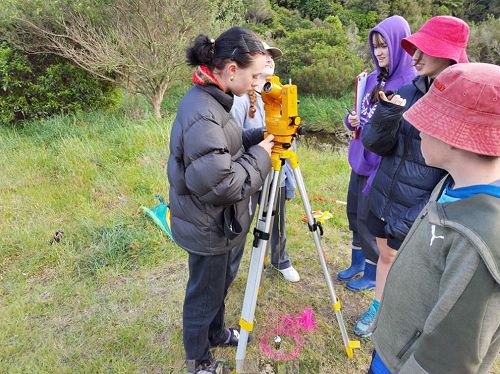
For the next few days we mainly used theodolites for our measuring. A theodolite is a surveying instrument with a rotating telescope for measuring horizontal and vertical angles. We measured the degree of the poles around our territory, zeroing at one of our poles and going from there. This meant when we drew our maps, we could zero our protractor at the same pole we zeroed at on the day, and then could read the degree to the next pole.
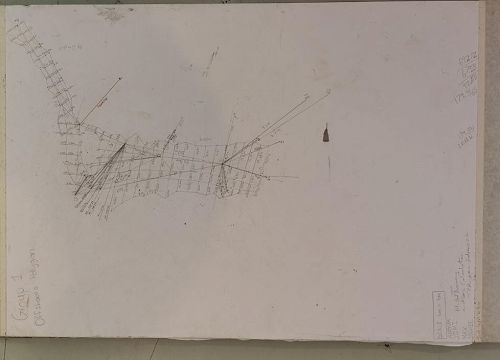
Once we had done this for all our poles, we used offset measurements to record any path’s width and length. We did this by laying a tape measure along the length of the path from pole to pole and laying a second tape horizontally across the first tape measure. We recorded the amount from the middle tape measure to the start of the bush line. Once we did this in the other side, we had the area of the path.
The last skill we used was radiation. This was used when you wanted to record objects that were all visible from one point, such as bollards. We set up our theodolite at a single point, from where all the details we wanted to plot were visible, and measured the degree from our pole. First, we measured the angle and the distance to the object, which allowed us to map it out. We measured the degrees, distance, minutes and seconds for each object. We continued this process for all the features.
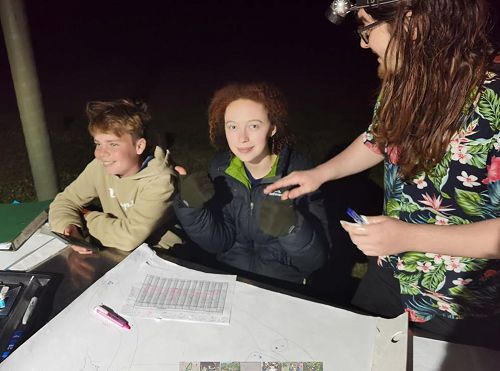
Once each group had made a map our zone, we put them all together to form a map of the whole campsite. This took quite some time. We had to scale our maps so that the proportions would be the same and match them up, not unlike a very confusing puzzle... surprisingly, most of the map fitted together nicely- so satisfying!
Overall, an incredibly knowledgeable camp that taught us a lot of practical skills. A big thank you to Merlin and Tim, for being great teachers and patient, skilled, and dedicated people. Especially to Merlin, who held a surprisingly heavy surveying pole, knee deep in a river, in a thunderstorm. Thanks to Sarah, who helped us out, reminding us to put on sunscreen, taking us out and watching over us and making sure we didn’t starve or light ourselves on fire from our gas cookers. All round, a success!
Gallery