
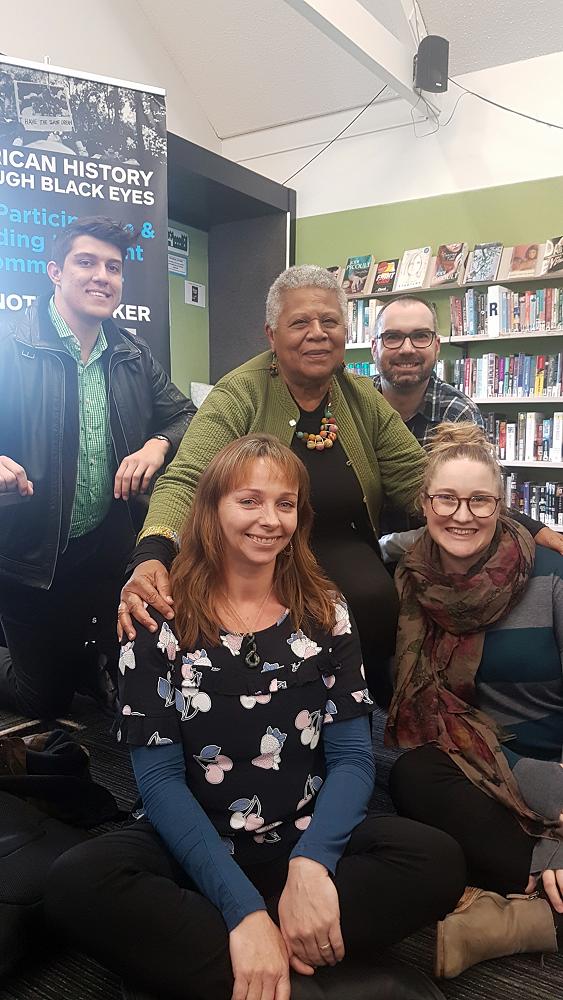
History comes alive with Minnijean Brown
On Friday May 25th, the school’s Year 11 History students, with hundreds of others from across the city, had the privilege to walk to the nearby La Vida Centre to listen to an icon of the American black civil rights’ movement, Minnijean Brown.
Minniejean was one of the nine courageous black students that volunteered to be integrated into Central High School, Little Rock, Arkansas in 1957.
History remembers them as the ‘Little Rock Nine.’
They confronted fierce and ongoing resistance from the community in the racially segregated South of the United States, in order to break the colour barrier that blocked access to quality education for black Americans.
Minnijean was able was speak to the students of her experiences in the famous desegregation of Central High School, which included mobs chanting: “Two, four, six, eight, we don’t want to integrate!” and what life was like during these turbulent times.
The study of the struggle for black civil rights has featured in the Riccarton High School History programme for a number of years. Our students appreciated the chance to listen and see someone they had learned about in class, crossing time and place from the textbook page and television screen, here in Christchurch, New Zealand.
Our students were also treated to a highly engaging presentation from a visiting American scholar, Dr Clarence Lusane of Howard University in the United States.
Dr Lusane spoke to the students about Black Panther, the first superhero of colour to appear in American comics in the 1960s, and recently the subject of a very popular film.
Our students were fascinated and appreciative of the opportunity to see and hear History come alive for them, and many excellent questions were asked!
The day before this student event, the school’s four History teachers, Mr Campbell, Ms LeCren, Mrs Gordon and Mr van der Peet had the opportunity to join with other History teachers from across the South Island to listen to Minnijean Brown and Dr Lusane.
We took full advantage of the opportunity to learn about the state of contemporary race-relations in the United States, and hung on every moving word of Minniejean’s recollections of her experiences both in 1957 and since.
For students and staff alike, this was a memorable opportunity never to be forgotten!