
Introducing María Fernanda Félix de la Luz from Mexico, a Rotary Peacefellow from ROTARY PEACE FELLOWS CLASS XVII at UQ in 2021.
Maria has just completed her Masters in Peace and Conflict Resolution at the University of Queensland, and this is her story.
At the age of fourteen María started working with sex trafficking survivors in Puebla, Mexico - one of the worst cities for sex trafficking in the world. Since then, she has continued her work on preventing sex trafficking and women disappearances, as well as in providing legal services that bring justice to the victims. She has a Bachelor in Economics, a Master in Economics, a Master in Law, and a Certificate in law against ‘revenge pornography’ and other online crimes in Mexico, and in the establishment of youth parliaments. She has collaborated in projects with International Law and Contemporary Issues. In the last 10 years, she has worked in national and international campaigns for the promotion of gender equality and youth participation, including the creation of a national international entities like the United Nations, the World Bank, the World Economic Forum and the Y20. She has also published four textbooks for middle schools in subjects of Mathematics, Research Methodology, and Civic Education.
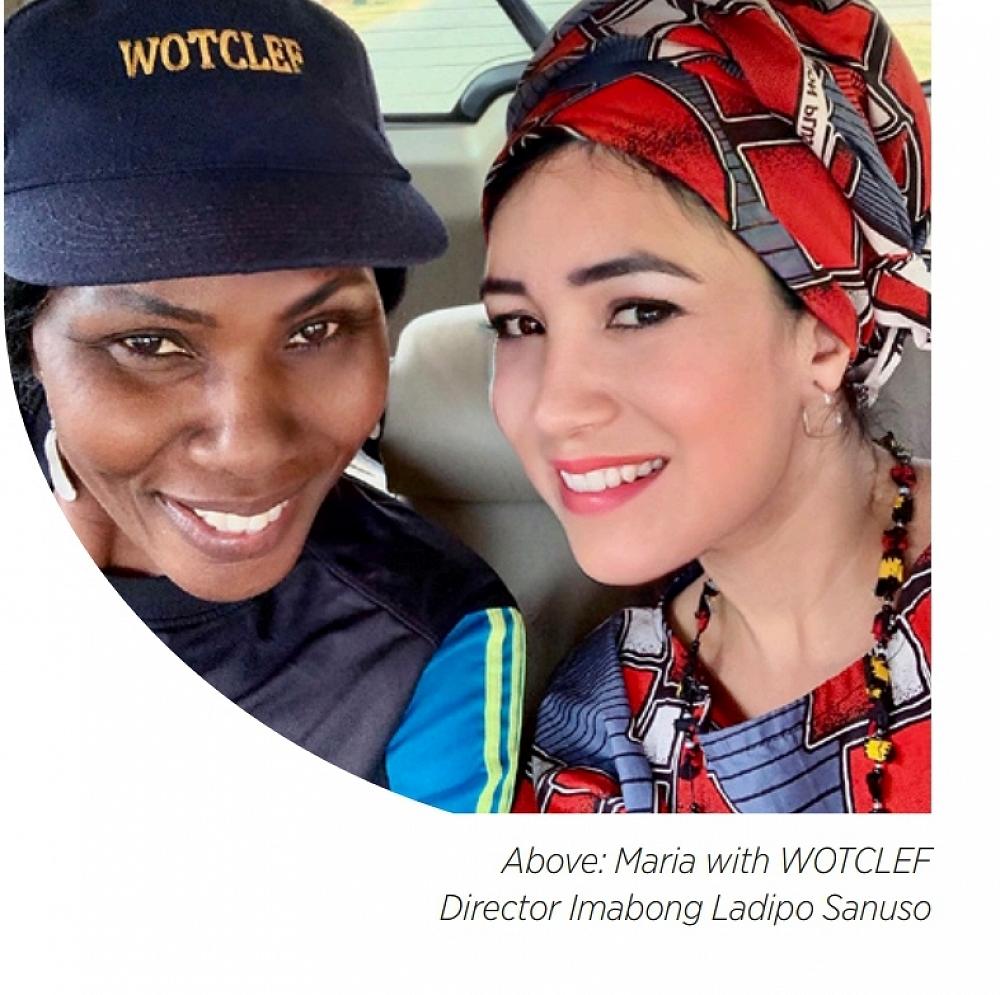
During her AFE María worked at Women Trafficking and Child Labour Eradication Foundation (WOTCLEF) one of the shelters for human trafficking victims, which is run by the National Agency for the Prohibition of Trafficking in Persons (NAPTIP.) Human trafficking is a very serious issue in Nigeria, especially due to abductions by the terrorist group Boko Haram. María’s work consisted of reviewing victims’ case files from the last 20 years, and interviewing sex trafficking victims to write a report on their stories. She also helped in the development and implementation of programs to prevent sex trafficking and to help rescue victims, especially those at risk of HIV.
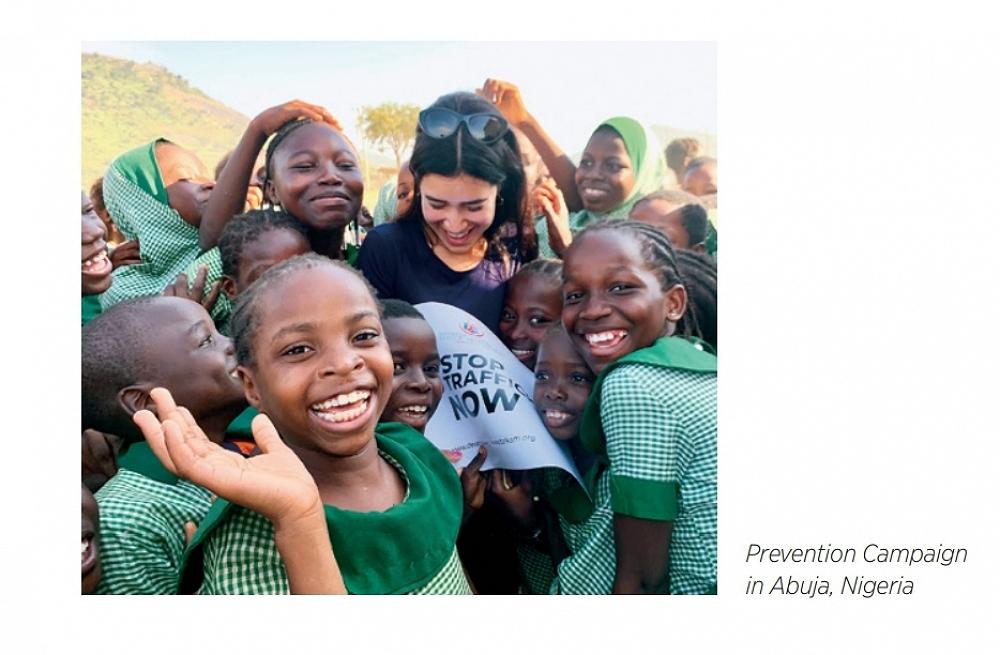
She participated in awareness campaigns in primary and secondary schools.
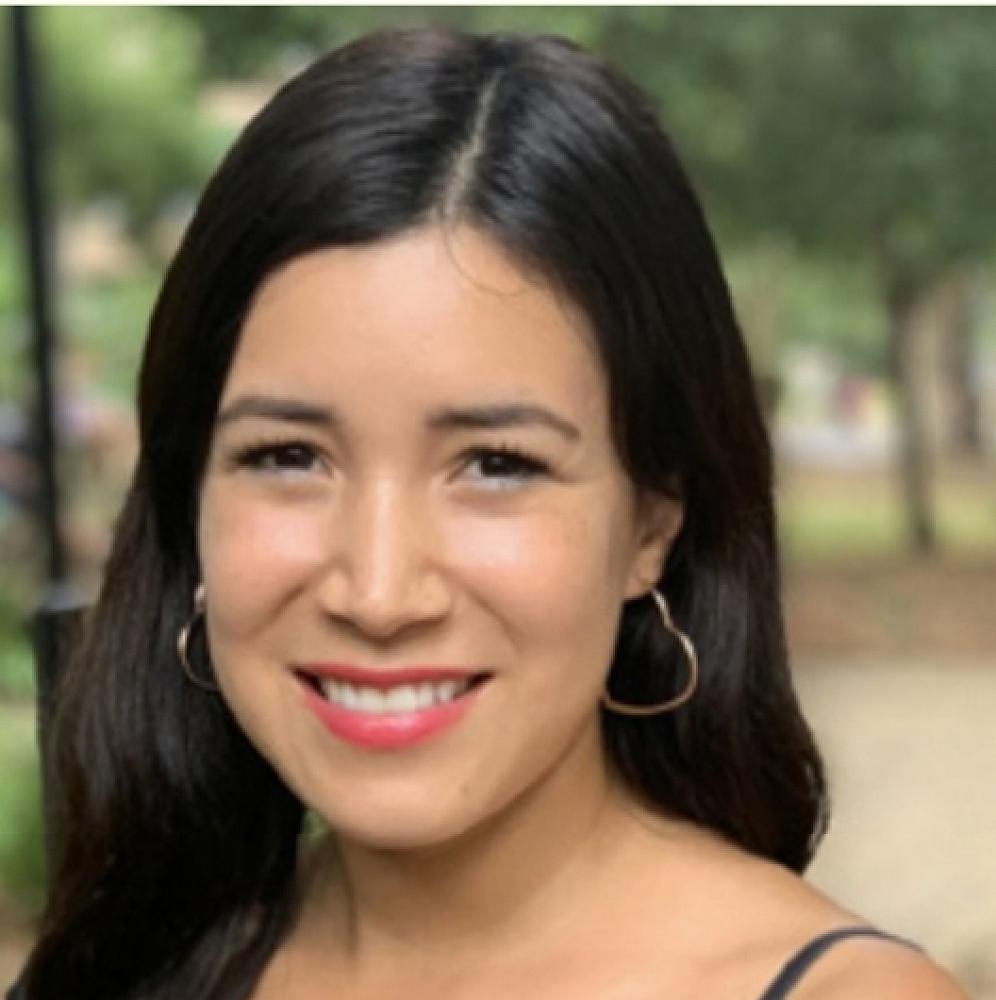
Sponsor Club: Club Rotario Puebla Centro Histórico, District 4185
Host Club: Rotary Club of Paddington, District 9600
AFE Country: Nigeria
HER STORY IN HER WORDS: :
CAUTION: Some content here may trigger readers.
I reflect on details of sex trafficking and sexual abuse. I leave it to you to decide whether to read on. I was sitting in a two square meter room on the third floor of a building, no windows, no fan and only one lightbulb above my head. The intense heat of that afternoon made me feel dizzy. The light was intermittent, and the constant power cuts left us in complete darkness sometimes for several hours a day. By then, I was already used to working like this, reading police reports and the medical files of victims in the gloom, talking to the girls with little air in the high humidity.
The first thing that I noticed when she arrived were the scars on her arms. I wanted to ask her about them, but I was afraid of the answer. She sat next to me, barefoot, a purple dress covering her knees, nervously playing with her fingers while I talked. Six or seven years old, this beautiful Nigerian girl was one of the sex trafficking victims in the safe house where I was working.
During my AFE I worked at Women Trafficking and Child Labour Eradication Foundation (WOTCLEF,) one of the shelters for trafficking victims of the Nigerian National Agency for the Prohibition of Trafficking in Persons (NAPTIP.) Nigeria is currently in the midst of violent conflict. We can forget about it when we hear that Nigeria is a rapidly growing nation with a thriving economy, the biggest in Africa. The country is still struggling with the repercussions of years of systematic terrorism fuelled by ethnic and religious divides. This has caused thousands of deaths and millions of displacements. The roles of women in armed conflicts are varied and complex. Sometimes they are active participants, sometimes they are passive victims or bystanders. As Hilary Matfess notes, they are variously “wives, weapons and witnesses.”
The use of sexual violence as a weapon of war is common in conflict scenarios. Women and girls are often raped, sexually enslaved, forced into marriage or subject to many other forms of brutality. The United Nations, NATO, and other international organizations have codified these abuses as some of the most serious violations of International Humanitarian Law.
assets/pdf/pdf_2019_07/20190709_1907-factsheet-sexual-violence-in-conflict.pdf
In Nigeria, the terrorist group, Boko Haram, has specifically targeted women as part of its war. Two of the most known episodes of the conflict are the abduction of 270 schoolgirls in 2014 in Chibok, and of 110 schoolgirls in 2018 in Dapchi.
But the total number of women kidnapped to be forced into marriage, prostitution, terrorist acts or given as a price for combatants, is hard to determine. In addition, the general devastation that conflicts bring and the conditions of poverty, domestic violence and child abuse, put women and girls at further risk.
During my AFE, I heard dreadful stories: female genital mutilation, girls as young as six years old raped with instruments, markets where people claimed they were selling human parts, and declarations of organ harvesting and baby factories, where women are supposedly being forced to deliver babies to be sold.
But in spite of all this, the country’s national agencies were working in collaboration with national and international organizations to implement the United Nations Protocol to Prevent, Suppress and Punish trafficking in Persons especially Women and Children.
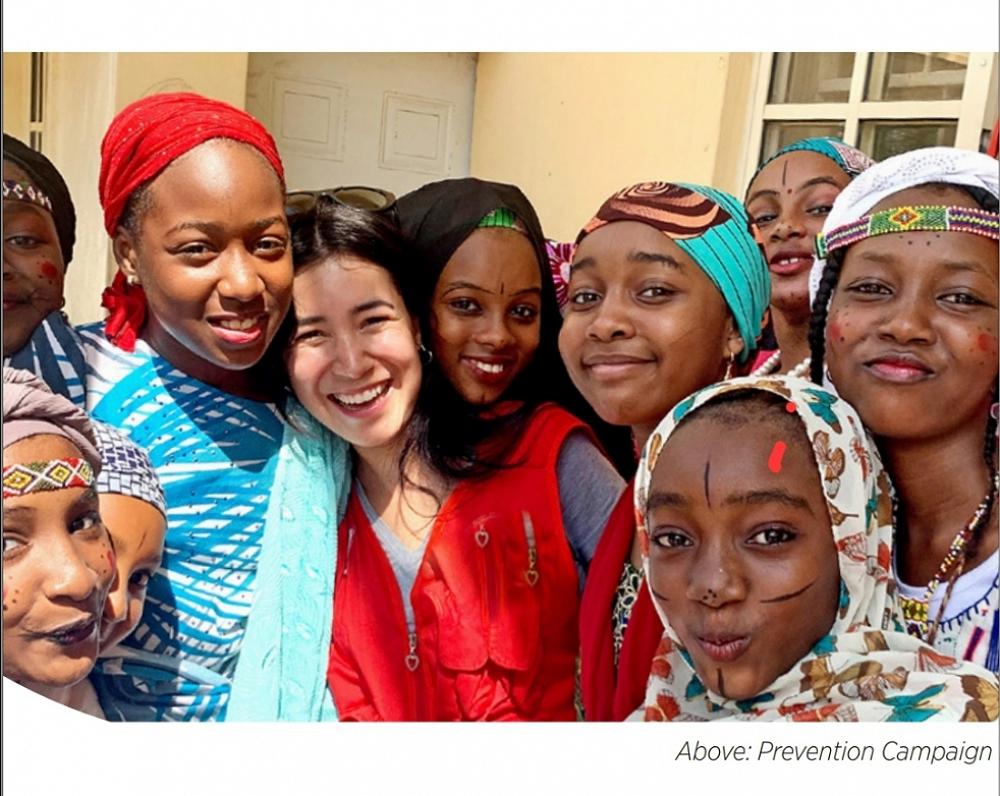
Through this, I witnessed some successes: children were rescued, lives were saved, and prevention campaigns were created. In the time that I spent in Nigeria, I met some of the most committed, benevolent, and caring people-- people who sacrificed their liberty so others could have freedom, people living away from their families so others could be reunited with their loved ones, people who have dedicated their lives to save the lives of others.
In those moments I realized that peace is a collaborative effort. Each of us in the field is just one link in a long chain of efforts to build a better world.
I was not a person alone on an assignment. I was the result of thousands of Rotarians all over the world living their lives for this cause. My actions were not those of a single person but part of a collaborative effort of people who have worked on this before me.
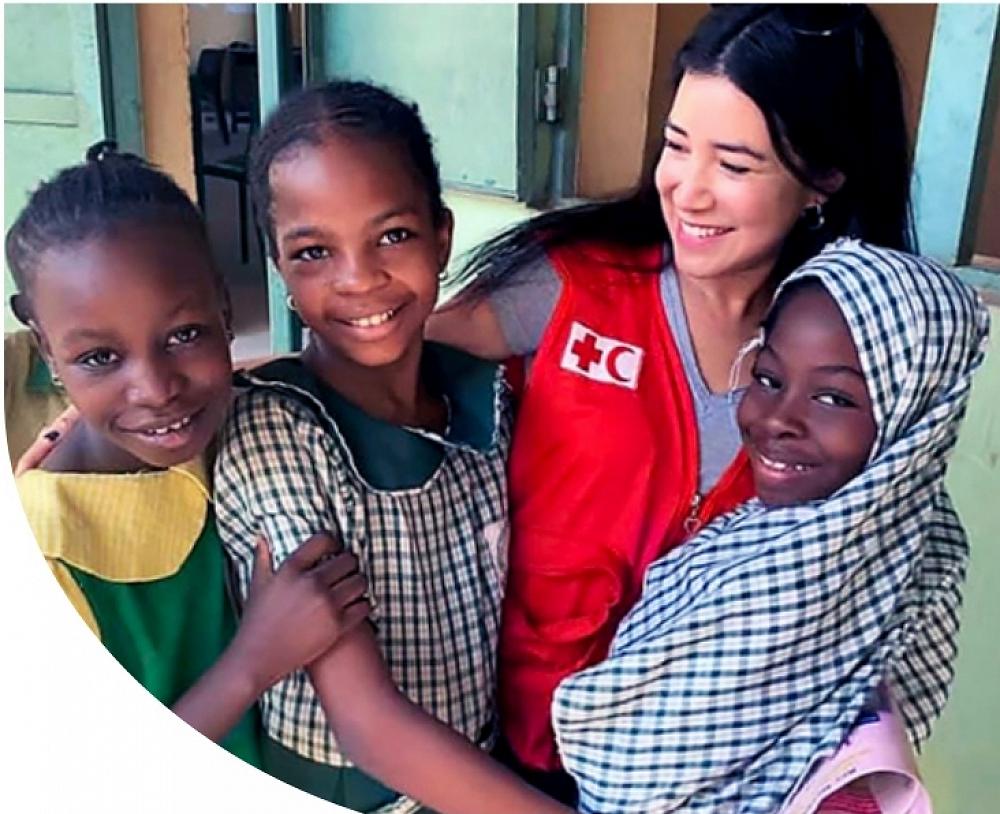
And for that I am eternally grateful.
My four months in Nigeria brought me years’ worth of lessons about compassion, strength, collaboration and peace. At the end, I felt confident that the girl in the purple dress will have a better future because people around the world are working together.
When I finally left, I knew I was not saying goodbye to the people I met there. I am sure that I will be seeing them again in another field, in another mission, in another effort to build peace in this world.