NUMBER 8 WIRE - THE CULTURE OF ROTARY IN THE SOUTH PACIFIC
What is different about Rotary in Australia, New Zealand and the South Pacific?
Article by PDG Euan Miller, Rotary Club of Norwood
Rotary International has spread its ‘Service Above Self’ message across the world into over 220 countries and geographical areas but, as any Rotarian who has done a makeup overseas knows, Rotary culture across the world means this motto has many different guises. The impending regional pilot has argued that we can create a more effective form of Rotary here, if we can reflect better our South Pacific regional culture. So, what is different about Rotary in Australia, New Zealand and the South Pacific?
Do it Yourself culture
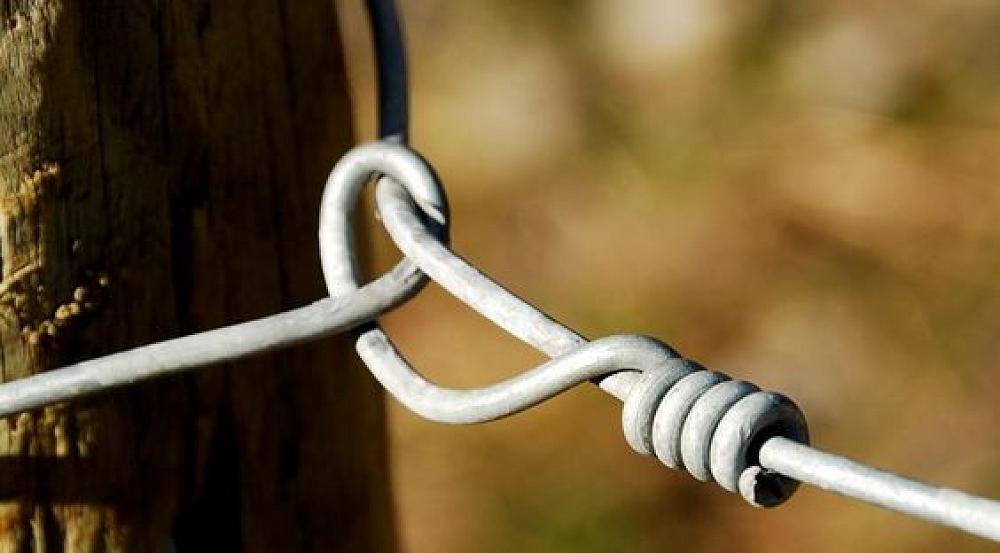
Probably the standout feature is our attitude to service. In Australia and New Zealand at least, where we have a strong DIY culture, we like to tackle any problem with a hands-on attitude to find a practical solution. We are an inventive, self-reliant and open-minded Rotary culture. In New Zealand it is characterised by no. 8 gauge fencing wire which as all Kiwis know, provides an immediate fix to any problem. All South Pacific Rotarians like to get their hands dirty and be on the front line of any service project. Projects not meetings, spending not fund-raising, doing not policy-making; is our Rotary culture.
In the 2022 RI All-Member Survey[i], South Pacific Rotarians topped the poll with 53% volunteering on projects for more than 5 hours over the past four weeks. Only one other region, India, had 51% all other regions were in 20%-48% range. In the same survey when Rotarians were asked “did you perform tasks and work to carry out projects over the past 12 months”, 83% in our region responded yes. Again, our hands-on culture, stood out as the highest in the world.
When you measure Rotary Foundation fund-raising we are not anywhere near the top tier of giving in the Rotary world. Even the Philippines, with a much lower per capita income, gives more per Rotarian than we do[ii]. Rotary in the Philippines is strongly aspirational and competitive. Rotary in the South Pacific is more ‘thank you for your donation, we will spend your money wisely and do the project to maximise the impact’.
Half our clubs are small
The second strong feature of our culture is the multitude of small clubs. In June 2023, 47% of our clubs had 20 members or less (20 is the minimum size to charter a club) and even more worrying 14% had 10 or less members[iii]. This is not because the community pool of potential members is small. All these clubs were much larger but over the years they have gradually become smaller and smaller because maintaining membership has never been the priority.
All these clubs are in a danger zone where they don’t have enough members to carry out a range of projects that can attract new members, they struggle with repeat presidents and board members because every member has been there and done that and the age profile is getting older and older each year.
A lot of these clubs are in rural and remote areas so if they hand back their charters, we lose all their members at once. In the smaller South Pacific nations, almost all clubs fall into this category so if a club closes, that country loses Rotary all together. Even in metro areas if a small club closes only a minority transfer to another club.
One of the major priorities of the pilot is to revitalize and strengthen these clubs in danger so they refocus on community needs sufficiently to attract newer and younger members with that same energy and enthusiasm that their current members had when they first joined.
Egalitarianism
A third feature of our culture is our egalitarianism. As Rotarians, we value authenticity, sincerity and loath pretentiousness. We are modest, humble, self-deprecating with a very strong sense of humour.
In the All Member Survey, Rotarians were asked “should membership of Rotary be exclusive and reserved for community leaders?’” our region voted strongly no with only 8% agreeing. Whereas most of the Rotary world (apart from the British Isles) voted two, three or four times higher.
Similarly, when Rotarians were asked, “traditions are important to me” we, and the British Isles, voted 59% and 57% respectively, whereas all the other regions were in the 70s and 80s percentiles. As South Pacific Rotarians we are much more open-minded to change. Professional connections, often touted as a reason why people join Rotary, was not a strong feature either in our region. Only 16% said it was one of the reasons for becoming a club member whereas in North America it was 37%, in Europe 39% and Japan 54%. Local community service, at 59% for the South Pacific, was our major reason for joining – again one of the highest in the world.
There are probably many more features you could add to define our South Pacific Rotary culture. I think we are much more informal and relaxed than Rotarians in other regions and also much braver and prepared to take more risks because of our peaceful society base and relative isolation from other parts of the world. However, I don’t have measures to support this. What do you think?
[i] 2021 Rotary All-Member Survey. Results for Rotarians. Evanston, Rotary International, Jan 2022. RI identifies 10 cultural regions – Africa and the Middle East, Australia New Zealand and the Pacific Islands, Central and SE Asia, Europe, Great Britain and Ireland, India, Japan, Korea, Latin America and USA, Canada and the Caribbean
[ii] RISSPO The Rotary Foundation
[iii] RISPPO Zone 8 membership by club at 21 June 2023
Gallery