
The Problem with White Saviours
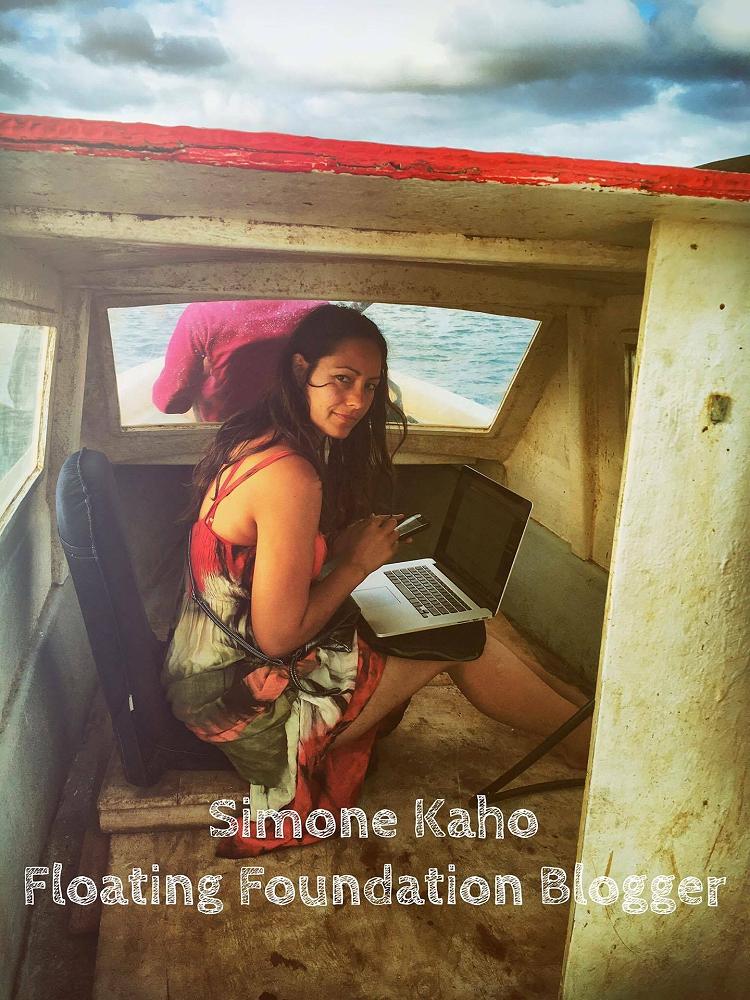
In 2016, Simone Kaho was invited to join a New Zealand charity mission sailing to Tonga to provide medical aid and training in far-flung villages.
She leapt at the chance to reconnect with her late father’s homeland, and to do good. But the experience has led her to reflect on the politics of “helping” — and to question the motives of some of those in the business of doing good.
I met Craig Koning for the first time at a cafe in Mission Bay. He sent me a photo of himself walking there as I was walking there, so I’d recognise him, which was redundant as we’d already been messaging on Facebook. His profile, which I’d lightly stalked, was abundant with photos, including one of him shirtless in a captain’s cap at Splore.
He was Pālangi, averagely attractive, and looked about 27. I kept an open mind.
“You look lovely,” he said as I approached the outside table he was sitting at, his napkins blowing away in the wind. We were meeting to talk about his mission, Floating Foundation — an aid initiative in which volunteers sailed on a trimaran taking medical supplies and training to outlying islands in Vava‘u, Tonga. The volunteers paid a daily amount for the privilege.
My mission was to get on to that boat.
It was March, 2016. My life was in flux. My Tongan father had died less than a year earlier. I’d stopped drinking and was reconsidering my career: whether to keep working in corporate or follow my dreams to become a writer and film director, as Dad had encouraged in his later years.
I filled the chasm of my weekends with relentless cause-joining and activism. I attended anti-rodeo protests and joined animal rights groups. I patrolled Western Springs with a group saving ducks paralysed by botulism, a bacteria that gets rife in summer. I went for a swim to save one. I went to vegan potlucks and made new friends, like Emily, a climate change activist and nurse and world traveller. Emily had recently met Craig at a laser strike get-together.
I learned that Craig was a South African migrant, that he had a millionaire dad whose Auckland mansion he was living in at the time, and that he’d been a DJ and an events organiser before he founded his own charity, Floating Foundation. He seemed to have connections. One of his major sponsors was Ricoh, which had hosted fundraisers for him. Craig had just returned from his first aid mission in Tonga on his boat Pickety Witch. He was doing stopgap work managing roadworks gangs and planning the next expedition.
From the moment Emily told me about him and the Floating Foundation, I started dreaming about Vava‘u. In my dreams, I’d swoop over houses and hills with my father.
Hence the meeting at Mission Bay.
I presented myself as a digital-media-blogging person, who could cook.
He asked me about my Tongan connections, which are limited, and Tongan language skills, which were nil, neither of which bothered him. He showed me photos of the last expedition, with pictures of Tongan children smiling at the camera, in a montage alongside images of healthy, tanned volunteers, grinning and sailing. Totally instagrammable.
My heart jumped when I saw the kids — they reminded me of my cousins. It was a strange feeling because the pictures also reminded me of aid campaigns for Africa.
Craig talked a lot about the sea, how much he liked teaching people how to sail, the dangerous voyage back to New Zealand from the last expedition. His eyes became intense blue as he described his boat scuttling across the ocean. It was mesmeric and slightly nauseating.
I asked why he chose to launch an aid project in Tonga and not in New Zealand. He said: “I think the New Zealand government looks after New Zealanders well enough.” He talked vaguely about aid not getting to the right places and corruption. I backed off because politics is not my thing.
“How do you get something like this off the ground?” I said to him.
“My favourite quote is: ‘Leap and the wings will appear,’” he replied.
We finished up, and as we approached the door, Craig paused to let me pass.
I said: “It’s strange, to see my people like that.”
Craig answered: “Yes, they are our people.”
Which was not what I meant. I meant “my people” as in “those kids could be my cousins.” Not as part of a universal connectedness, or whatever Craig meant. We stepped out into the stormy summer evening.
Four weeks later, I received an official letter of invitation to join the crew.
“How wonderful! Thank you! I’m tickled pink and overjoyed to accept,” I emailed back.
Yet I had a sneaking feeling, as I quit my job and told people about the mission, that something wasn’t quite right. I couldn’t put my finger on what.
An older male Pālangi at work said: “So what will sticking plasters and bandages do for diabetes?”
An older male Tongan cousin said to me: “Well, it’s not going to help Tonga sort out its own problems, is it?”
My sister said: “Hey, don’t listen to them being negative. If it’s needed, it’s needed.”
I packed my backpack, sub-let my flat, said a tearful goodbye to my Burmese cat, and got on a plane with Emily. We stayed with family in Tongatapu, displacing my niece from her room. Four days later, after hitching a ride on a cargo ship because the passenger ferry was grounded for repairs, we arrived in Vava‘u.
We boarded Sea Runner early in the morning on June 5. “We” being the all-woman crew. Five of us, plus Craig. No experienced sailors except Craig.
From the beginning, things started going wrong. Some of it was safety related, including a disastrous first sailing leg when the engine broke down more than once, the tender came loose, and the mainsail ripped. All while the trimaran bobbed through Vava‘u’s jagged and tightly interlocking reefs.
Then there was Craig’s bullying. It started on the first day, with the dangerous first sail. Everyone got yelled at, but especially the first mate, who was also his lover. I have a memory of him standing over her, speaking furiously and quietly, too quietly to hear, although the general gist was clear. She, much shorter, standing before him with her head bowed, Floating Foundation cap pointing to the ground.
Later, when the crew were chatting, I found out that I was the only one Craig hadn’t tried to get in bed at some point in the lead-up to or on the mission.
I felt a deep murky feeling. Something like panic.
Nonetheless, Craig delivered on the vision of paradise he’d sketched at Mission Bay. We cruised out in the tender to underwater caves, where I, an unconfident free diver, got stuck and had to be rescued by Craig. To my shame. At dinner, he said he’d enjoyed seeing me on the edge of hysteria. That pushing the boundaries was where exciting things happen.
We snorkelled over coral reefs so intensely bright they made Saving Nemo look underplayed, with fish of all shapes and colours nudging each other and playing like dogs. I swam over the drop-off, dazzled by the electric indigo of the water, an endless vision in front of my mask.
I felt pride to be associated with this place, that my bloodlines traced here, to Tonga. I started to grow confident in and on the water. I even took the helm of Sea Runner.
Every morning, I woke up and dipped into the sea for a wash. Every evening, I read the blog of our activities to the crew, sanitised and with dialled-up humour and positivity. Eating and laughing under the stars.
While day-to-day scenes were overwhelmingly beautiful, I couldn’t help but compare it to the first time I was in Tonga when I was 16, staying with a school friend. Then, I’d been immersed in a Tongan world that was strong, and swaggering, unapologetically itself, where it was on me to learn, to try to fit in. I felt intense pride when I started to pick up Tongan things, understand inflections, begin to blend in.
Compared to that, being on Sea Runner felt glossy and superficial. Like I’d uprooted a chunk of my Kiwi life and taken it with me to Tonga.
There was something else going on that I haven’t been able to put into words until now. As the crew scrambled to help Craig organise things that could have, should have, been done before we left — updating the training manuals, stocktaking and labelling of the medical equipment — I started noticing something.
The Pālangi nurse training volunteers spoke in a faux-fresh accent, like my Pālangi mother would. A kind of pidgin English which involved replacing words like “the” with “da,” and using a sing-song storytelling voice.
The other volunteers, all Pālangi, and one Chinese Kiwi, snickered about it. One of them laughed about the Tongan shack of an airport, and joked that the engine of the Sea Runner was irredeemably broken because “there’s no way we’d find engineering support in Tonga”. (Incidentally, we did find help, at a place called Trouble in Paradise.)
A game began. “You know you’re in Tonga when . . . you can’t get anything fixed. You know you’re in Tonga when . . . (insert developing country fail).”
Part of the medical training was teaching the volunteers about diet and how to avoid diabetes.
“Don’t you think it’s pretty hypocritical,” I said to Emily, “that western culture has introduced fast food, fizzy drinks, and cheap fatty cuts of meat, and now we’re here preaching they’re unhealthy?”
She shrugged: “So we can suggest they don’t follow in our footsteps?”
Craig hilariously imitated the accents of South African blacks and the Hunga town officer. There are notes in my journal trying to pinpoint what’s wrong with imitating accents.
Looking back at my journal, I can see how startled I was. I just didn’t expect to find racism on board. These Pālangi had left New Zealand, and come to Tonga, to do good! It was too jarring to understand, and it hurt. I was angry, and I was failing to call it out effectively.
I felt protective of the Tongan volunteers we were working with, almost all women, of their (mostly) big bodies and the kids with scabs they would sometimes bring to be treated. Only one or two — most of the kids had bows in their hair and bright dresses. Of how attentive they were during training, ignoring other Tongans who laughed about Pālangi teaching them to run cold water over burns, when everyone knew you should use butter.
The trainees made us a feast on the last day of training. Craig invited some rich German tourists, like it was a tourism event. Luckily they didn’t show.
The food was sensational, even for a vegan. There was tapioca, yam, taro, salad, as well as meat stuff for the others.
One of the trainees grabbed my hand. She said she’d just found out I was Tongan and it made her happy. The Floating Foundation crew were presented with gifts and she gave me a shell necklace in the shape of a shark’s tooth.
The Tongan women waited until we’d eaten, then rose and approached the table. “Did you see them demolish it?” Craig said afterwards.
A confusing thing was that it didn’t feel done with malice. I could see there was like and appreciation on both sides. There was also an underlying imbalance. We were in the homes of Tongan people “helping,” but beneath that, judging. Seeing a generic third world situation. Not really appreciating or learning about Tongan culture or history. None of us really understood the political forces that had brought about our expedition.
This was a particular failing for me because, unlike the other volunteers, I had skin in the game. I had an identity stake. I was there to connect.
I felt stuck in the middle. Here I was with a Pālangi contingent, not feeling I had the right to call out comments that felt racist, because I felt like a fake. My fellow volunteers didn’t see me as Tongan, which I presume is why they made those comments in front of me.
I also lacked the confidence to reach out to Tongans, to identify myself as a Tongan, and ask to be included somehow. I guess no one wants to have to ask for that.
Walking in Neiafu village, I stopped to chat when some Tongan teenagers working on an official-looking lawn called out to me.
“We don’t mean to offend,” they said, “but what are you? You have a body like a Tongan but say ‘mālō’ like a Pālangi.”
I knew they were being cheeky, but they were right. What was I?