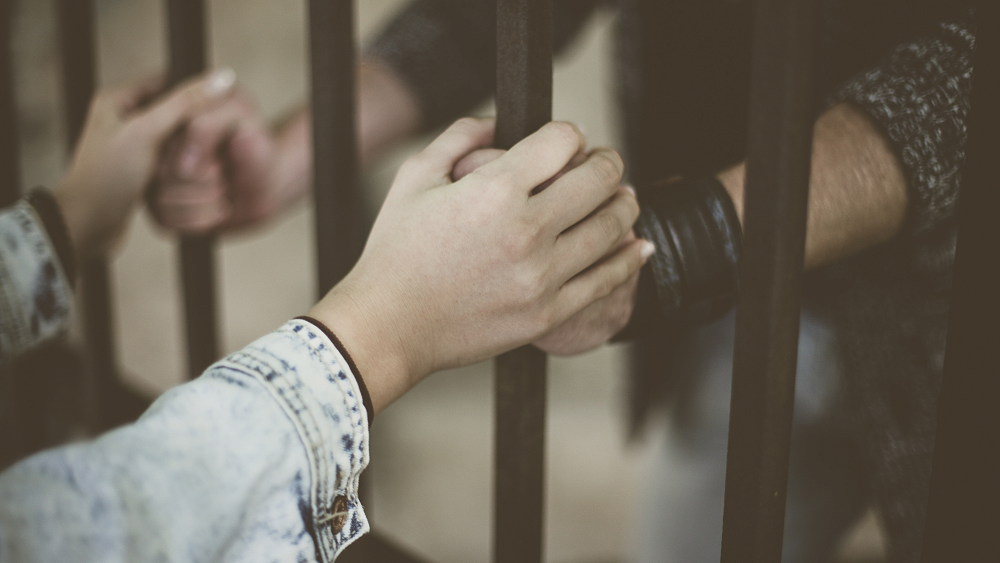
I was in prison and you came to visit me.
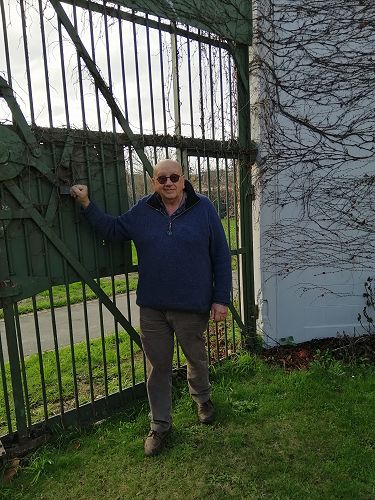
Don Rowlands was our guest speaker at Antioch’s The Table and spoke to us about his Prison Ministry.
As a teenager Don was sent to his uncle’s farm to help out, and was struck by how his uncle had gone out into the misty night for two hours looking for one little lamb. Even though his Uncle owned a large farm, that one little lamb was highly valued, reminding Don of the parable of the lost sheep. That image of his uncle bringing in that little lost lamb across his shoulders, wrapping it in his Auntie’s best towels and setting it in front of the fire to dry and warm up has stuck with Don to this day.
Luke 15: 3-7 3 Then Jesus told them this parable: 4 “Suppose one of you has a hundred sheep and loses one of them. Doesn’t he leave the ninety-nine in the open country and go after the lost sheep until he finds it? 5 And when he finds it, he joyfully puts it on his shoulders 6 and goes home. Then he calls his friends and neighbours together and says, ‘Rejoice with me; I have found my lost sheep.’ 7 I tell you that in the same way there will be more rejoicing in heaven over one sinner who repents than over ninety-nine righteous persons who do not need to repent.”
Don sees his Prison Ministry as a calling, looking for and helping the lost sheep. He has taken his inspiration from Matthew 25:34-40
“34 “Then the King will say to those on his right, ‘Come, you who are blessed by my Father; take your inheritance, the kingdom prepared for you since the creation of the world. 35 For I was hungry, and you gave me something to eat, I was thirsty and you gave me something to drink, I was a stranger and you invited me in, 36 I needed clothes and you clothed me, I was sick and you looked after me, I was in prison and you came to visit me.’” 37 “Then the righteous will answer him, ‘Lord, when did we see you hungry and feed you, or thirsty and give you something to drink? 38 When did we see you a stranger and invite you in, or needing clothes and clothe you? 39 When did we see you sick or in prison and go to visit you?’ 40 “The King will reply, ‘Truly I tell you, whatever you did for one of the least of these brothers and sisters of mine, you did for me.’
Don began his Prison ministry about 5 years ago. He is part of a team of 6 that go to the prison once a month to take two services. After the lengthy security checks at the entrance, they begin their services with a karakia to welcome the Holy Spirit [Wairua Tapu] then a waiata and hymns, Bible readings with a short talk, prayer and intercession followed by time for one to one meeting with the prisoners to offer hope, encouragement and empathy over tea and coffee.
Their main goals are to: “Treat prisoners with respect and honour so that their dignity and Mana are restored. To acknowledge the ethnicity and culture of those present especially Maori and Pacifica by including Te Reo in karakia, and waiata. To bring the Good news of God’s love and mercy for all. Although they are physically imprisoned, their minds and hearts are free to accept God’s grace and live with mana and to serve God.”
Don told us that 52% of NZ incarcerated people are Maori despite making up only 16% of the population. 90% of incarcerated people have a lifetime diagnosis of a mental health disorder or substance abuse. A Queensland study found that over 50% of prisoners were sexually abused. Inside many adult prisoners is a “hurt child.” Literacy rates are low. There is a silent sentence of ongoing stigma after release. Families suffer socially, financially and emotionally."501 Deportees” from Australia struggle with the absence of whanau and family in New Zealand. A lot of food for thought within those stats.
Don finds the Prison Ministry very rewarding, he told us that once the members of Black Power and the Kapa Haka group honoured them with a thunderous Haka in appreciation of the Te Reo content in the service. Prisoners have an openness and honesty that it is a privilege to hear and often moving and inspiring. In what is a harsh and sterile place, it feels good to bring some reassurance and hope.
Whakatauki Of Hope
E huri tō aroaro ki te rā,
tukuna tō ataarangi
ki muri i a koeōā
Turn and face the sun
and let your shadow fall
behind you.
Gallery