The significance of a strong foundation
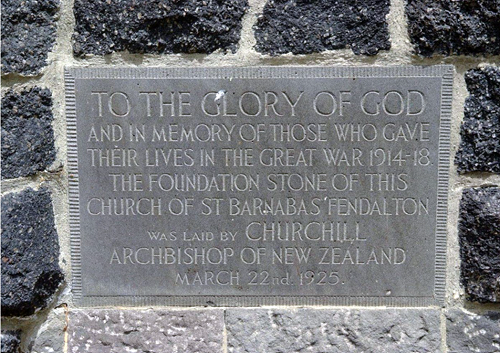
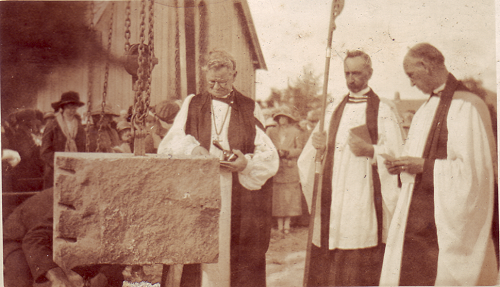
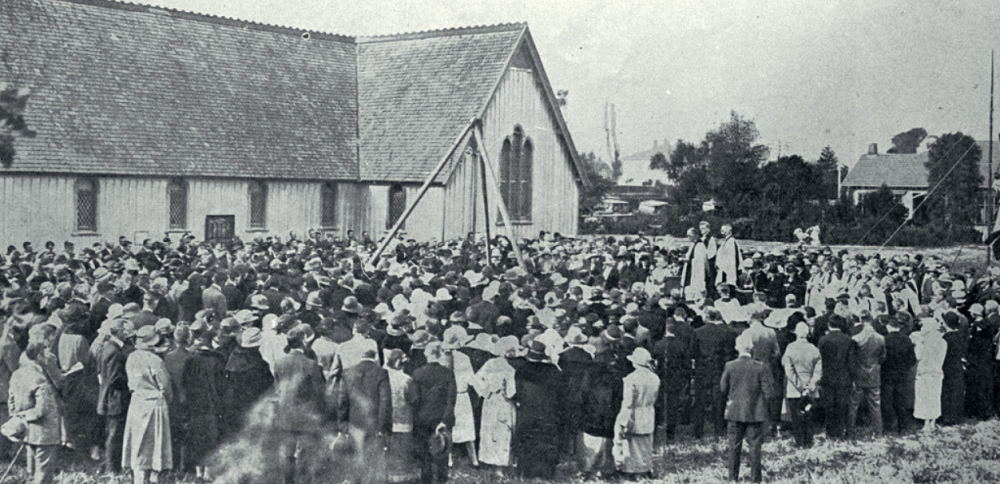
On 22 March 1925, the parish and community of Fendalton gathered to lay the foundation stone of the Memorial Church of St Barnabas to replace the much-loved wooden First Church.
The foundation of the Fendall Town community was the selection of 50 acres of Rural Section 18 by Walpole Fendall in March 1851, and his prompt subdivision of 10 one-acre sections. A long walk across fields and streams to attend St Peter’s at Upper Riccarton, nurtured the desire for the construction of a local wooden chapel-of-ease in 1876. A growing population led to extensions to the wooden church and the foundation of the separate Parish of Fendalton in 1883.
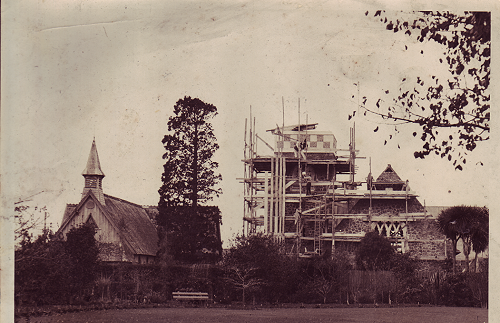
The desire to build on these early foundations inspired the vicar, Canon Thomas Hamilton, and vestry, from the turn of the century, to dream of constructing a larger church in ‘permanent materials’. Although put on the backburner during World War I (1914-1918), fundraising and planning continued, and the heartfelt desire to honour those who served and fell in the Great War rallied the parish and community.
The first issue of the Fendalton Parish Magazine in 1920, an initiative of the new vicar Rev. Hugh Leach, announced that “Mr Cecil W. Wood, our well-known architect has drawn us a plan of a beautiful village Church” which was to be sited immediately behind the First Church, and the grounds would then be landscaped with lawns and English trees. On 22 March 1925, the service of dedication was led by the Archbishop of New Zealand Churchill Julius, Bishop of Christchurch, as the foundation stone was laid for the next chapter in our faith journey in Fendalton.
The link here has a useful reference list with links to Papers Past.
Gallery