Reflections: Food, Glorious Food!
For many Old Boy boarders throughout St Bede’s history, the food they ate at school sadly doesn’t bear remembering. With tales of plain mince and stale bread that would much rather be forgotten. This month we thought it would be fun to take a look back at the meals our boarders have been served up, based on the memories from Old Boys, and find out what's on offer for today’s lucky students.
Current-day offerings aside, for many St Bede's boarders who have made their way to the dining hall over the years, the food was at times a bleak prospect. It could be argued however that the menu was worse for those who experienced boarding during the war years, where food shortages and rationing provided a challenge to the staff. Boys were often given the task of helping Fr Alan Kennedy with the torturous task of cutting up dozens of ration books and sorting them into categories. For the boys, though the quantity of food wasn’t an issue it was the variety. Gerry Rathbun, a boarder in the 1940s, recalled:
“In one term I think we had rhubarb every day. I can recall one occasion where the rejection rate was so high among the boys that there were extra rubbish bags already in place before they went into the dining room.”
Bernard Kearns, then a table prefect, recalled a story from the 1940s involving Rector Maurice Dowling and the spinach being served up day after day.
“We weren’t eating it. He came down to study one night and gave us a long talk about spinach and the value of the iron it contained. It was quite extraordinary. The next day he came into the dining room and walked up and down to check the boys were eating it. Our table had an older steel bowl with some decrepit handles and part of one fell into the spinach. I quipped to Fr Dowling that there was certainly plenty of iron in our allotment. He gave me a 2 for Discipline.”
Breakfast was rather dismal as Graham Shaw, a boarder through most of the war years, recalled:
“It was porridge or prunes at breakfast, there were hardly ever eggs and limited butter. The bread was often stale.”
We asked Old Boys across different generations to share their memories of the food served while they were boarders. The below responses show that while things had improved slightly from the rationing of the war years for some the food was still underwhelming.
Barry Gardiner (1949 to 1954): “Mince with peas and carrots. That's all I can recall. I know we were broken up into tables and I think there was eight a table. When breakfast was on, we had two pieces of toast from memory. There was a small piece of butter, about three inches by two inches and there was one guy who was in charge of the food that sat at the table, someone was allocated that job, and his job was to cut that piece of butter into eight pieces. And we each got handed a little bit of butter to put on our two pieces of toast. Yeah, no the food wasn't great to be quite honest.”
David Cotter (1953-1958): “Well, I never complained much about it. Because you had to eat. I think that first year I became anemic, lack of iron. I'm not sure why it might have just been a growing spell. But all that happened then was I was given a jar of Bovril by my parents and I used to drink that, so that helped. But the food was adequate. Nothing special. Not like home.”
Kevin O’Sullivan (1964-1966): “Yeah, I mean, it was ordinary, you know, and it fluctuated a fair bit. My mother was a great cook and she always ensured that there was stuff being sent up for the boys at the boarding house and we kept them there and my brother had a reputation for selling some of mum's cooking. But the meals were fairly basic in the morning they were sparse even. But you know, you sort of accepted it really or you look to occasions where in fact you know those specialties that you quite liked, sticky pudding and that sort of thing that was above the ordinary. Chops never made particularly a great impression, but if you were going to survive, you had to eat it. So away you went.”
Alan Davidson (1968 to 1971): “I haven’t got much to say about the food when I boarded as I didn’t enjoy it one bit. I do remember one time that we received sausages, I think it was, for tea and we wouldn’t eat them. We got them again for breakfast and ended up eating them for lunch. We only received toast as a treat and I think it may have been when the 1st XV had College games and the rowers were performing somewhere.”
Richard Catterall (1969-1973): “Most of us thought it was awful. I was reasonably happy with it. But I ate, everything I still eat everything. So, it wasn't a worry. I do remember that on a Saturday night. Dinner was two bits of luncheon sausage. And there might have been some bread and butter. I don't seem to remember anything much else for dinners on a Saturday night. And it was partly because they knew that a lot of the boys would sneak out go down to the fish and chips shop down the road on Saturday night. Then we'd come back and watch the Saturday night movie…. We had milk twice a day. So, for breakfast and dinner, there was milk and jugs on the tables which were straight off the farm. So, it went from milking, into the fridges in the kitchen and then onto our table. It was fresh milk. At lunchtime, there was water on the table. So, there was either milk in the morning or evening or there was water.”
Tony Wright (1971-1975): “Breakfast was usually porridge, very dry and chunky, plus as much toast, bread, and butter as you could possibly eat. Well-stewed tea was also available, as was hot water to mix with whatever drink you were allowed to take in – Milo was a popular one. You could take in your own weet-bix or cornflakes and eat that with the milk and sugar provided. Breakfast saw many boys taking their own supplies in rather than eating the food supplied by the school. If you were in the swimming or athletics team, the rowing crews the First XV or First XI you were given bacon and eggs for breakfast on the mornings of the Inter-secondary school sports, and of College games. Luxury!
Lunch was a mix of “dishes” which have faded in memory over time. I do still remember the first time we were offered the curried mince, with rice, at lunchtime. It sat in a deep pool of fat and I found it inedible, in fact, it made some people sick. Most of it was returned to the kitchen.
Dinner was very often beef stew (usually tough from poorer cuts of meat), mashed potatoes, and the very over-boiled cabbage. Desert sometimes consisted of apple crumble/apple pie and custard. The whole apple seemed to be used, core and all because there were often pieces of core in the crumble/pie. Some junior boys were convinced by senior boys that these were toenails!
In 1975, when the new kitchen and dining room opened, the standard of food lifted markedly. It was unrecognisable and we left the dining room after a meal feeling like we had a full stomach.”
Stephen Kinder (1985-1989): “My memories of the St Bede’s boarding school food in the eighties was that it was plentiful if somewhat bland and a very predictable menu. The borders would play a game to see if we could recite the weekly meal roster from memory and I could do so for some years after.
Breakfast was the usual porridge, cornflakes, toast, tea, and coffee. The toast was made by one of those large conveyor machines you get in hotels, which gave it a curiously rubbery texture. The dining room was very cold in the mornings. The kitchen staff would set out small metal plates of butter for the toast so the first action on arrival was to get a hot mug of tea and set the metal plate on top to melt the butter. Generally, one table member would need to remain to guard the butter warmers whilst the others collected their porridge or the latecomers would simply swipe the plates of nicely softened butter.
Lunch was sometimes pies and chips with fresh bread, which was a favourite. Also, the Friday no-meat lunch of soup, boiled eggs, and fresh bread was well received. The ham and salad combination was most feared, neither was really recognisable and many boys opted for the tuck shop or relied on their day boy mates for lunch that day.
The dinner roasts of pork or beef were popular, with the deep-fried crispy potatoes and gravy being sought after. Friday night was always fish and chips, not the highest quality fish so mixed reviews there. Deep-fried chicken pieces were probably the best meal. One of my earliest meals as a third former was this and the kitchen had over-catered. I ate so much I was up sick in the night!”
Brian Clayton (1989-1992): “I remember the Monday luncheon sausage, mashed potato and salad lunch. You’d put your tray down on the table and all the bugs would start running out of the ‘rabbit’ food. Monday was bad times for hungry boarders! My favourite was hotdogs and chips. Bloody hard to go wrong there!
Dad, (John Hugh Clayton 1965-1967), said they used to drop the jelly out of the top of Durham and it would bounce.”
Hungry boarders were always trying to secure extra food wherever they could. One way they achieved this was to get a day boy to pick up extra food from the dairy across the road on their way to school. Making friends with day boys had its perks as the mothers of day boys would often send their boys to school with extra sandwiches for boarding friends.
Looking back at his time as a boarder in the 1950s Barry Gardiner recalled: “We were always starving. Literally always starving and there was a dairy on the corner over there right on the corner opposite the entrance which in those days went down there on the western end of the school that went right down there. And on the other side, opposite the entrance was Foley's Dairy. And that was a source of unimaginable food. Little pastry things and pies. But you weren't allowed to go over there so, it had to be a kind of sabotage job. You had to get over the fence at midnight, or when it was dark before they closed and get what you wanted. If you had enough money.”
According to Barry boarders kept their extra food in lockers as he remembers: “There was the room full of lockers for the borders, where they could put their food if they got any sent in, which was then eaten by the rats that occupied that room... It’s a wonder there wasn't a plague around here.”
For Tony who boarded in the 1970s the experience was much the same: “I came from a farm, so at home, we always had fresh and plentiful food. I had never been hungry before going to St Bede’s. That soon changed. If it had not been for well-stocked tins of food from home, called tuck boxes, and the generosity of several day boys who donated their sandwiches, I would have been even hungrier. You could also have an account at the dairy across the Main North Road. Parents could pay money into the dairy at the start of the term and boys could buy fruit (supposedly) with the credit. The chocolate cream buns were also very popular.”
Despite the unappealing food on offer boarders found fun in the Dining Hall where they could with record-setting being one such way. Volunteers from surrounding tables would give up their allotted portions for serious record attempts. With records being set for who could eat the most of a variety of foods on offer including: Dick Steel (1969 to 1973) who ate 107 prunes in one sitting and ‘Springer’ (J.F.) Kearns (1947 to 1951) held the bread-eating record at 15 slices, while the sausage record reached 23.
The food boarders are served today is in stark contrast to the food (or lack of it) served up over the years. Today it is the mission of the Catering Manager to create wholesome, energising, and delicious food that encourage the boys to want to eat their greens.
An example of a daily menu for the boys includes:
A full continental breakfast with a selection of cereals, fresh fruit, yogurt, and toast;
Morning and afternoon tea with items such as pulled pork subs or fresh muffins and a smoothie.
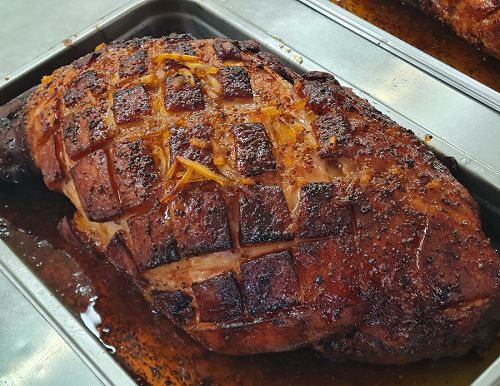
Lunch could include honey mustard glazed ham with potatoes and salad or roasted chicken and mayo subs.
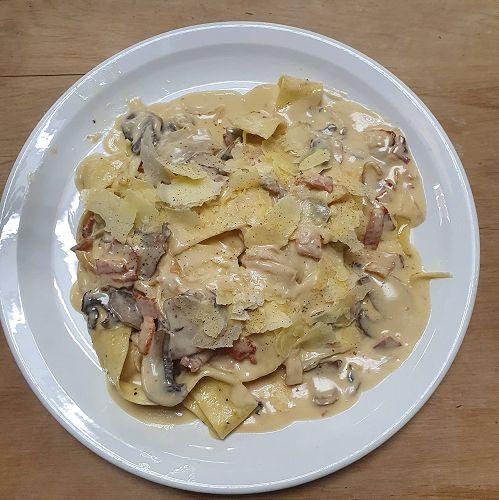
Dinner options could be a pasta pappardelle with slow braised lamb ragout, or baby back ribs and buffalo wings followed desserts offerings of Ambrosia, chocolate croissants or brownie.
For supper always on offer are biscuits, fruit, and milo.
Our borders of today certainly do not go hungry.
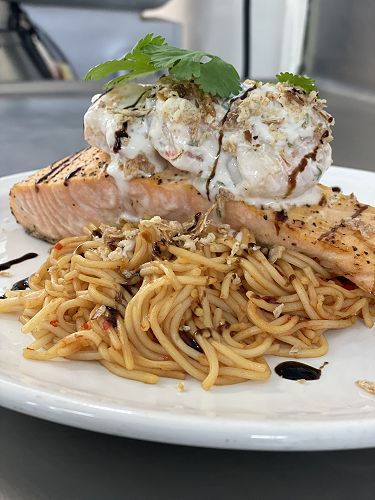
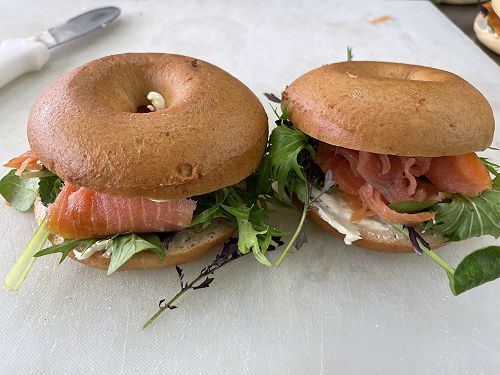
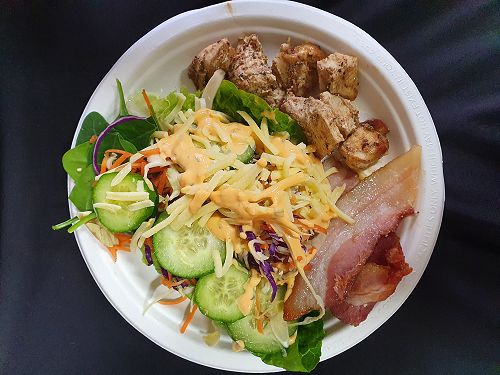
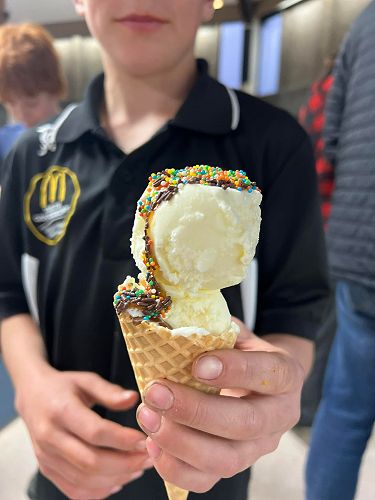
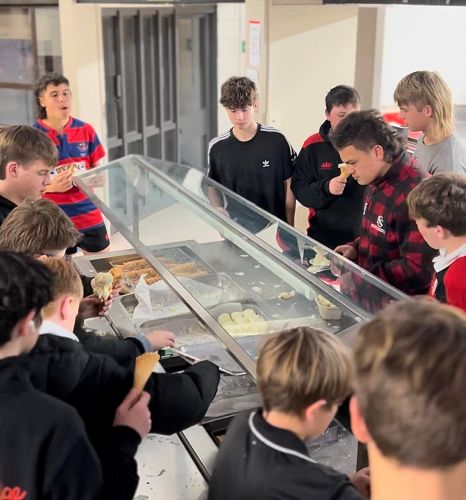
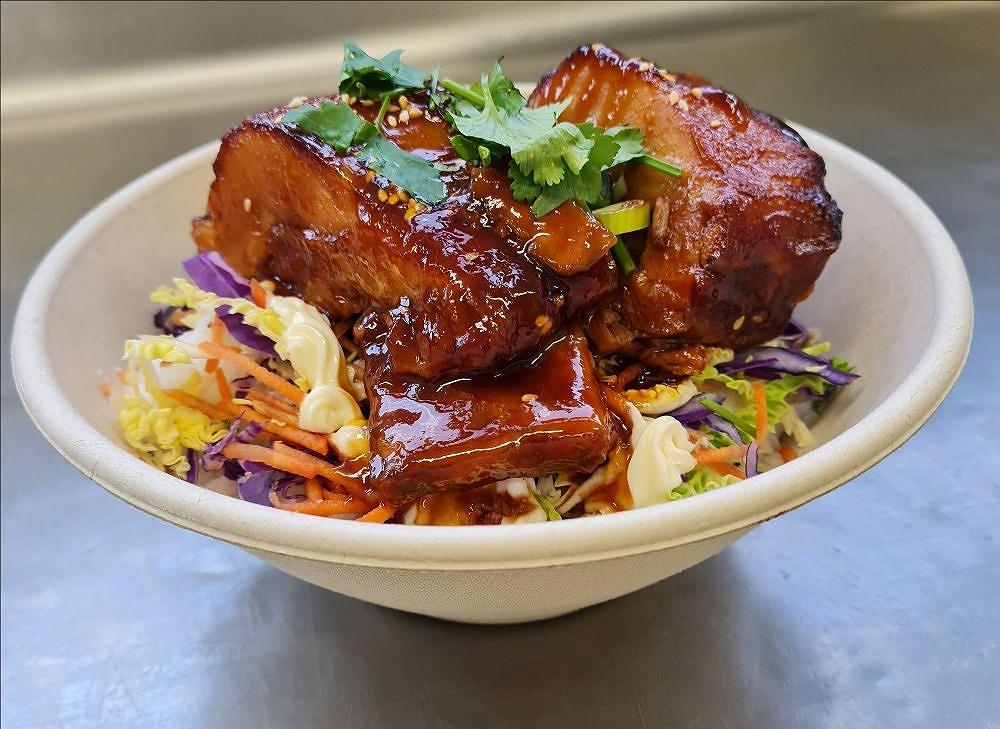
Below is a selection of photos showcasing some examples of food they have been served up recently. Enjoy!
References:
Catterall, Richard. “St Bede’s Oral History Project.” Interviewed by Emily Rosevear. 27 April 2022.
Cotter, David. “St Bede’s Oral History Project.” Interviewed by Emily Rosevear. 25 May 2022.
Gardiner, Barry. “St Bede’s Oral History Project.” Interviewed by Emily Rosevear. 20 April 2022.
McCarthy, David. The Faith of our Fathers: The Story of St Bede’s College 1911-2011. Christchurch: Centennial Organising Committee,2011. Pages 153-154.
O’Sullivan, Kevin. “St Bede’s Oral History Project.” Interviewed by Emily Rosevear. 29 June 2022.
The Bedean 2020, page 9. SBCA 2020.1.98.
Gallery