
Profile: Jordan Halligan (2008-2012)
We catch up with Jordan, a London-based old boy who recently graduated from Cambridge University.
Tell us a bit about your journey since you left St Bede’s.
I attended the University of Canterbury, graduating with a Bachelor of Laws (Honours) and a Bachelor of Commerce (Taxation and Accounting), having thoroughly enjoyed my studies. I clerked for a local law firm in my penultimate year of study and subsequently joined their litigation team as a graduate in 2018. I spent close to five years there, split roughly between the firm’s Christchurch and Auckland offices, and was fortunate enough to learn from a number of talented colleagues, regularly appear in court, and do intellectually stimulating work for generally thankful clients.
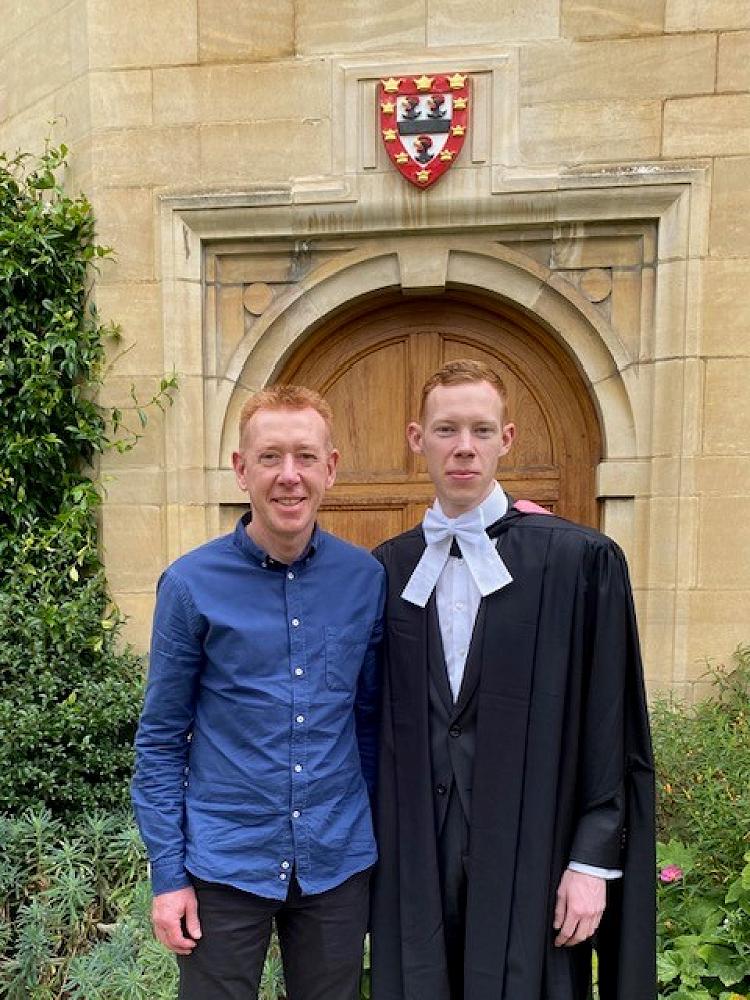
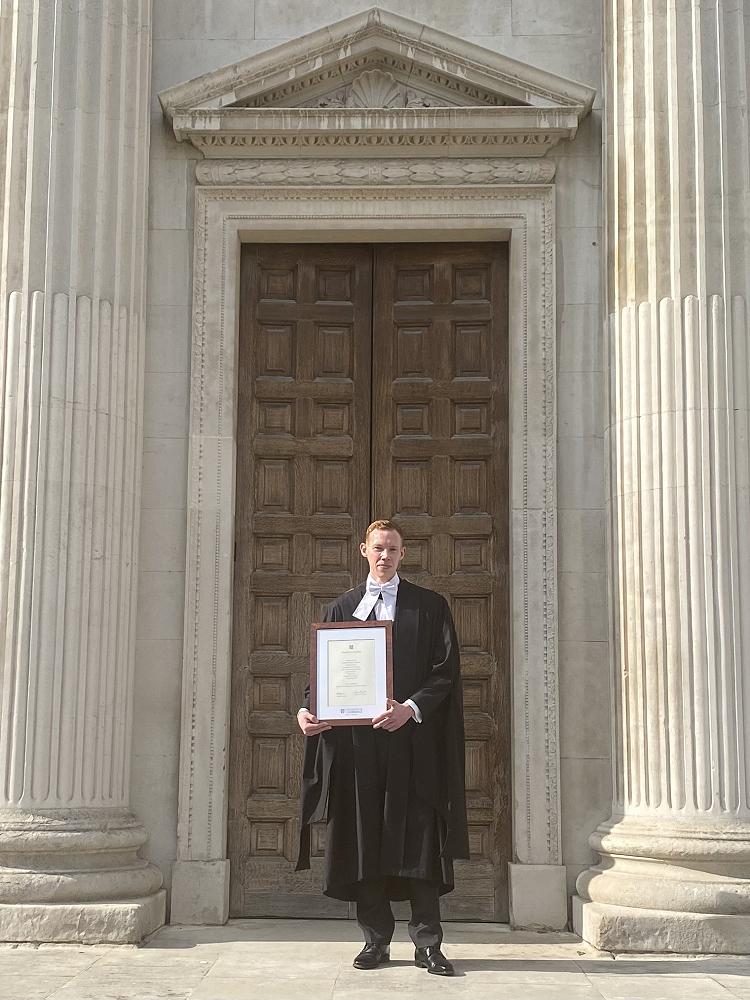
I’d always harboured an interest in pursuing post-graduate study, so in 2022 I made the decision to relocate to the UK to read for a Master of Laws (LLM) at the University of Cambridge. Cambridge (like Oxford) operates a collegiate system, whereby, although teaching is predominantly administered by the university, all other aspects of university life (from dining to lodgings and social activities) are the purview of the 30 or so colleges whose historic facades vie for tourists’ attention in the city centre. Quite aptly given my schooling, I was a member of Jesus College (also known as The College of the Blessed Virgin Mary, Saint John the Evangelist and the glorious Virgin Saint Radegund, near Cambridge) and had a thoroughly enjoyable year, consisting of formal dinners at various colleges, May Balls, and lectures delivered by leading academics, judges and barristers.
I was also fortunate enough to spend six weeks working in barristers’ chambers in London following the conclusion of my studies, as one of a handful of Pegasus Scholars. The scholarship programme is run by the Honourable Society of the Inner Temple, one of the four historic Inns of Court, which date back to the mid-14th century and still remain responsible today for calling aspiring barristers to the Bar of England and Wales. I spent time at two different sets of commercial barristers’ chambers, where I had the opportunity to attend hearings at various courts (from the County Court up to the Supreme Court and Privy Council), tour the Inns’ libraries housing all manner of historically significant books, and attend receptions held for incoming scholars and to celebrate the newly appointed ‘Benchers’ (judges and King’s Counsel responsible for the management of the Inns).
Having wrapped up my scholarship at the end of the legal year in July, I spent a lovely couple of months travelling and enjoying a European summer, before settling down in London, where I am currently an Associate in the Disputes & Investigations Team at Slaughter and May. I work on large scale commercial disputes for some of the world’s largest companies, either in proceedings before the English courts or in domestic and international arbitrations, and am otherwise making the most of the cultural, sporting and dining highlights that London has to offer!
When you look back at your time at St Bede’s who or what inspired you in your initial life choices?
I have fond memories of those teachers (particularly in the English faculty) who had an evident passion for their subject and also aimed to inculcate that in their students. It’s something that I also appreciated in my favourite university lecturers, both in NZ and abroad, and that I try (with reduced success) to bring through in my own presenting and teaching. Although I ultimately eschewed the arts as a study choice (perhaps to my teachers’ disappointment), I have found that the practice of law and particularly litigation is, at heart, an intensely human endeavour. It requires you to interact with, and interpret and predict the actions of, an incredibly diverse section of society. Aside from speaking with people, I do think that one of the best ways to understand the human condition is via literature, and some of the texts I studied closely at school remain tours de force in that respect.
What were some of the different career choices you thought of when you were leaving school and who helped you make your decision at that time?
I was fairly finely balanced between pursuing the humanities and more commercially minded subjects at university. I knew that I wanted to study something intellectually challenging but that also had a practical bent to it. Like a lot of students that study law in New Zealand, I ultimately opted for a double degree that kept my options open and allowed me to study a wider range of papers than if I had simply opted for a law, history or commerce degree on its own. Although I tangentially knew one or two law students via family friends, I didn’t know any practising lawyers and had next to no understanding of what being a ‘lawyer’ or an ‘accountant’, for example, actually entailed. Looking back, I was quite lucky that I did really enjoy my studies and the career they led me towards; but I wouldn’t say that I had a clear idea of what I wanted to do on leaving school. That may just mean I got lucky, but I think there is something to be said for, if you are unsure on what you want to do by way of career, getting a range of experiences and seeing what ultimately sticks.
Has your direction changed over the years since leaving school, and why?
In a sense, my general direction hasn’t changed that much since leaving school – I am working in a professional role in one of the fields that I studied – but I have certainly narrowed my focus. I studied subjects I thought I may enjoy and be good at (which is sound, if somewhat clichéd, advice) and, while at university, found myself favouring law over commerce. Similarly, when I ended up in clerk and graduate roles, I enjoyed disputes work over my time in corporate and transactional seats, and now, with a few years’ experience behind me, find myself focussing almost entirely on commercial litigation and arbitration. That said, I think it’s been very valuable having an understanding of the wider legal system and the way it operates as a coherent whole, along with at least some understanding of the world outside the law; so, I wouldn’t change the course that I took.

When you look back has there been a defining moment in your career path?
As might already be apparent, my career path to date is probably better characterised by a focused narrowing of scope, rather than a single defining moment, albeit (like anyone) there have been moments of serendipity. I would, however, say that my experience at Cambridge is one that I’m confident will have wide and long-lasting impacts. For someone from the Antipodes, the opportunity to get outside one’s comfort zone, experience different cultures and hear a range of perspectives on common issues can’t be understated. It also afforded me the time and space to reflect and focus my attention on the type of work I want to be doing and the contribution I want to make.
What words of advice would you give young students today wanting to pursue a similar career path?
I’m hopeful that profiles like this (and more so those from Old Boys far more interesting and accomplished than me!) can give current students some idea of the types of pathways that may be available to them. That really is important, because if you do have at least some semblance of a plan, and you’re prepared to work hard, take opportunities, and create genuine connections with people, you will continue to be surprised by the doors opened for, and helping hands lent to, you.
Thanks Jordan, we look forward to following your career with great interest!
You can also read about Jordan's Dad, old boy Danny Halligan, in this month's newsletter.