Obituary - Peter Mannix
David McCarthy reflects on the life of his friend and class fellow.
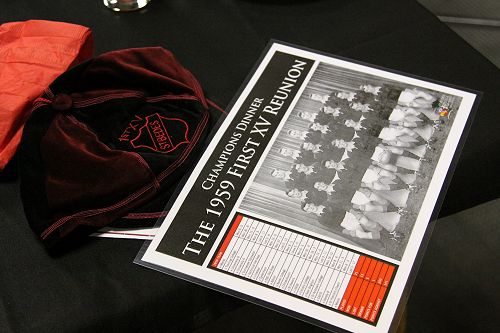
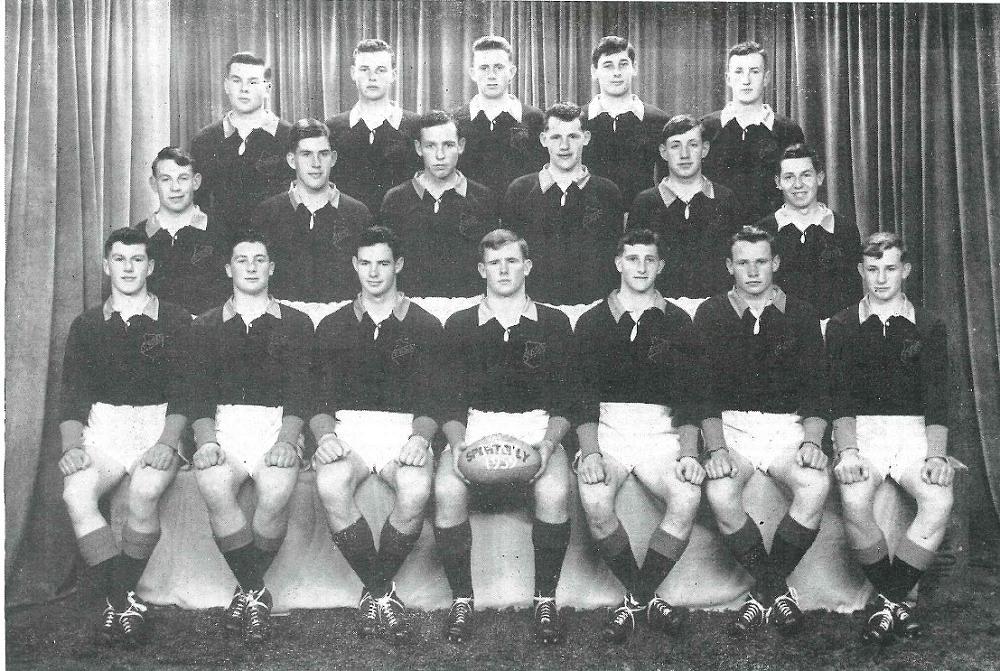
The recent death of Peter Mannix (1955-1959) captain of the 1959 First XV - of which arguably there has not been a 20th century superior - was the passing of a man with an impeccable Bedean pedigree who lived up to that billing all his life.
Peter and his brother, Neil (1953-1958) originated from Wellington and both followed their uncles Fathers Jack and Jim Mannix to St Bede’s. Jack (1923-1925) was Rector from 1949 -1954 and later Provincial for the Society of Mary. Jim (1926-1929), was a Scholarship winner from St Mary’s in his youth and a Marist leader in other roles including at Greenmeadows seminary, was a teacher at St Bede’s on and off from 1938 to 1959. He taught geography and was choir master during Peter’s time at St Bede’s.
A serious man but with an impish sense of humour, Peter liked to sum up his uncle’s differing approach to life through their attitude on the golf course. Jack relaxed and positive, competent and keen, but out to enjoy the day without over emphasis on the technical aspects. Jim focused and deliberate, with a technique requiring so many practice swings it, sometimes frustrated his partners (including his brother) a reflection of his thoroughness of purpose. Peter himself was a mixture of both.
I met Peter through Neil who was a close friend of my elder brother, Tom, and occasionally they would spend part of the holidays with us.
Peter soon took charge. There was inevitably a party to be hosted during the stay and the planning was of D-Day proportions. Peter would call at least daily meetings where every minor detail from which record would be played to who would be invited and what routine the evening would follow was discussed and decided. It should have taken an hour all up but Peter enjoyed the repartee and the anticipation as much as the evening. Invariably it all went without a hitch as the voluminous notes suggested. Trouble otherwise in the inevitable analysis sessions.
Peter was also the unchallenged leader of our small boarding group at college and being made captain of the Firsts in his second year in the team was a tribute to his dedication. There were rival candidates like David Gledhill, the college athlete of the decade, first or second in nearly everything he tried, head prefect and general legend. We thought he had it all but he was already quietly embarking on a less glamorous path to an outstanding future. There were several others with chances including Mick Hanham, even then a man with style and mana, but Peter was Father Leo Evatt’s man.
It was a hugely successful team by any standards and while Dave Gledhill’s angled 40m penalty out of the mud in the last minute to save a draw and a little pride against the previously “upstart” Xavier was a “Roy of the Rovers” moment in college history and my memory, Peter’s leadership was crucial to all the success and especially at the crunch of close games.
The victory over the star-studded unbeaten Boys High School in the championship final was the highlight.
The Boys High team had turned in consistently brilliant performances all season and had just defeated Waitaki Boys. Its stars were fullback Gerry Bradley and especially winger Tony Steel the best in New Zealand and soon to become an All Back. Even though he scored a brilliant solo try the less glamorous Bedean team prevailed.
“The key to the St Bede’s success was the pace and power of the forwards” The Press reported, “The flankers and No 8 especially managed to keep the ball away from High School’s brilliant back for long periods”
Peter was a good sportsman but if he lacked any natural talent, and later, size it was more than made up for in application. At evening breaks in autumn, in the trees then behind the swimming pool where an ancient scrum machine gathered dust, Peter, battling to make the 1958 First XV would summon us to take part in some extra hooking practice- just in case. He also invented variations on touch rugby we could play in nearly all weathers to keep us active. He held his place in the First XI as a lightly tried all-rounder but was really there to fight determinedly lower in the order in the event of collapse. Leo Evatt knew his man.
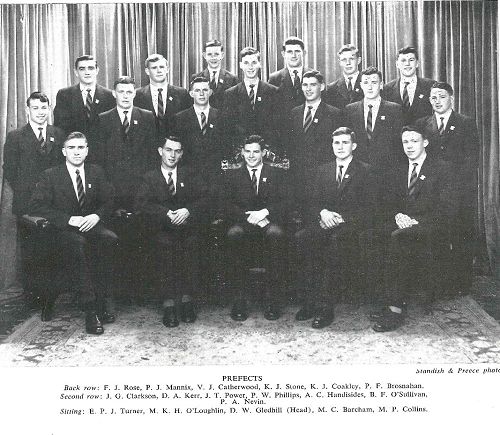
In his final year Peter and lifelong friend Brendan O’Sullivan were both made prefects - an office I had neither the scholastic attainment nor leadership skills to aspire. It left me with a year to change direction and find my own feet with ultimately happy outcomes but one quirky incident indicated Peter’s determination to do it by the book.
Seemingly frustrated by my ability to elude capture while smoking, a hobby of mine at the time, he tracked me secretly one evening break, surprising me under the stage of the gymnasium where I was quietly contemplating the day’s activities. He had no compunction reporting me with the usual physical punishment and didn’t share my opinion that he had stretched his required duty by an unreasonable margin. He was proving a point but I struggled with his logic and a rift was unhealed for some time. If he had a weakness it was a certain stubbornness in decision making, but then it also produced much of his success
On leaving college Peter joined the then market- leading Phillips Electrical group and his leadership skills were soon making an impact. He graduated from Canterbury University in 1967 with a Batchelor of Commerce in accounting. Peter had, as was the way then with Commerce done the degree part time while holding down a job. He moved back to Wellington and ultimately took over the well-known ladies’ wear store of Peacocks in Dixon St owned by his father Vincent who later retired with his imperturbable wife, Olive, to the family house at Raumati Beach where Tom and I had enjoyed holidays. The business was expanded in spite of an industry which was a closed door to many often on grounds other than merit.
Peter was meantime captaining St Pats Old Boys senior rugby team (later merged with Marist who were then in the ascendancy) and only lack of bulk prevented a substantial provincial career. He later took up marathon running and other interests and was rarely idle for any length of time
Peter married the love of his life Jill, whom he had wooed in his usual determined fashion and the increasing family were soon living in “Diplomat’s Row” in Lower Hutt in his case next door at one stage to the American Ambassador. His sons Tim and Simon were outstanding sportsmen and it was a proud moment for their father (whom they closely resemble in appearance) when both were named in the original professional Hurricanes squad of 1996. Tim, a hooker like Dad, played for Wellington for several years and Simon ultimately took the step up to All Black status against France in 1994. He then played and has since coached successfully in Europe and, most recently, Singapore. Both played for the old Marist -St Pats rivals, Petone.
Tim as head coach took Silverstream to several college premierships from 2016 after some years of disappointments for the college. This year he became Director of Coaching. His wife, Katrina, is Chairperson of the Board of Governors.
In the 1980’s Peter and Neil’s business paths diverged, Peter and his family forming Jackpot Clothing specialising in indirect marketing. At one stage the company had a small factory operating in China. He later moved to Norsewood which operated as a store and distribution centre. The failure of his marriage and the premature passing of brother Neil in 1998 and his younger sister Pam, would have weighed heavily on anyone though Peter’s inner resolve proved a vital strength.
At Norsewood he reconnected with Father David Gledhill, his local “parish priest” who had devoted a lifetime to the Maori. A number of the 1959 team including an exceptionally brave Mick Foley have now passed, John Weir and Oscar Dyer being known earlier casualties.
Peter and I also reconnected in the past decade originally through his long enjoyment of horse racing - we had attended meetings together 50 years before-, as I was still involved with the website of a leading stable. Peter felt “past the post” tips were now in order. Yes, I thought that it was my filter tips which had once fascinated him but only fleetingly and with a wry smile.
We enjoyed talking of school days and generally. Then I began to notice his regular praise for my quite average memory becoming somewhat extravagant. He then moved back to Wellington and confessed there were health problems associated with dementia. After a while longer, the phone no longer answered.
Indomitable was the word probably best summing up Peter Mannix’s character. He used all his God given talent and extended it by dedication and enterprise. If he failed at anything it was never from lack of trying. And he would try again.
That and his determination to remain true to the principles of the Mannix family established so long before, and nurtured by the Marist fathers, set him apart. Though he has gone the Mannix name is far from dead in the Marist fraternity. The epitaph he would have wanted.
- David McCarthy
Gallery