
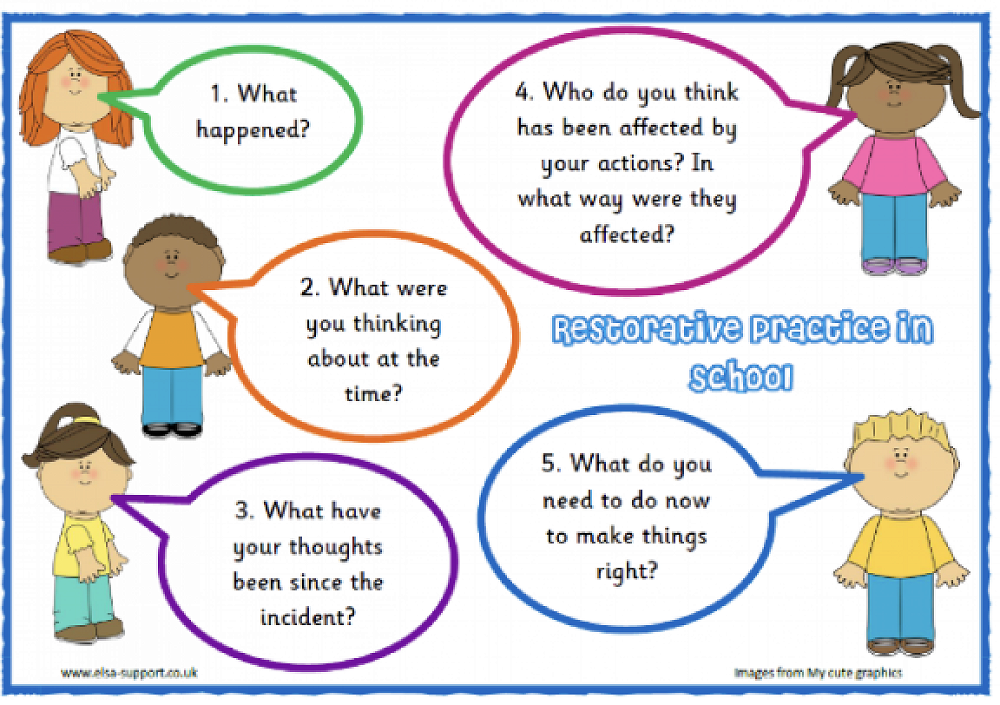
Restorative conversations
Teachers spend time talking to children after a disagreement.
Questions that are asked of students by teachers include:
Tell the story: What happened?
What were you thinking at the time?
Explore the harm: Who has been affected by what you have done?
Was this the right or wrong thing to do?
Move forward: How can we make sure this doesn’t happen again?
What do you need to stop doing, stay doing or start doing?
Repair the harm: What do you think you need to do to make things right?
What exactly are you saying sorry for?
At St Joseph’s School we manage student behaviours using a restorative approach. This does not mean that there are no consequences for inappropriate behaviours. As teachers we follow the school wide behaviour flow chart to ensure all behaviours are consistently responded to.
Punitive approaches to manage behaviours damage relationships and are not effective in learning new behaviours. At St Joseph’s school we prefer to use logical consequences to manage inappropriate behaviours. An example of this might be when a student is talking and does not complete school work they may be asked to sit on their own to get their work done.
At St Joseph’s School we want all children to learn from their behaviours and a restorative approach is more effective in reducing undesirable interactions or behaviours.