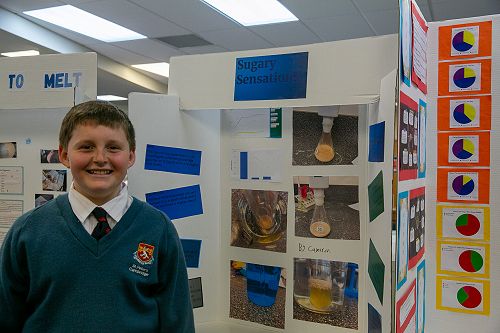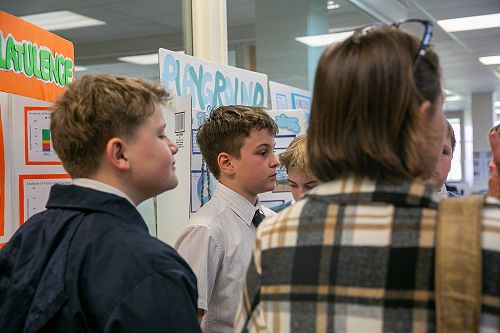
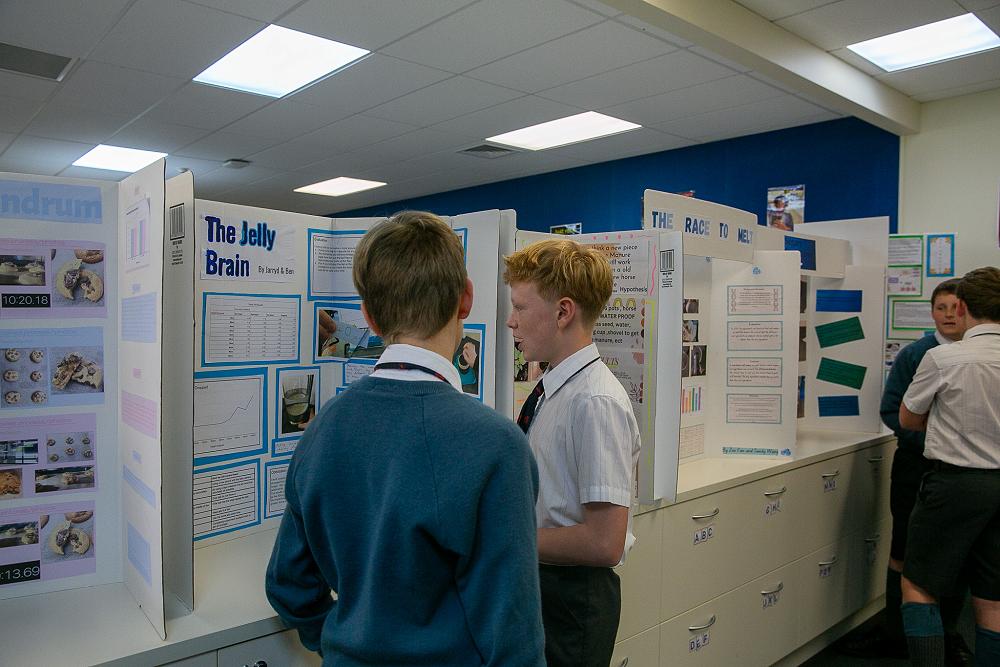
Seeing our budding scientists in action at the Science Fair
The Annual Science Fair begun this week, providing an opportunity for those students who partake to engage with a piece of original scientific research.
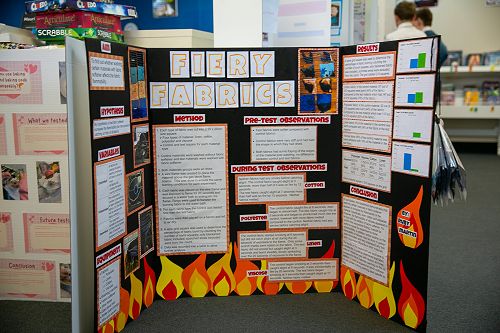
This year’s entries ranged from fabric flammability to flatulence, and nutrient application on farms to building a device for monitoring algae concentrations in waterways. The science fair provides a rich opportunity for students to combine skills learnt from other subject areas, such as art and maths for example.
Toni Vickers, Teacher of Science, says: “The science fair is a great way to showcase the amazing work of our students, with many of our senior students using the opportunity to submit a science project for their Extended Essay, which forms part of the IB diploma.”
Selected students will represent the school at the NIWA Waikato Regional Science Fair on Monday 19 August. St. Peter’s students have a history of being awarded great prizes at the NIWA Waikato Science Fair, including the prize of a paid work placement with NIWA Waikato over the summer holidays.
There are six categories for both science fairs:
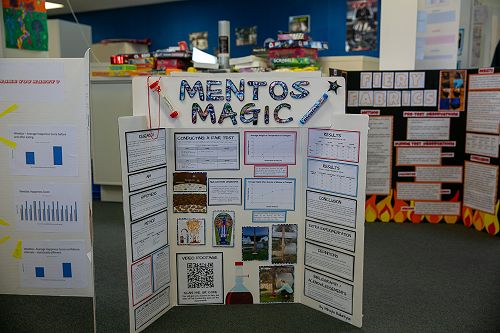
Science project - individually or in pairs, students carry out an investigation to address a question of their own design resulting in a science fair board.
Technology project - individually or in pairs, students produce a technological solution to a problem or opportunity they have identified resulting in a science fair board.
Scientific wall chart - students work individually to produce an A2 poster linked to the theme of time.
Observational drawing - students produce a scientific drawing on a fish of their choice.
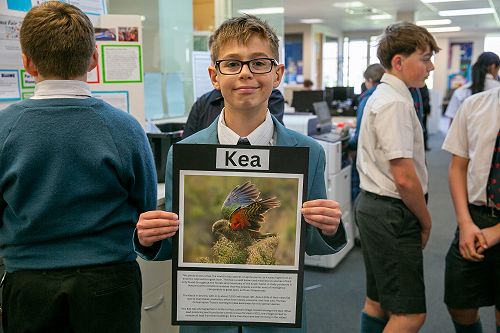
Scientific photography - students produce a photograph of a New Zealand bird, along with a caption outlining their thoughts on our kaitiakitanga of that species.
Scientific video - individually or in pairs, students produce a short video linked to the theme of time.
The Science Fair students take ownership of their own learning; something that requires courage and organisation. Many students choose topics that address a genuine problem, opportunity or question, so their work also has the power to change their future. “Even though it was challenging it was also a great way to learn about new things. I’m really happy I took part.” said a Year 8 student, summing up the thoughts of many of her classmates.
“The best bit was doing the experiment and getting the results. I also still want to find out more about my topic, whether powerade, V or sugar water gives cells the best energy boost” said another student, demonstrating admirable curiosity.
Lots of students enjoyed the practical elements of the science fair and reflected that it was a great lesson in planning and working with others.
Alumni and Zuru founders, Nick and Mat Mowbray were inspired to enter the toy industry from a science fair project. Winning the 1997 National Science Fair with a model hot air balloon, Nick and Mat launched a hot air balloon kit as their first product. From this initial foray Nick and Mat, along with their sister Anna, have gone on to establish a globally successful and innovative business that has produced not only toys, but also a wide range of consumer goods using the same skills of keen observation, investigation and innovation that are required for the science fair.
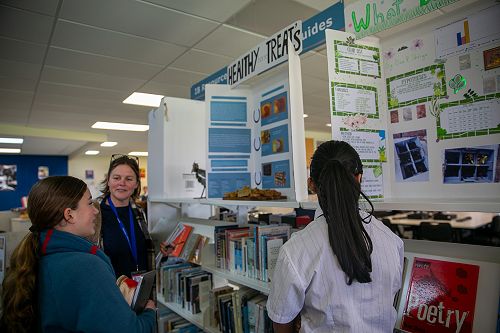
The St. Peter’s Science Fair display will be in the school library for the next week.
Gallery