
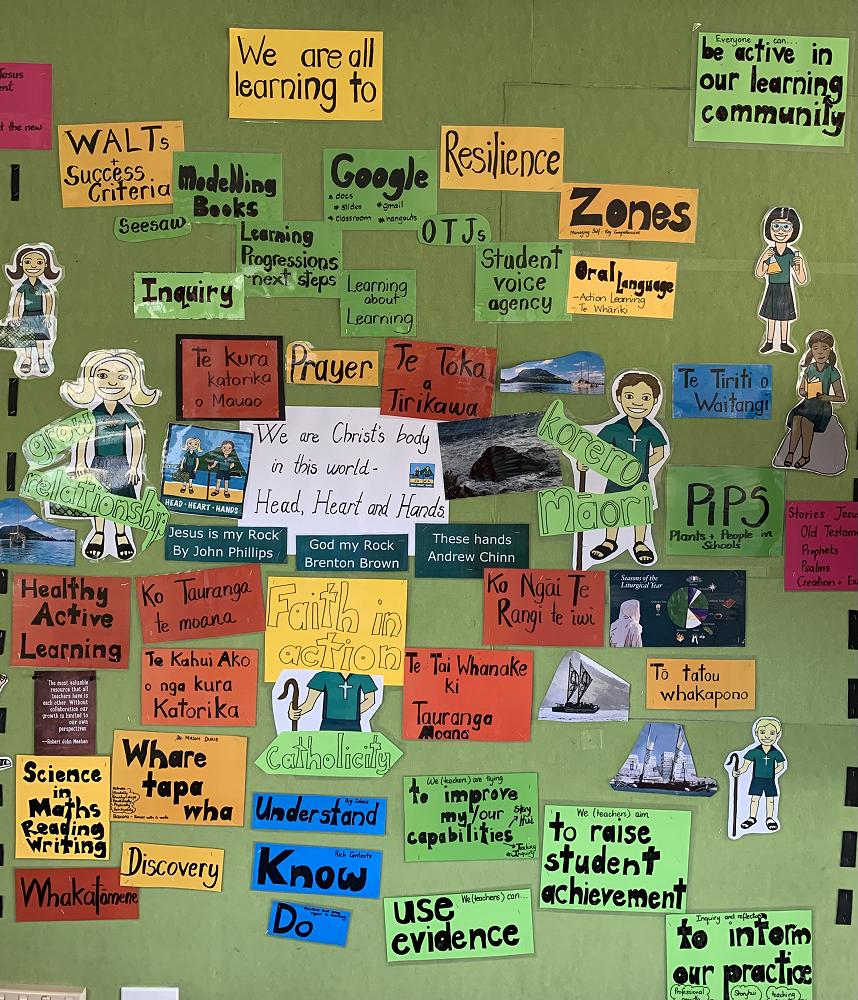
STM Turangawaewae
Discovering ourselves by understanding who and what has gone before - a rich, layered base for inquiry learning across many learning areas.
Each term we will plan from the inquiry questions developed around four concepts:
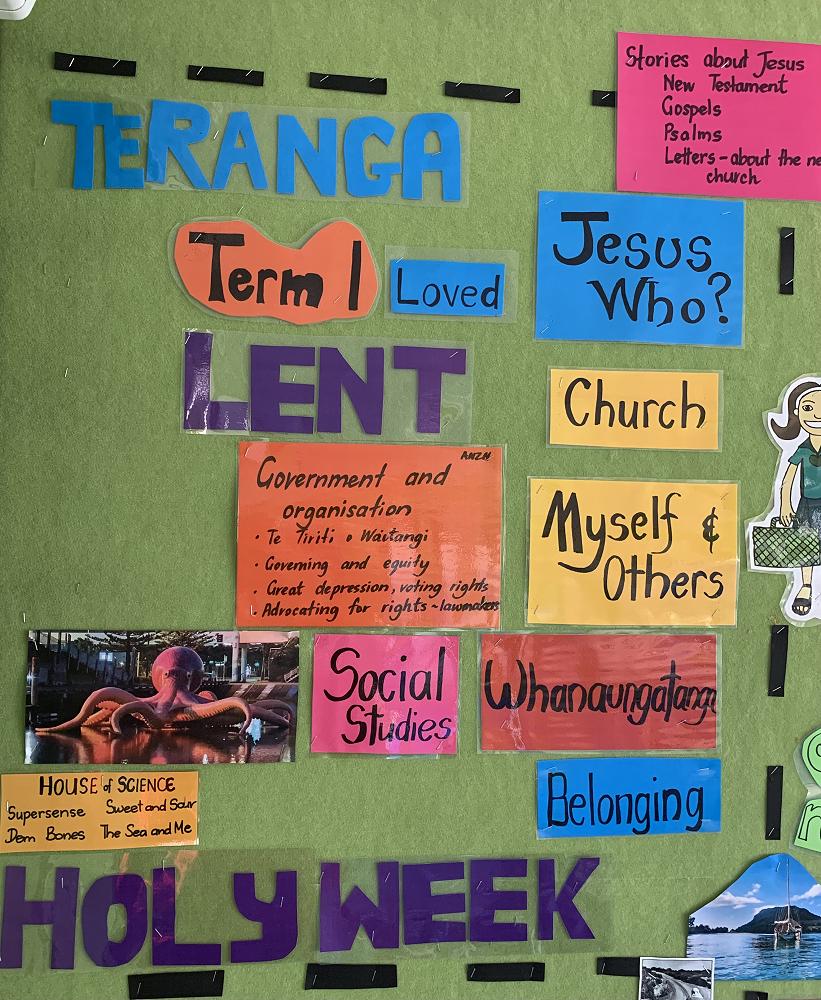
Whanaungatanga
The foundation of our identity comes from who we come from. Culture and heritage originate and are sustained through familial links and bonds. Kinship comes with rights and obligations and affects responses to historical events. People pass on and sustain culture and heritage for different reasons and this has consequences for people.
Term 1 : Whanaungatanga / Belonging.
Year 1-2 RE/Social Studies. Myself and others; my people my place; my family, my school and my parish. People who help us. Whanau tapu - the Holy family. Living in Nazareth, Bethlehem and the villages on the shores of the sea of Galilee. Boats- Jesus was a fisherman, so were some of the apostles. On the Sea of Galilee- parallels the waka on the Pacific. A great way to bring in new learning about the first voyagers/sailors.....and connects to the Year 3-6.
Year 3-6 ANZ Histories . Where did Maori come from? Journeys across the Pacific. The waka hourua (great canoes) and the navigators. Connections between the waka hourua and the places they discovered and settled in Aotearoa. How iwi make connections between themselves and other iwi through the waka and the navigators who came to Aotearoa . Add these links to your own pepeha in the same way.
Our pepeha. This place- whenua. How did we/whanau arrive and settle in Aotearoa?
Visits to local landmarks and significant places. History of our rohe. Important people. Background to this Papamoa Hills trip (Year 4-6 will have been on this trip in Term 4).
NZ's first Flag 1834 the flag of the United Tribes. Selected by 25 chiefs from the Far North who had gathered in the Bay of Islands. Missionaries, settlers and the commanders of 13 ships were present.
https://nzhistory.govt.nz United Tribes flag.
Tiriti o Waitangi.
RE / Jesus and the places he visited and settled in from the time he became a rabbi ( about 30 years old). Moving around the Sea of Galilee. Place names. Life in this time. His mission and miracles.
Inquiry questions:
What do we know about the narratives and history of where we stand?
- How do we reflect Ngai Te Rangi narratives at STM?
- Who are the people who belong to this whenua?
- What stories can they tell us about this land?
- How has colonisation changed this place? (Tauranga Moana)
- What was Aotearoa like before the Pakeha settlers arrived in the Bay of Plenty?
What is being done to re-establish the traditions and mana of the whenua in our rohe?
Making connections with the people and place that we live in, making connections with my family tree and knowing about the tipuna and whakapapa of Matapihi and Arataki- the whenua our kura stands on.
- How do we learn to make our pepeha? Can we make a pepeha for Jesus? What is our school pepeha?
- What can we find out about the land where Jesus lived and the places where his family settled?
Monday staff meetings we'll unpack the HOS box and determine what each teacher will use with their vertical (ethnic) group. House of Science Kits ordered so we can plan special interest groups /teachers (18-20 students from Y1-6) working on one experiment from each box- on Wednesdays 11.15-12.00. One week do the experiment and language building, next week do the presentation preparation ( e.g. plays, songs, dances, ipad videos, charts, posters, dressups, 5x ethnic lens)
Return to your home groups and then there will be five ways of presenting what has been learned.
Supersense
Sweet and Sour
Dem Bones
The Sea and Me
ART focus for Term 1: sculpture and flowers.
Darcel Apelu is exhibiting at the art gallery - sculptures. Darcel is visiting our school to talk about her art and to take some lessons...flowers in Polynesia. i.e. tapa cloth, stencils, block prints
Sand sculptures (Year 4-6)
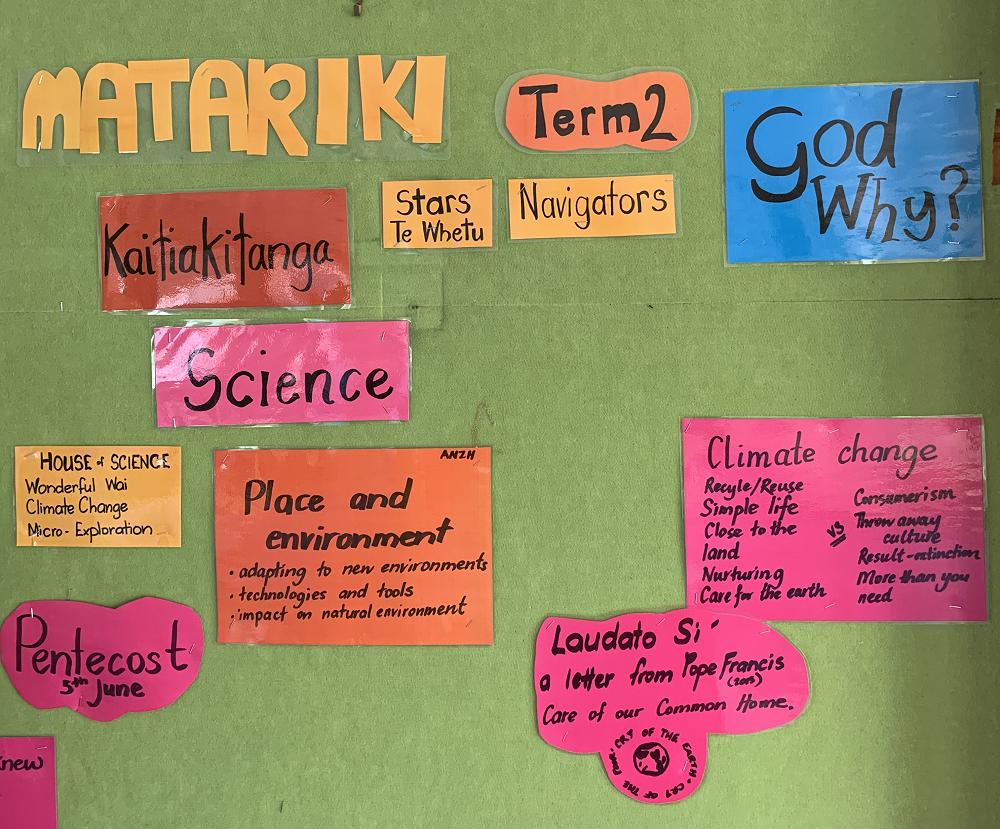
Kaitiakitanga
Term 2: God the creator. Creation narratives. Cause and effect. The gardens - taking care of our environment and taking care of our community. Reciprocity. Gathering data. Monitoring change.
Inquiry questions:
How have people before us lived in harmony with the natural world?
What can we learn from them about how we live here today?
What are the major climate change issues?
Which of them are most relevant to us and our community? What are the significant challenges for the people in the Pacific?
How healthy is the natural world around us?
What local action is already taking place?
What gets in the way of local action?
What direct steps can we take here at school to combat climate change?
What’s already happening in our community that we could get involved in?
What skills and connections could we access?
Matariki - remembering those who have gone, celebrating the harvest (kumara) and making time for thanksgiving/coming together. The stars helped with the navigation across the seas - waka hourua.
Jack Thatcher ( Tauranga) navigator on waka hourua.
House of science kits:
Wonderful Wai
Climate Change
Micro-exploration
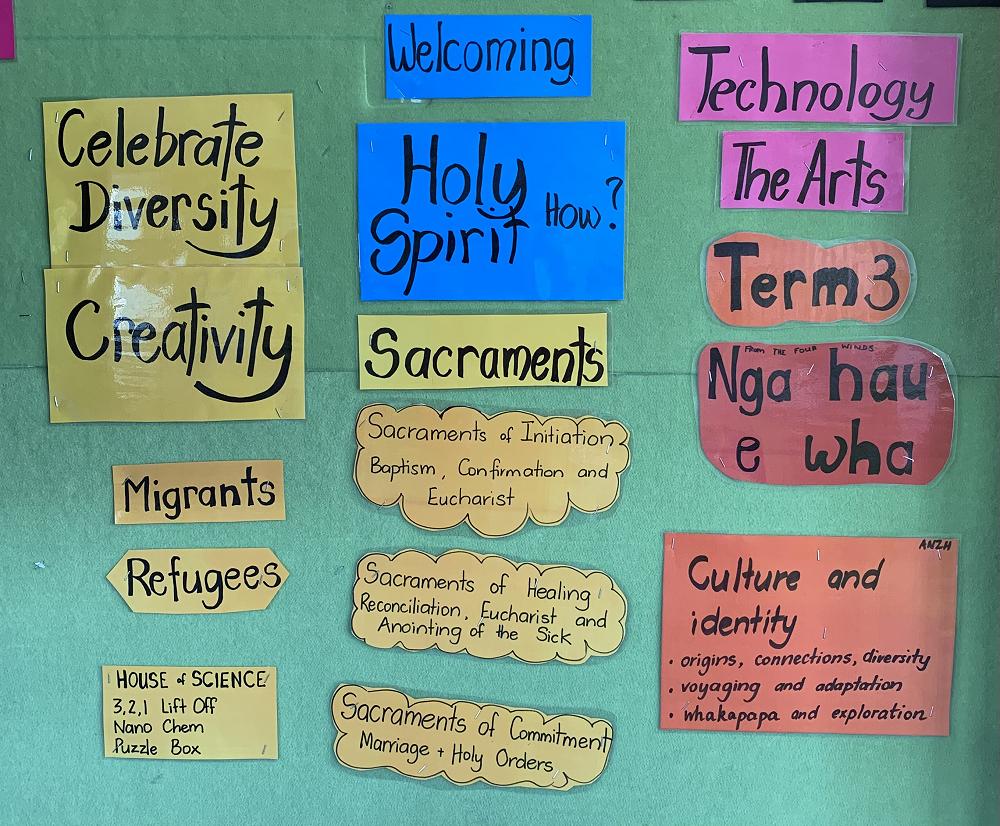
Nga hau e wha
Term 3:
Nga hau e wha ( people from the four winds). Celebrating diversity. Growing connections between ethnic groups within our school community. What it is to be a migrant or refugee. The journey to NZ. Using Caritas units about refugees and climate change.
Holy Spirit - the gifts and talents of everyone. The birth of the church - the disciples scattered to spread the good news of Jesus' message. Speaking in their own language- so that all could understand. Mission. Pilgrimages. Building the church in the Pacific.
The Sacraments and the strength we gain from God's grace.
House of Science kits ordered:
3,2,1, Lift off
Nano Chem
Puzzle box
Inquiry questions:
Our church was born on Pentecost when the Holy Spirit was present to the disciples.
How does the presence of the Holy Spirit change the way we speak and act towards others?
Do you know what gifts and talents you have been given by the Holy Spirit, how can you show us?
People from many lands have travelled to Aotearoa New Zealand in the last 200 years. How have they been changed by living here and how have the people of Aotearoa welcomed them?
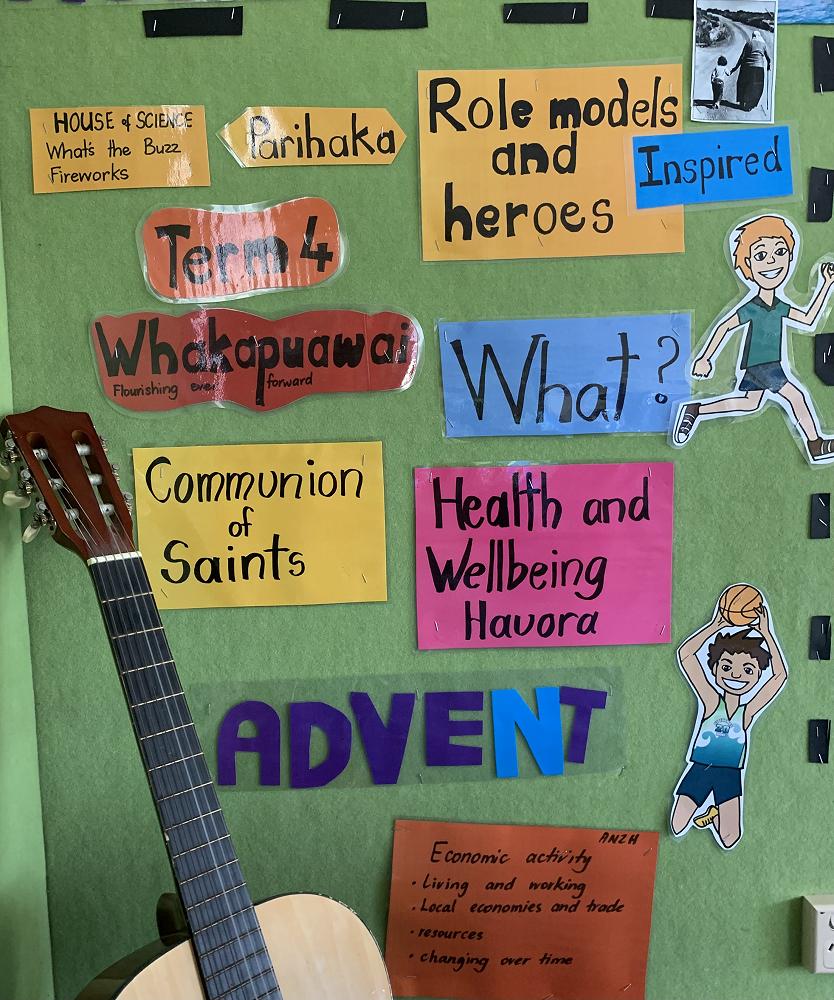
Whakapuawai
Puawaitanga embraces future directions for humanity that are optimistic and solutions-focused. It promotes a shift from the linear to the circular, and provides a base from which learners can explore popular culture, dominant economic mindsets, and the innovation required to move from where we are to where we need to be.
Term 4: Flourishing ever forward. Preparing for change. Making changes.
Advent- preparing for baby Jesus. Saints - Mary and Joseph on a journey to Bethlehem (why).
Find a baby to make handprints and footprints. Interact with mother and child- talk about baby scans and milestones. Make records of milestones with each child...development ( losing teeth at 7-8 years). What's it like when a new baby comes into the household?
(Lessons from Understanding Sexuality + Having life to the full - NZRS)
Communion of Saints:
Role models- ordinary people doing extraordinary things.
House of Science boxes ordered:
What's the buzz ( bumblebees)
Fireworks (Parihaka/Guy Fawkes)
Inquiry questions:
tbc
Appendix 1
Catholic curriculum: "Understanding sexuality/Having Life to the Full" (NZRS)
Year 1
- Growth patterns from birth onwards
- Names of parts of the body – including sexual, how we tell the biological difference between a female and a male
- Exercise, rest, food, shelter, love
- Care and protection – feeding a baby
- What it means to be healthy
- Development of a baby in the womb
- About me
Year 2
- Feelings about self in relation to gender, culture and abilities
- Comfortable and uncomfortable feelings they experience when interacting with other people
- Responding to unwanted touching
- Before my birth
Year 3
· Expressing feelings
· Hygiene
· Positive body image
· Their gender
· Growth from egg to foetus to baby
· Pregnancy and birth
· Body parts
· Family formation
Year 4
· Relaxation
· Feeling good
· Talking about people’s abilities, appearance or
gender
· Expressing angry feelings appropriately
· Conception (cellular)
· Review growth from egg to foetus
· A birthday story
· I’m special
· The birth of a baby
Year 5
· Positive body image
· Gender stereotyping
· Messages about body images
· Review of body parts
· Baby overview
· Body systems
· Breast feeding
Year 6
· Puberty
· Abuse
· Bullying
· Equality issues – gender and cultural
· Managing pubertal change
· Body changes
· Menstruation
Appendix 2
ROLE MODELS AND HEROES - NGA TOA
Willie Apiata (1972 - ): Soldier.
Peter Buck (1877 - 1951): Health reformer, politician.
Lisa Carrington (1989 - ): Olympic athlete.
Whina Cooper (1895 - 1994): Community leader.
Hōne Heke (? - 1850 ): War leader.
Te Puea Herangi (1883 - 1952): Kingitanga leader.
Rua Kenana (1868/69? - 1937): Māori prophet.
Robert Mahuta (1939 - 2001): Politician.
Howard Morrison (1935 - 2009): Entertainer.
Kiri Te Kanawa (1944 - ): Opera singer.
Apirana Ngata (1874 - 1950): Politician.
Māui Pōmare (1876 - 1930): Health reformer, politician.
Dalvanius Prime (1948 - 2002): Entertainer.
Tahupotiki Wiremu Rātana (1873–1939): Religious leader.
Apirana Taylor (1955 - ): Author.
Te Rauparaha (? - 1849): War leader.
Inia Te Wiata (1915 - 1971): Opera singer.
Hone Tuwhare (1922 - 2008): Poet.
Heni Pore (Battle of Te Ranga) - provided water to soldiers.
Taratoa - (Battle of Te Ranga) - rules of engagement
Hori Ngatai - soldier - Ngai Te Rangi
There are several sources for this curriculum
- Ngai Te Rangi iwi narratives
- the NZ Religious Education (bridging) curriculum
- the Ministry of Education curriculum framework
Putatara ( call to action).
- the draft Aotearoa NZ History curriculum
- the original STM school scheme.
There are many stakeholders represented in this curriculum.
- students and teachers
- parents and caregivers
- school board
- local iwi Ngai Te Rangi
- NZ Catholic Education Office, NZRS and Hamilton
Diocese
- the Faith based Kahui Ako
- Ministry of Education
- House of Science (Tauranga)