
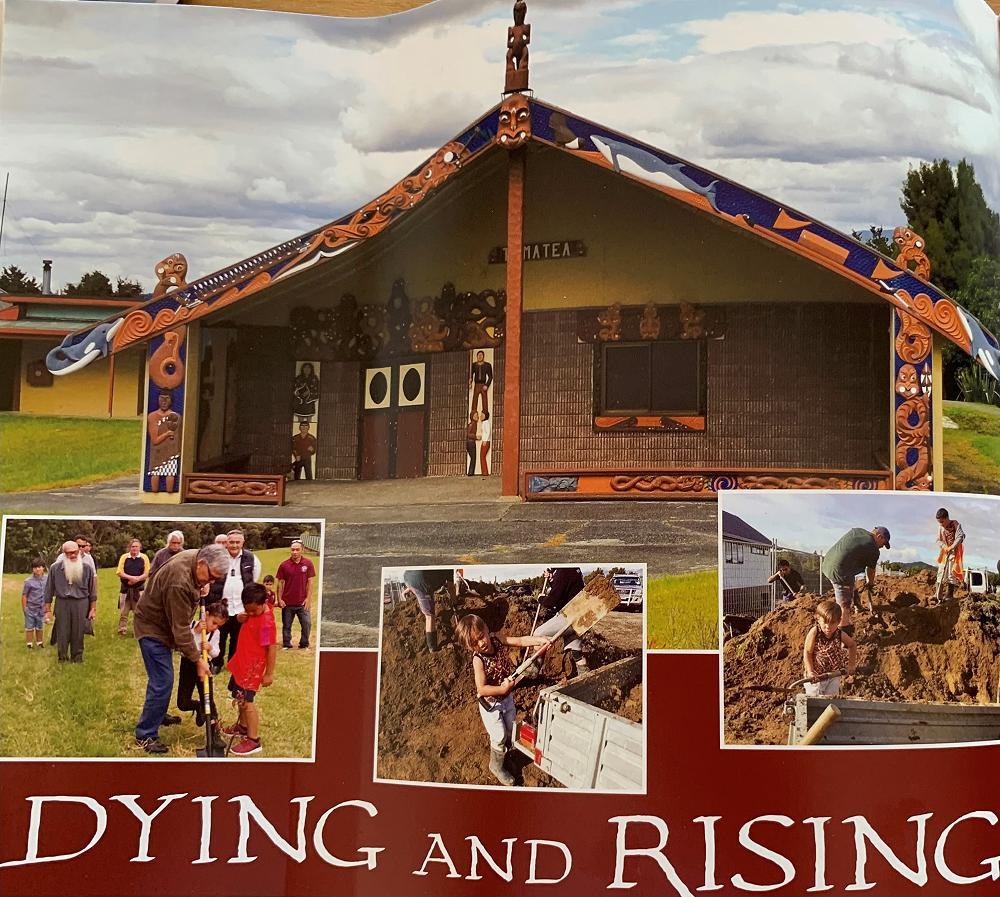
Many Maori communities observe the regular Easter liturgies but this is also a time when we remember the dead.
It is when we visit the graves of loved ones, organise cemetery clean-ups and hold hurakohatu ( unveiling services)
As well as being a time of reflection, renewal and hohourongo ( reconciliation with God and with other people), Easter is also a time for whakawhanaungatanga (strengthening of relationships).
It's a chance to catch up with relatives, particularly during faith festivities and hurakohatu.
In the weekends leading up to Easter, many marae will host working bees, where whanau will return from the cities to pull out weeds, mow lawns, repaint facilities and clean the bird droppings off the whakairo (carvings). Certain whanau might volunteer to mow the lawns at the urupa ( cenetery) , another to clean the whare karakia (church). Wherever hurakohatu are to be held, the close relatives will be busy laying cement foundations for the beautiful headstones which will stand as glistening memorials to loved ones, to be admired and visited in perpetuity.
Usually manuhiri (visitors) come from far and wide for hurakohatu. They may, or may not have a whakapapa ( genealogical) connection to the particular iwi (tribe), hapu (sub tribe) whanau and marae hosting the hurakohatu.
Therefore it is important to make sure that the setting is impressive and the hospitality of a high standard for the manuhiri.
The little settlement of Motuti in North Hokianga is observing two events on 23 April.
There will be a dawn blessing and then the official opening of the Raiatea Maori Catholic Museum and Resource Centre - Motuti. Raiatea was the name of the schooner in which Bishop Pompallier from France arrived in Aotearoa. Bishop Pompallier brought the Catholic faith to Aotearoa New Zealand in 1838. He and his supporters, the Marist brothers, travelled throughout the islands of the Pacific before reaching Aotearoa New Zealand. The first Mass in NZ was celebrated on the 13th January 1838 at Totara Point, not far from Motuti in Northland.
(In 2016 our school children did fundraising and donated $100 to help build the museum).
This article is part of a piece of writing by Geremy Hema, Te Rarawa, Ngati Paoa, nephew of Pa Henare Tate for the Catholic magazine Tui Motu.