Battle of Pukehinahina
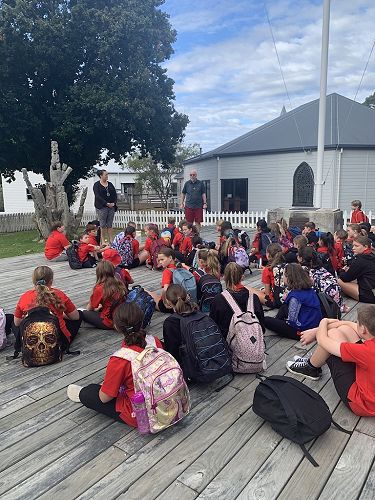
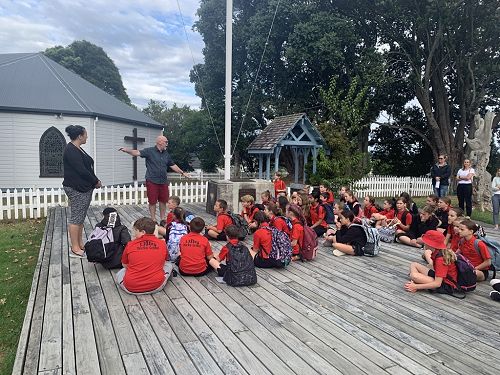
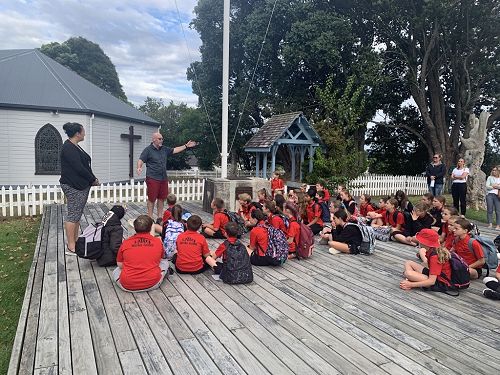
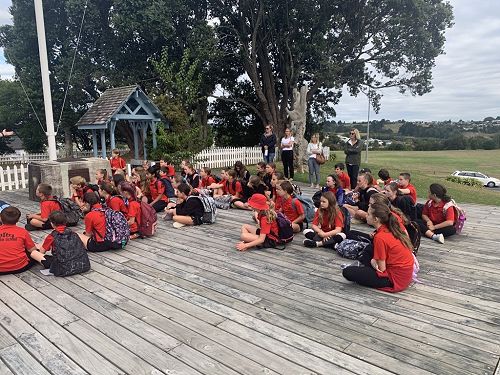
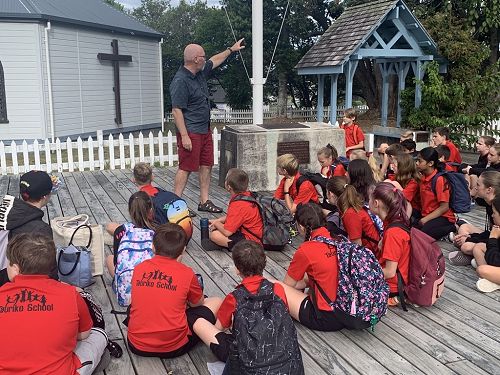
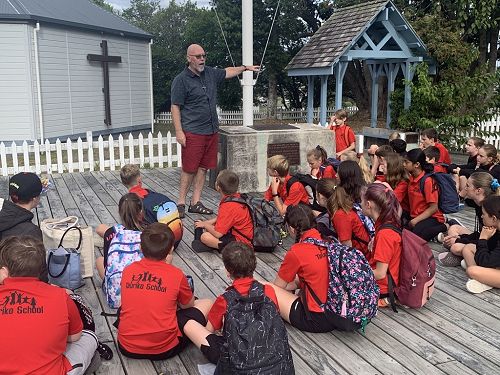
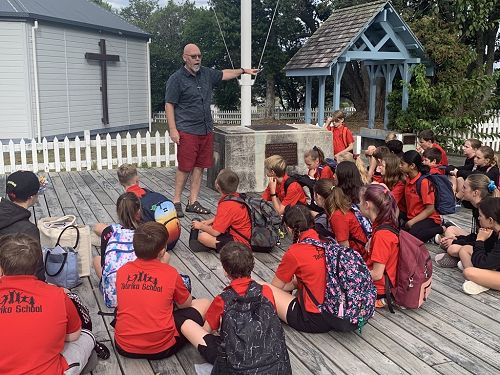
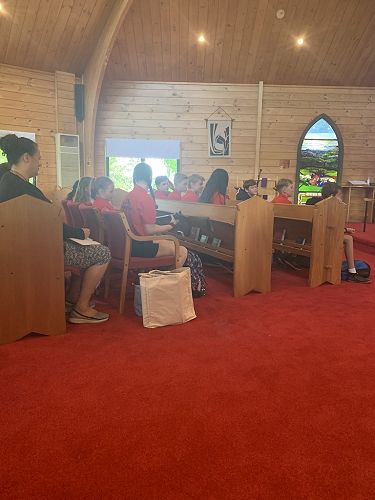
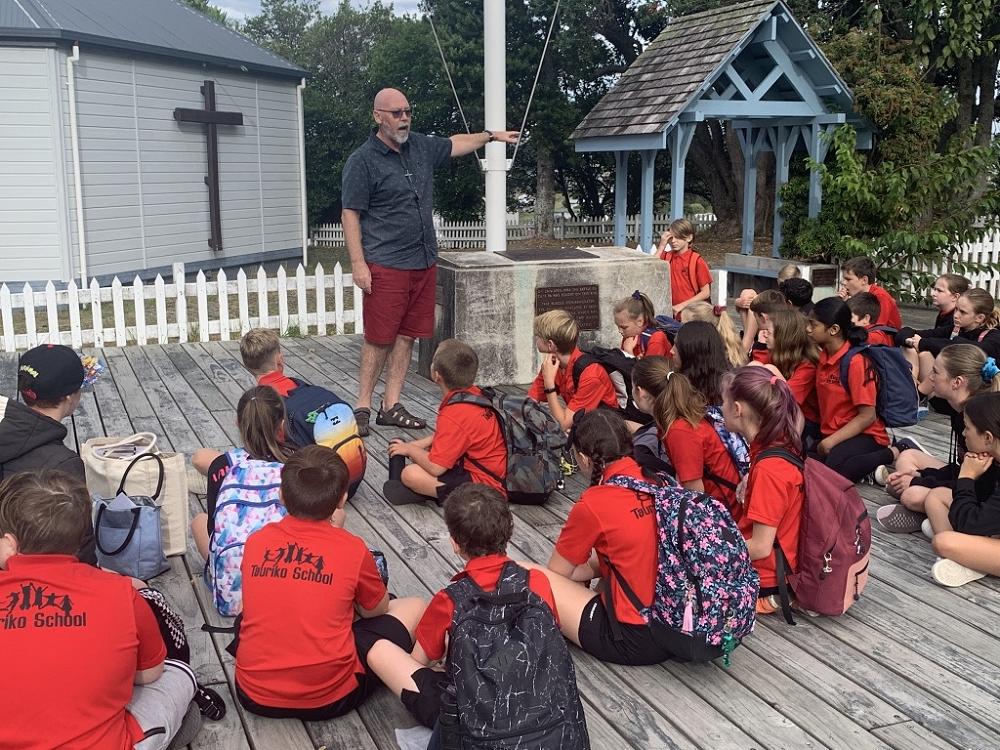
On Thursday, the 5th of March, the Tall Poppies class went to the Gate Pā Historic Reserve to learn about Te Pakanga O Pukehinahina - The Battle of Gate Pā.
When we first got there, John Hebenton, the vicar of St George’s Anglican Church, pointed out important features of the Gate Pā battle site from the hilltop platform outside by the flagpole. He pointed to where the trenches would have been, and what direction the British soldiers came from.
He helped us to understand more about why the Treaty Of Waitangi was signed, or not, (which we studied earlier this term), then also linked it to why the NZ Land Wars started 20 years after the signing of the treaty. 40,000 new European settlers were arriving in Aotearoa every year, all wanting their own land to settle. Meanwhile, Māori around the country were slowly seeing their lands taken, muskets being used, their people dying.
John told us about the first ever NZ government. How only men could vote, but also, only men who owned land. Because Māori owned land together (collectively), they weren’t allowed to vote, so no Māori had a seat in parliament, even though they were the majority population in New Zealand at the time. Later, we heard, they were given four seats in parliament to keep them quiet, to stop them moaning.
We then learnt about the actual Battle of Gate Pā, Māori using shotguns with rocks, sticks and broken bits of china as ammo, versus British muskets and spiral bound pellets, and other artillery, such as cannons, calvary and bayonets; how Hēnare Taratoa wrote a code of conduct for a fair battle; and how completely mismatched the battle was, with British having far more troops, and yet Māori had built a very clever sawtooth trench system and tunnels that saw them hold Gate Pā, force the British to retreat, then make a way for them to safely disappear into the countryside themselves over night.
We learnt some places and streets in Tauranga are connected to the Battle of Gate Pā. Greerton is named after Lieutenant Colonel Greer. Cameron Road is named after General Duncan Cameron. And more recently, Puhirake Crescent in Pyes Pa, is named after Rāwiri Puhirake, and Penetaka Heights is named after Pene Taka Tuaia.
Another interesting fact we learnt was hearing about perhaps the only woman who fought in the Battle of Gate Pā - a woman warrior named Heni Te Kiri Karamu (also known as Heni Pore/Jane Foley/Jane Russell). People believe that she gave water to those British soldiers who were wounded after the battle, proving her compassion.
Here are some memories of our trip:
“At the end of the presentation we watched a play that was made by Gate Pā School.” - Ava Dobbin, Year 7
“The trenches that the Māori used in the battle are now underwater” - Logan, Year 7
“We got to hold a replica shotgun that was used by the Māori in the Battle of Gate Pā.” - Brianna Blower, Year 8
“They found that there are still active bombs in Green Park School and that the British shot them during the British attack.” - Ella, Year 8
The Battle of Gate Pā is a significant part of Tauranga’s history, but also the history of New Zealand. We have some amazing carved pou to commemorate it, and it's been fascinating to learn about our own local history.
Gallery