
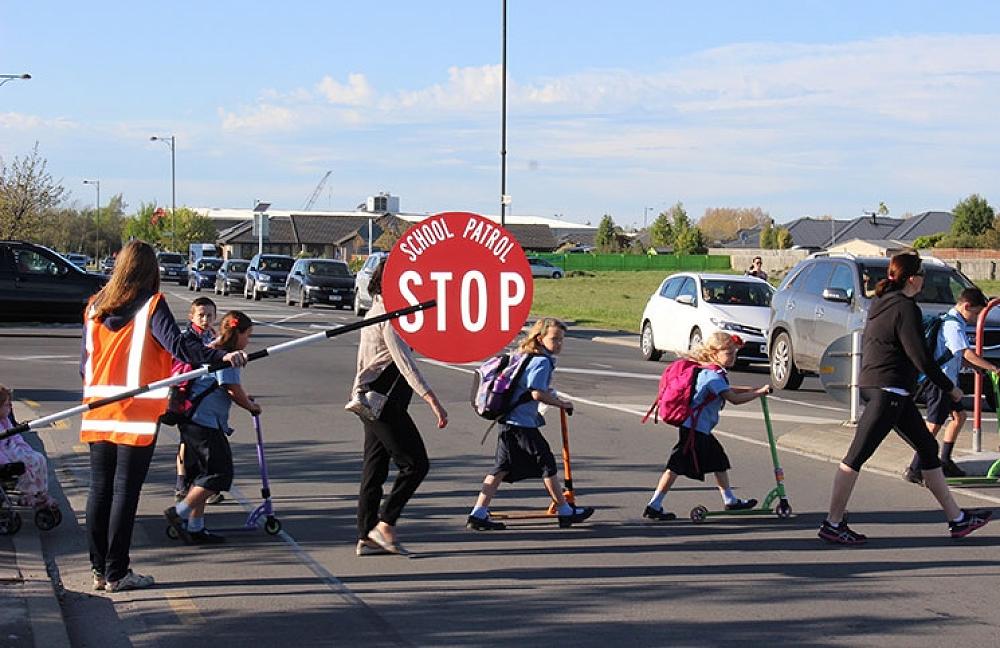
Road Patrol - Split Crossing System
Kia Ora Te Ahi Kaikōmako Rolleston School hapori. Our current and future road patrollers have been trained by Police using a slightly different system of stopping traffic reflecting the increasing traffic volumes on Tennyson Street around peak times.
In the past both patrollers waited for a gap in traffic in both directions before simultaneously extending the lollipop stop signs into the road. The new “split sign” system will see one patroller, who has a gap in traffic approaching them, extend the sign before the other if they have no gap. As the law requires, traffic travelling in both directions to stop even if only one sign is extended (not both), this will have the effect of slowing and stopping traffic to allow the other patroller to extend theirs. This lawful obligation on drivers is not widely known but with time local drivers will become more familiar with the system. This will become our standard practise as of next Monday, 9 November.
Obviously allowances will be made for one or two vehicles that are very close to the unextended sign before it is put out and the lack of reaction time available to drivers, in that they can pass through the crossing. The expectation is though, vehicles further back will be still be required to stop safely short of the crossing. The delay between both signs being extended should, in practice, be only a few seconds. It does to some extent rely on the confidence and assertiveness of patrollers but with practice and experience the result will be less delays for pedestrians waiting to cross Tennyson Street and the traffic will still flow relatively smoothly. The split sign system is widely used successfully on busy urban roads throughout New Zealand. Thank you for your patience and assistance in helping us get our tamariki to kura safely.
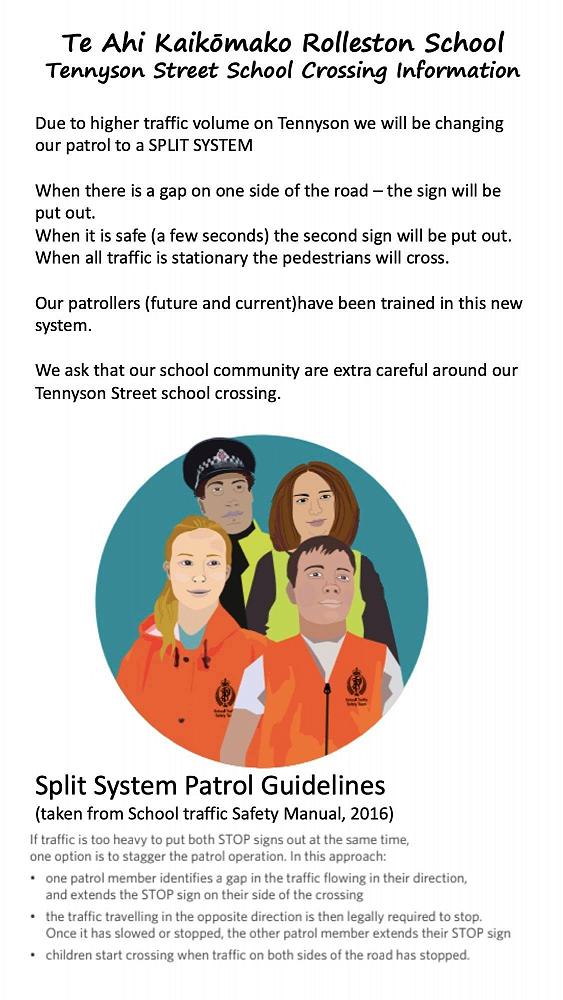
Again, this will be our standard practise from Monday 9 November 2020.
Constable Ross and Mrs Bambry