
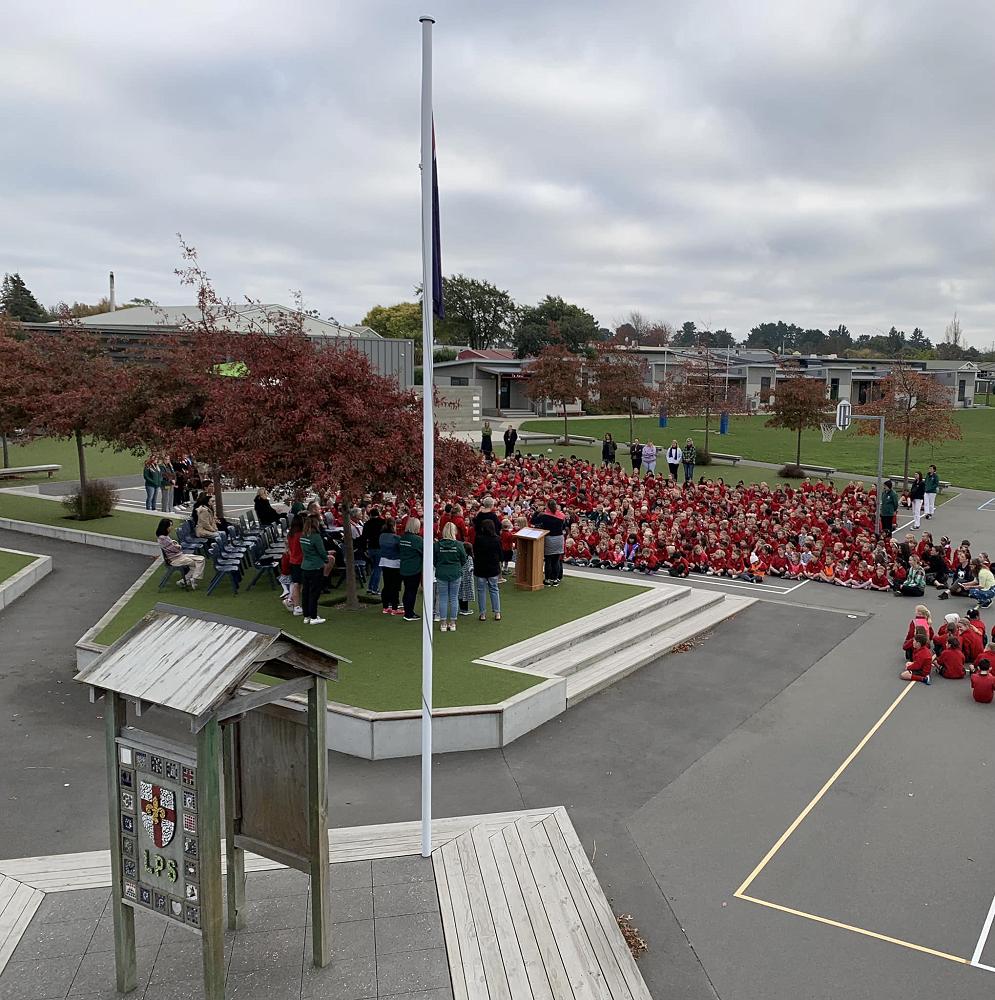
Mihi Whakatau at LPS - Term 2, 2025 28th April
A Mihi whakatau is a formal yet less ceremonial Māori welcome, often used in schools to acknowledge and greet visitors or new staff members. It serves as a way to make people feel comfortable and to recognise their presence in a culturally appropriate manner, while still upholding the values of manaakitanga (hospitality) and whakawhanaungatanga (building relationships).
Unlike a pōwhiri, which is a more formal ceremony typically held on a marae, a mihi whakatau is usually performed in everyday settings like classrooms or school assemblies. It still follows important protocols, including karakia (prayers), mihimihi (speeches), and waiata (songs). A key focus of the mihi whakatau is on bringing people together and creating a sense of unity and belonging within the school community.
As part of our school Tikanga (protocols), we welcome all our new ākonga (learners) and kaiako (teachers) each term with a mihi whakatau. We welcome whānau to join their child as part of this process. All visitors will be welcomed to our staffroom at the end of the for a small snack and a drink.
We would like to formally welcome you through our mihi whakatau process. You are very welcome to bring extended family plus anyone who is important to your child as they begin their learning journey at kura/school.
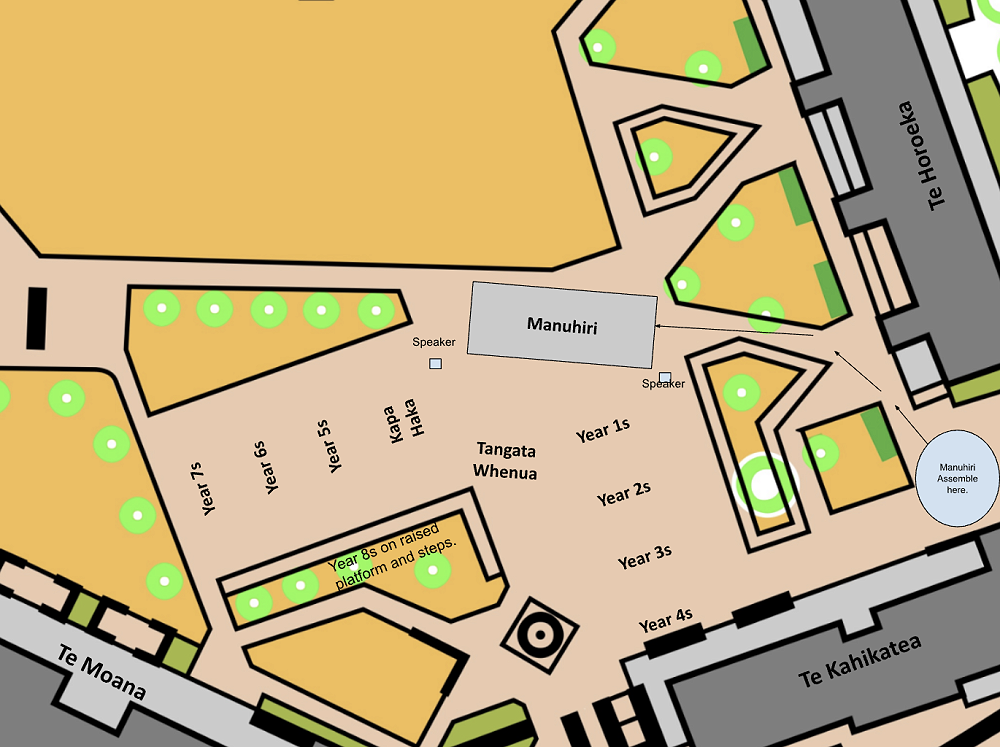
The ākonga (students) will complete their morning roll in class and then assemble on the courts. After settling your child in class, we invite you to come to Reception at 9am on the first day of term, Monday 28th April. We will walk with the group of whānau, entering the space together (see below). Please note if the weather is unsuitable for an outdoor event, this will be moved to our school hall. In this instance the meeting place will be the same and we will walk with you to the hall before the start of proceedings.
Please note our gates open at 8:30am and the first bell goes at 8:50am.
A Mihi Whakatau follows a structured process, with simplified elements compared to a pōwhiri, but still based on tikanga Māori (cultural practices). The key parts are:
Karanga (chat) - The mihi whakatau typically starts and finishes with a Karanga. This sets the tone and acknowledges the Manuhiri as they enter our space.
Whakatau (Informal Welcome) - A speaker from the tangata whenua (local people, usually school staff) greets the Manuhiri (visitors or new people) on behalf of the hosts. This welcomes the visitors and expresses a desire to form positive connections.
Mihimihi (Speeches) - Both the hosts and Manuhiri might give speeches. The tangata whenua speaks first, welcoming the visitors or new members. A representative from the manuhiri often responds, offering thanks and acknowledgements.
Waiata (Song) - After each speech, a waiata is sung to support the speaker’s message. The waiata reflects unity and respect, reinforcing the connection between the hosts and visitors.
Koha (Gift) - Sometimes, the manuhiri gives a koha (gift) to the hosts as a token of appreciation. In schools, this may be symbolic, representing thanks for the welcome.
Hongi (Traditional Greeting) - In some mihi whakatau, the ceremony finishes with the hongi, where people press noses and foreheads together. This gesture represents the sharing of breath and the coming together of the hosts and visitors.
Kai (Food) - Sharing kai (food) often follows the mihi whakatau, symbolising the end of the formalities. It lifts the tapu (sacredness) and allows people to relax and build relationships in an informal setting.
On arrival, new children and kaiako (plus Whānau) stand together outside the Office (see map below). Once all students are seated, the Kapa Haka will begin their haka. Mahuhiri move in the direction indicated, ready to enter their seats facing Speaker 1 (shown as Tangata Whenua on the map).
We welcome whānau who want to be part of the mihi whakatau process to let us know prior to the event, and we will ensure you are part of the ceremony. If you would like to respond on behalf of the visitors to our school (either in English or te reo Māori), please email chris.nord@lincolnprimary.ac.nz, and he can organise this for you.