
Te Mātaiaho | The New Zealand Curriculum
The New Zealand Curriculum is currently being reviewed and updated. The refreshed English and Mathematics & Statistics curricula were released on 31 October 2024 and will be implemented from Term 1, 2025. Kaiako at Prebbleton School have been engaging in professional development to understand these changes and enhance best practice in teaching and learning within our kura.
Why refresh?
Internationally, countries regularly review their curriculum to ensure they remain relevant and effective. New Zealand’s curriculum has been in place since 2007, making this refresh timely. Advances in our understanding of the Science of Learning—how the brain learns—and the essential skills needed for 21st-century learners have influenced these updates.
The refreshed curriculum is built on five characteristics of how we learn:
A strong sense of belonging in the learning environment, where students feel valued and supported, enhances learning.
New ideas and concepts are understood through connections with existing knowledge.
Organising knowledge effectively in long-term memory reduces cognitive load and supports knowledge application and transfer.
Social and emotional wellbeing directly influences the ability to learn new information.
Motivation is essential for wellbeing and engagement in learning.
What’s changed?
The NZ curriculum has undergone a refresh, not an overhaul. Many of the guiding principles and values of the 2007 curriculum remain the same.
Students will be taught in a knowledge-rich environment, following Te Mātaiaho (The New Zealand Curriculum). Learning will occur through local, national and global contexts.
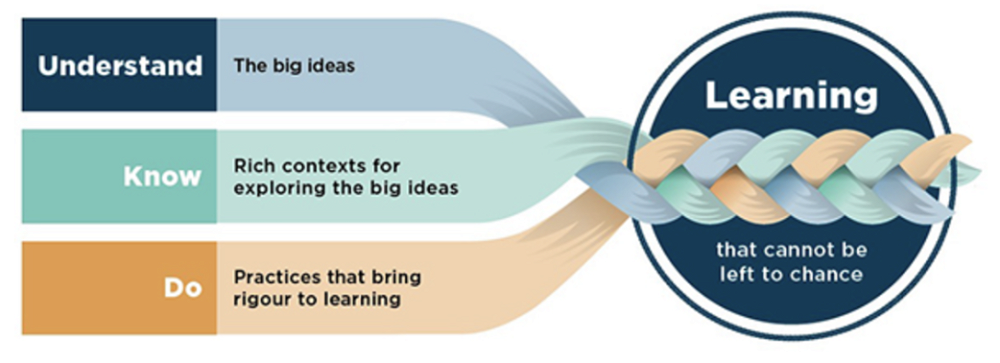
All learning areas now follow the Understand, Know, Do model. These 3 aspects are woven together so learning builds on previous understanding and is purposeful and relevant.
We now move from achievement levels to phases of learning:
Phase 1 (Years 0-3): Thriving in environments rich in literacy and numeracy.
Phase 2 (Year 4-6): Expanding horizons of knowledge and collaborating.
Phase 3 (Years 7-8): Seeing ourselves in the wider world and advocating with and for others.
Phases 4 onwards will be covered in secondary school.
English Curriculum Refresh:
Phases 1 & 2 (Year 0-6) have been released, to be taught from Term 1, 2025.
Structured Literacy is entrenched in the first two phases released.
Prebbleton School is well-placed to implement the changes. We have been on a Structured Literacy journey for over 5 years, with all year groups learning following a scope and sequence.
Staff have taken part in professional development to understand the changes that impact them.
Some learning progressions are aspirational.
You may not notice much difference in how your child is taught due to changes we’ve already implemented.
Maths Curriculum Refresh:
Phases 1, 2 & 3 (Year 0-8) have been released, to be taught from Term 1, 2025.
A highly aspirational curriculum: the new expectations are a little higher for each phase of learning.
Designed to build on previous learning and focus on both knowledge and conceptual understanding.
The science of learning has informed the changes with teachers using a range of tools and approaches; explicit teaching, group work, problem solving and practise.
Maths talks are used to support discussions around mathematical thinking.
Prebbleton School has been involved in professional development through The Learner First for the past 2 years. We are well placed to meet the needs of combining mathematical inquiry with explicit teaching.
Due to the changes we have already made, you may not notice much change in how your child is taught.
We will continue to update you with these changes and support whānau to understand what these changes mean for your tamariki.
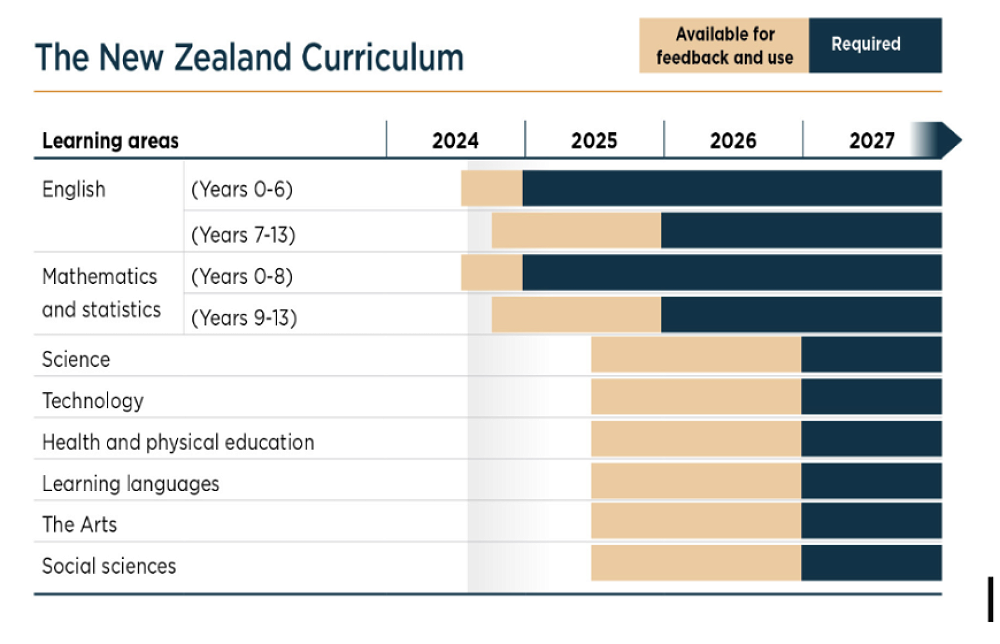
Further release of curriculum areas
The Ministry of Education expects all refreshed curriculum areas to be finalised in 2027. This timeline is an indication only and is subject to change.